
What You Might Not Know About Asbestos
Published by Remtech Environmental Team · Last updated April 2025
As is the case with most topics, there is a fair share of misinformation passed around about asbestos. In an effort to keep you informed about what you might not know about asbestos or to debunk wrong information you might believe, here are some common things you should know about asbestos.
If you would like to know more about asbestos or you would like to schedule a consultation to have your Raleigh, North Carolina home inspected for asbestos, reach out to us at Remtech Environmental. We handle asbestos abatement projects utilizing the latest techniques and safety measures to remove the asbestos without letting it get distributed throughout your home’s duct system. Call today to learn more.
- Asbestos is still in use in the U.S.- Despite the fact that many countries have banned asbestos completely, you will still find it used in some industries in the United States. While less than 1% of the final product is asbestos, in most cases, it could be found in your vinyl tile, home insulation, roofing materials, corrugated sheeting, cement piping, and other building materials, as well as in some potting soil, fire safety products, home appliances, and in automotive parts such as brake pads and clutches.
- The ban on asbestos didn’t go through- The EPA implemented an asbestos ban in 1989, but it was overturned. There have been many recent cases fighting against asbestos found in imported products, including home goods and toys.
- At-risk homes are those built before 1985- Despite the ongoing use of asbestos, the exposure is relatively low overall in homes built after 1985. If you want peace of mind that your family is safe from the potential for lung issues related to asbestos, have your home inspected by an asbestos abatement professional.
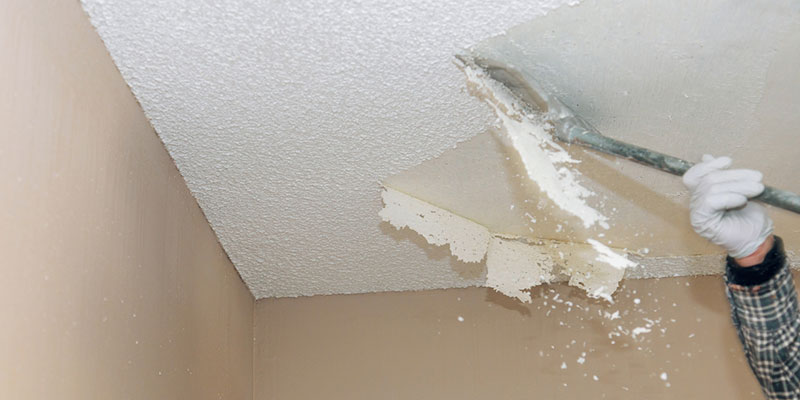
- One of the most common asbestos hazards is a popcorn ceiling- If you have an older home, there is a good chance you have a popcorn ceiling in one or more rooms and that asbestos was involved at the time. Asbestos popcorn ceiling removal is one of the most common asbestos removal projects and should always be handled by a professional.
Most North Carolina homeowners associate asbestos with popcorn ceilings and old pipe wrap, but the mineral hides in places that rarely make the headlines. Decades after the partial federal ban, fibers continue to surface in imported brake pads, contaminated cosmetic talc, and vermiculite insulation that traveled from a single Montana mine into millions of attics across the country. Even seasoned remodelers in Raleigh, Cary, and Durham occasionally misidentify suspect materials, mistaking modern fiberglass batts for older chrysotile-laced board or assuming a 1990s renovation eliminated all risk inside the walls. This article moves past the obvious warnings and explores the surprising, lesser-known facts that determine whether a home, workplace, or consumer product is genuinely safe today. At Remtech Environmental, our certified abatement teams encounter these hidden pockets nearly every week across the Triangle, and the patterns we see should reshape how property owners think about exposure long after the visible hazards have been addressed and forgotten.
Surprising Asbestos Facts That Change How You Assess Risk
The conventional asbestos checklist focuses on a handful of obvious building materials, yet the actual exposure landscape is far broader. The five lesser-known categories below explain why testing and abatement professionals continue to find friable fibers in homes that owners assumed were clear, and why a careful inspection is worth the effort even on properties built in the 1990s or later.
Vermiculite Attic Insulation From Libby, Montana
Between 1919 and 1990, the W.R. Grace mine in Libby, Montana supplied roughly 70 percent of all vermiculite sold in the United States, marketed under the brand Zonolite. Geologic contamination meant the ore was naturally laced with tremolite and actinolite, two of the most aggressive amphibole forms of asbestos. Roughly 35 million American homes received Zonolite as loose-fill attic insulation, and a sizable share of those properties sit in the Carolinas. The material looks like small, golden-brown or grayish pebbles that puff up when heated. If your attic contains pour-in insulation that resembles popcorn or aquarium gravel, the EPA recommends treating it as asbestos-containing until laboratory analysis proves otherwise. Disturbing it during recessed-light installs or HVAC retrofits is a documented exposure pathway.
Asbestos Hidden Inside Cosmetic Talcum Powder
Talc and asbestos form together in the same metamorphic rock formations, and several decades of mining produced consumer talc with measurable tremolite contamination. High-profile multidistrict litigation in New Jersey federal court has documented this overlap in baby powders, body powders, and even some makeup products manufactured before 2020. The Food and Drug Administration began surveillance testing in 2019 and has since recalled multiple cosmetic lots after positive results. North Carolina residents who used legacy talc products for years now show up in mesothelioma case studies tied not to occupational exposure but to daily personal-care routines. The takeaway is straightforward: an asbestos diagnosis does not always trace to a workplace or a basement boiler room, and clinicians at Duke and UNC oncology programs increasingly screen for non-traditional exposure histories.
Post-9/11 Exposures Are Still Producing Diagnoses
When the World Trade Center towers collapsed on September 11, 2001, an estimated 400 tons of pulverized asbestos drifted across Lower Manhattan along with crushed gypsum, lead, and silica. The latency window for asbestos-related cancers commonly runs 20 to 40 years, which means we are entering the period when first responders, clean-up crews, and downtown residents begin presenting with mesothelioma and asbestosis at elevated rates. The World Trade Center Health Program, administered by NIOSH, formally recognizes these cancers as covered conditions. The lesson for everyone else is that any large structural failure of a pre-1980 commercial building, including fire damage and partial collapses we see during Atlantic hurricane events, can release similar fiber clouds and demand professional decontamination rather than ordinary debris removal.
Asbestos Remains Legal in Specific U.S. Products
Despite a popular belief that asbestos was outlawed in the late 1980s, the Fifth Circuit struck down the EPA's comprehensive ban in 1991, leaving most existing uses intact for another generation. The 2024 EPA rule under the Toxic Substances Control Act finally prohibited chrysotile in chlor-alkali diaphragms, sheet gaskets, and certain brake blocks, but compliance phases out over five to twelve years depending on the specific application. Until those staggered deadlines pass, products such as imported aftermarket brake pads, specialty industrial gaskets, certain vehicle clutch facings, and some roofing felts can legally contain chrysotile fibers. North Carolina automotive shops, HVAC contractors, and manufacturing facilities should request manufacturer Safety Data Sheets and verify component sourcing, because do-it-yourself brake jobs on imported vehicles remain a quiet exposure route in residential garages across Wake County.
False-Positive and False-Negative Identification Mistakes
Visual inspection alone produces a surprising number of errors in both directions, and the consequences of each mistake type differ sharply. We routinely encounter homeowners who tore out modern joint compound believing it was a 1970s asbestos product, and we just as often see clients who left genuine 9-by-9 asphalt floor tiles in place because they assumed vinyl meant safe. Polarized light microscopy and transmission electron microscopy at an accredited laboratory remain the only reliable identification methods, and even then, sample collection technique strongly influences the analytical result. The North Carolina Division of Public Health maintains a public list of accredited inspectors, and a proper bulk sample collected under negative-pressure containment costs far less than the medical, remediation, and legal consequences of a confident guess that ultimately turned out wrong.
Why Imported Goods Keep Reintroducing Asbestos to American Homes
Customs and Border Protection seizure data reveals a steady flow of asbestos-containing consumer goods entering U.S. ports each year, often labeled under generic categories that escape close inspection. Children's crayons, toy fingerprint kits, and cheap costume jewelry have all tested positive in independent laboratory work commissioned by the Environmental Working Group and the Asbestos Disease Awareness Organization. The regulatory gap is structural rather than accidental. Many exporting countries impose no manufacturing ban, raw asbestos remains cheap as a filler, and U.S. import inspections rely on a self-certification system that catches only a fraction of mislabeled shipments. For a Wake County family, this means a holiday craft kit purchased online could carry trace fibers, and a clutch replacement performed at a backyard mechanic shop could release them. The pattern explains why occupational and environmental physicians at the North Carolina Occupational Safety and Health Education and Research Center continue to log exposure cases tied to seemingly modern products. Consumer vigilance, third-party testing of suspect items, and professional handling of any failed component shift the odds dramatically. None of this should provoke panic, but it does argue for treating the asbestos problem as ongoing rather than historical, particularly in households that buy heavily from international online marketplaces or that rely on older imported automotive parts.
Steps to Uncover the Hidden Asbestos in Your Property
Begin with a documented building history. Pull deed records, prior renovation permits, and any product receipts that survived from the original construction or major remodels, because paperwork often reveals materials that visual inspection cannot confirm. Walk the attic and crawl space with a flashlight and a phone camera, photographing any pebble-style insulation, wrapped pipe runs, transite air ducts, or unusual coatings on furnace components. Avoid touching, sweeping, or moving the materials. Next, schedule an inspection with a North Carolina accredited asbestos inspector who will collect bulk samples under controlled conditions and submit them to a NVLAP-accredited laboratory for polarized light microscopy or transmission electron microscopy analysis. Inventory consumer products purchased before 2020 that fall in the higher-risk categories: legacy talc powders, imported automotive friction materials, and craft items containing colored powders or wax sticks. If your property suffered fire, flood, or storm damage, treat damaged building materials as presumed asbestos containing until proven otherwise, and consult a licensed abatement contractor before any debris removal. Finally, share what you learn with neighbors who own similarly aged homes, because awareness of these hidden pockets benefits the entire community and often surfaces shared sources of contamination from a single subdivision builder.
Connect These Findings to the Rest of Our Resources
Once you understand where asbestos hides, the practical next questions concern legal duties and homeowner basics. Our companion guide on the regulatory framework walks through 15A NCAC 19C, EPA NESHAP requirements, OSHA worker-protection rules, and how disclosure obligations affect a Triangle home sale or refinance. The homeowner-essentials article explains how to recognize, test for, document, and safely live alongside asbestos until a certified abatement crew can address it. Together with our service pages on asbestos abatement, popcorn ceiling removal, and indoor air quality testing, these resources give Raleigh, Durham, and Chapel Hill property owners a complete decision framework for any suspected exposure scenario or planned renovation project.
Key Takeaways
- Vermiculite insulation from the Libby, Montana mine sits in roughly 35 million American attics and should be presumed asbestos-containing until laboratory analysis confirms otherwise.
- Cosmetic talcum powders manufactured before 2020 have produced documented mesothelioma cases tied to daily personal-care use rather than occupational exposure.
- The 1991 Fifth Circuit ruling left most asbestos uses legal in the United States, and the 2024 EPA rule phases out remaining chrysotile applications over five to twelve years.
- Imported consumer goods including children's toys, brake pads, and craft kits continue to test positive for asbestos contamination at U.S. ports.
- Visual identification produces both false positives and false negatives, so accredited laboratory testing is the only reliable way to confirm or rule out an asbestos-containing material.
Need Help with Environmental Services?
If you have concerns about mold, asbestos, or water damage in your property, contact Remtech Environmental today for a free consultation.
Get a Free Quote