
What You Need to Know About Asbestos
Published by Remtech Environmental Team · Last updated April 2025
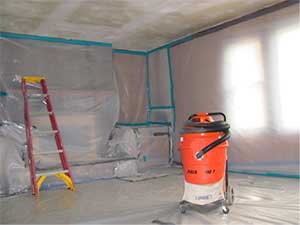
If you have a home or building that was constructed before 1985, then you should know a few things about a mineral fiber called asbestos. A few decades ago, asbestos was commonly used when constructing homes or buildings because of its ability to provide things like fire-resistance and heat insulation. It wasn’t until 1924 that the first asbestos-related case of health problems was recorded. From then, it wasn’t until 1989 that the U.S. Environmental Protection Agency attempted to ban all new uses of asbestos, though some products today still include very small amounts of asbestos.
Asbestos causes health problems when it releases fibers into the air. If these fibers are breathed in, then you can begin to suffer from lung diseases, such as asbestosis. You could also contract lung cancer, larynx cancer, ovarian cancer, or mesothelioma. While most of these diseases are dose related, mesothelioma is not; even a small exposure can lead to mesothelioma. Some common materials in your home that may contain asbestos include popcorn ceilings, linoleum floors, floor tiles, boiler or pipe insulation, duct insulation, duct tape, cement siding, roof shingles, artificial ashes for gas fireplaces, door gaskets, and more.
However, even if you have these items from the 1980s or before in your home, you don’t necessarily need to worry. If the material is in good condition, then asbestos fibers won’t be released. In the meantime, monitor the possibility of asbestos and limit access to the area. You can check with professionals to consult how to deal with the problem.
Be sure to take asbestos seriously. If you think you have an asbestos problem, be sure to give us a call here at Remtech Environmental today.
Asbestos is one of the most consequential building materials of the twentieth century, a naturally occurring fibrous mineral that powered the industrial revolution, insulated mid-century homes from coast to coast, and ultimately became one of the most heavily regulated substances in American environmental law. For North Carolina property owners, understanding asbestos is not academic. The state's housing stock includes a large share of homes built between the 1920s and the mid-1980s, the period when asbestos use peaked, and many commercial buildings, schools, churches, and industrial facilities across the Piedmont, the Triad, the Triangle, and the coastal plain still contain identified or presumed asbestos-containing materials in service today. A thorough understanding of asbestos covers four pillars: the history of how the material entered widespread use, the three commercially significant fiber types and how they differ, the well-documented health effects of fiber exposure, and the regulatory and remediation framework that governs how the material is managed and removed in North Carolina today. With that foundation, homeowners, building managers, and contractors can make informed decisions that protect occupants, comply with state and federal law, and avoid the costly mistakes that follow uninformed disturbance.
Key Takeaways
- Asbestos is a naturally occurring fibrous mineral that peaked in U.S. construction use in the 1970s and remained common through the mid-1980s.
- The three commercial fiber types are chrysotile (white), amosite (brown), and crocidolite (blue); amphiboles are more biopersistent and more hazardous.
- Asbestos exposure is linked to asbestosis, lung cancer, laryngeal and ovarian cancers, and mesothelioma; mesothelioma can result from brief exposures.
- Federal regulations under TSCA, NESHAP, AHERA, and OSHA, plus a 2024 EPA chrysotile ban with phased deadlines, govern asbestos in the United States.
- North Carolina enforces asbestos rules through NC DHHS, which licenses inspectors, designers, supervisors, and abatement workers.
- Remediation options include manage-in-place, encapsulation, and full abatement; every abatement should conclude with TEM clearance sampling.
Need Help with Environmental Services?
If you have concerns about mold, asbestos, or water damage in your property, contact Remtech Environmental today for a free consultation.
Get a Free Quote