
Is it Safe to Do Your Own Black Mold Removal?
Published by Remtech Environmental Team · Last updated April 2025
Mold can come in many different forms in many different areas around your home, but regardless of the type of mold you’ve been exposed to, you shouldn’t hesitate to get it removed. One of the most common forms of mold is black mold, which can have very serious health effects, making black mold removal incredibly important if you have this growth in your home. If you’ve noticed black mold growing in your home, you may be wondering if you can handle it on your own. However, you should never do your own black mold removal.
It’s much safer to leave black mold removal to the experts. For one, they’re much more effective at removing mold. They know where to look to make sure they get all of the spores. Sometimes, the mold that you see is only some of the growth. You don’t want to miss the hidden growth, so you’re much better off working with the people who can make sure hidden mold gets taken care of.
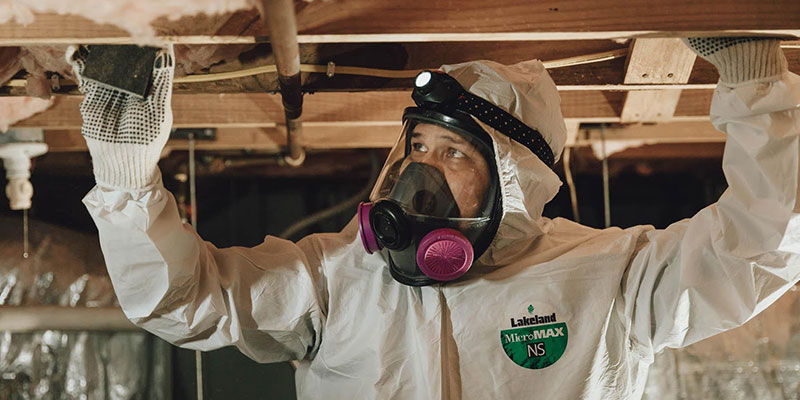
Professional black mold removal experts can also keep themselves and you safe during the process. They have the right protective equipment and know all of the best practices for preventing mold inhalation while they remove the mold presence in your home. Because of the health risks associated with black mold, you don’t want to take any chances trying to remove it on your own. Not using the proper equipment and procedures can result in more contamination in other areas of your home. Don’t risk your family’s health. Call in the experts to make sure you and your family stay safe during the mold removal process.
No one does black mold removal as efficiently as our team here at Remtech Environmental. If you have black mold growing in your home, be sure to reach out to us as soon as possible to have it safely removed.
DIY home repair videos make mold removal look like a Saturday afternoon project: spray bleach, scrub the surface, ventilate the room, and call it done. The reality is far more dangerous, particularly when the mold in question is Stachybotrys chartarum, the species commonly known as toxic black mold. The science of mycotoxin exposure, the engineering controls required to prevent cross-contamination, and the OSHA standards governing respiratory protection all converge on the same conclusion: black mold remediation is not a homeowner project. North Carolina does not currently license mold remediators, which means the burden falls on consumers to understand why professional standards exist and what happens when they are ignored. Every year we are called in to remediate homes where a homeowner attempted DIY removal, succeeded only at spreading spores throughout the HVAC system, and ended up paying three to five times the original professional estimate to remediate the entire structure. This guide explains exactly why that happens and what the genuine risks look like.
The Real Risks of DIY Black Mold Removal
Each of the following hazards independently justifies professional remediation. Combined, they make DIY work indefensible from both health and financial standpoints.
Mycotoxin Exposure During Disturbance
Stachybotrys chartarum produces trichothecene mycotoxins, including satratoxins, that are stable, lipid-soluble, and capable of remaining toxic for years after the parent colony dies. These compounds are not destroyed by bleach, alcohol, or most household cleaners. When you scrub or spray a Stachybotrys colony, you aerosolize both the live spores and the dormant fragments containing concentrated mycotoxins. A single disturbance event can elevate airborne mycotoxin concentrations by orders of magnitude for hours afterward. Documented health effects from acute exposure include severe respiratory inflammation, neurological symptoms such as memory loss and difficulty concentrating, immune suppression, and in vulnerable populations, pulmonary hemorrhage. Children, the elderly, pregnant women, and immunocompromised individuals face the highest risk. Without proper PPE and engineering controls, you are inhaling these compounds throughout the cleanup process.
Cross-Contamination Through HVAC and Air Currents
Mold spores measure between 2 and 100 microns and remain airborne for hours once disturbed. The IICRC S520 standard requires that any remediation activity exceeding 10 square feet be performed under containment with HEPA-filtered negative air pressure precisely because spores migrate aggressively through normal air currents and HVAC systems. A homeowner removing visible mold in a bathroom without containment is effectively seeding every room in the house with spores. Within 48 to 72 hours, those spores find new moisture sources, including HVAC condensate pans, and establish secondary colonies in attics, crawl spaces, and wall cavities. We have inspected homes where a single DIY bathroom cleanup created air sample readings 50 times higher than outdoor baseline throughout the entire structure.
OSHA Respiratory Protection Standards
OSHA standard 29 CFR 1910.134 governs respiratory protection in workplaces and is referenced in the ANSI/IICRC S520 mold remediation standard. For Stachybotrys remediation, the minimum respiratory protection is a full-face powered air-purifying respirator (PAPR) with P100 filters, not a dust mask or N95. PAPRs require fit testing, medical clearance, and documented training. The reason is simple: dust masks filter particles down to about 5 microns at best and provide no facial seal, allowing contaminated air to bypass the filter entirely. P100 filters capture 99.97% of particles down to 0.3 microns, and the positive pressure inside a PAPR hood prevents inward leakage. No homeowner can replicate this level of protection at the local hardware store, and yet without it, every breath during cleanup carries mycotoxins into the lungs.
Hidden Mold Beyond the Visible Surface
Visible mold is almost always the smallest fraction of the total contamination. When water enters a wall cavity, mold establishes on the back side of drywall, on framing lumber, on insulation, and inside HVAC ductwork long before any visible growth appears on the room-facing surface. Professional inspectors use moisture meters, thermal imaging cameras, and borescopes to map the actual extent of contamination. Cleaning what you can see leaves the parent colony intact, allowing it to continue producing spores and mycotoxins indefinitely. The visible patch returns within weeks. We routinely open up walls during professional remediation and find growth covering ten to twenty times the area of the visible patch.
Improper Disposal and Containment Failures
Mold-contaminated materials are regulated waste under most North Carolina county solid waste rules. Bagging contaminated drywall in a regular trash bag and dragging it through the home to the curb spreads spores along the entire path. Professionals double-bag waste in 6-mil polyethylene at the source, decontaminate the bags at the containment exit, and transport waste in lined containers. Cleanup tools used in a contaminated area must also be decontaminated or disposed of, otherwise the next time you use that vacuum or those rags you are reintroducing spores to clean areas. Most household HEPA vacuums are not actually HEPA-rated and exhaust spores back into the air.
What North Carolina Professional Standards Actually Require
Although North Carolina does not currently license mold remediators at the state level, reputable professionals follow the ANSI/IICRC S520 Standard for Professional Mold Remediation, which is the consensus industry document recognized in court, by insurers, and by environmental health authorities including the EPA and the NC Department of Health and Human Services. S520 defines four condition levels and three remediation categories based on the extent of contamination, and it specifies engineering controls, PPE, work practices, and clearance criteria for each. For any contamination exceeding 10 square feet, the standard requires full containment with HEPA-filtered negative air machines maintaining at least 0.02 inches of water column negative pressure relative to surrounding spaces. Workers must wear full-body Tyvek suits with hoods and booties, P100 respirators or PAPRs, nitrile gloves, and safety eyewear. The work area must be isolated from the rest of the structure, and a decontamination chamber separates clean and dirty zones. After remediation, an independent third-party indoor environmental professional collects post-remediation verification samples to confirm that airborne spore counts have returned to normal background levels. None of this is optional in the professional standard, and skipping any of it creates measurable health and legal liability. When homeowners ask why a professional remediation costs several thousand dollars while a hardware store mold remover costs fifteen, the answer is contained in those specifications. You are not paying for the bleach. You are paying for the engineering controls and the documented clearance.
When DIY Is Acceptable, and When to Call a Professional
The EPA and IICRC both acknowledge that very small mold patches can sometimes be cleaned by homeowners, but the criteria are narrower than most people realize. Acceptable DIY scope is limited to non-porous surfaces such as ceramic tile, glass, and metal, with visible growth covering less than 10 square feet, in a room where there is no underlying water damage, and where the affected person has no respiratory conditions, allergies, or compromised immunity. Even then, the EPA recommends an N95 respirator at minimum, gloves, eye protection, and ventilation to the exterior. Anything beyond that scope including drywall, wood, carpet, insulation, ductwork, or persistent moisture sources warrants professional remediation. If you have already attempted a DIY cleanup and the mold has returned, that is your signal that the underlying moisture source was not corrected and the colony was not fully removed. Stop, document the situation with photographs, identify whether anyone in the household has experienced symptoms, and contact a certified inspector. Do not attempt repeated cleanings, do not paint over the area, and do not run the HVAC system if you suspect spores have entered the ducts. Each subsequent disturbance compounds the problem and increases the eventual remediation cost.
Get Help in NC
Remtech Environmental performs IICRC S520-compliant mold remediation throughout the Triangle and surrounding North Carolina communities. Our team holds AMRT certifications, follows OSHA respiratory protection standards, and partners with AIHA-accredited laboratories for both initial inspection and post-remediation verification. We provide a written scope of work, transparent pricing, and full documentation suitable for insurance claims, real estate disclosures, or legal proceedings. If you suspect black mold in your Raleigh, Durham, Cary, Apex, or Wake Forest home, contact us before attempting any cleanup. The earlier we are involved, the smaller the remediation footprint and the lower your total cost.
Key Takeaways
- Stachybotrys mycotoxins remain toxic for years and are not destroyed by bleach or household cleaners.
- Disturbing black mold without containment aerosolizes spores and seeds secondary colonies throughout the home.
- OSHA-compliant respiratory protection for Stachybotrys requires P100 filters and fit-tested respirators, not dust masks.
- Visible mold is typically less than 10% of the actual contamination footprint inside walls and HVAC systems.
- DIY cleanup is acceptable only for non-porous surfaces under 10 square feet with no underlying water damage.
Need Help with Environmental Services?
If you have concerns about mold, asbestos, or water damage in your property, contact Remtech Environmental today for a free consultation.
Get a Free Quote