
4 Interesting Facts About Asbestos
Published by Remtech Environmental Team · Last updated April 2025
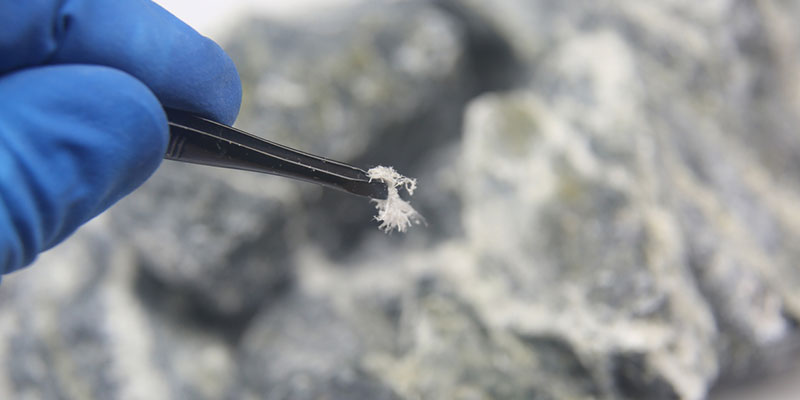
You’ve heard of asbestos before, even if you’ve never encountered it (at least we hope you haven’t). However, in our experience at Remtech Environmental, most people know very little about asbestos, including what it really is and the specific reasons it is harmful.
Today, we’d like to touch on four interesting facts about asbestos that you may not know, but probably should.
Undoubtedly, asbestos is harmful, but if you think you have asbestos in your home, don’t panic. Our team can provide asbestos abatement to restore your peace of mind. Contact us today.
- Asbestos refers to six naturally occurring minerals. Most people think asbestos is just one material, but it is actually the term for several silicate minerals, including chrysotile (white asbestos), amosite (brown asbestos), crocidolite (blue asbestos), tremolite, actinolite, and anthophyllite. These kinds of minerals form on metamorphic rocks.
- There is no “safe” level of asbestos exposure. Some harmful materials are only dangerous in certain concentrations, but asbestos is harmful regardless of the amount of exposure. It’s important to remove disturbed asbestos right away while taking the right precautions, and only accredited technicians should do it.
- Asbestos can scar the lungs. When asbestos is inhaled, some of the fibers can penetrate and scar the lungs, causing respiratory issues and certain diseases, such as mesothelioma and lung cancer.
- Asbestos fell out of use decades ago, but it’s still around. You might already know that the EPA banned most products containing asbestos back in 1989, but you may not know that plenty of homes still have asbestos. If your home was built before 1985, it may be at risk of asbestos.
Asbestos is one of the few building materials with a recorded history stretching back more than two thousand years, and that long arc explains why the mineral is still present in so many North Carolina homes today. The ancient Greeks named it asbestos, meaning inextinguishable, after observing its remarkable resistance to fire. The Romans wove it into ceremonial fabrics and crematory shrouds. By the mid-twentieth century, North Carolina's industrial textile mills, shipyards, and residential builders had embraced asbestos as a near-universal additive to insulation, flooring, siding, and friction products. At Remtech Environmental, we believe homeowners and property managers make better decisions when they understand both the science and the history behind the material. The four facts below, drawn from EPA, NC DHHS, IICRC, and World Health Organization documentation, provide context that goes well beyond the surface-level warnings most people have heard. Knowing where asbestos came from and why it was used so widely helps explain why it remains a present-day concern across the Carolinas.
Five Lesser-Known Realities About Asbestos and Its Legacy
Most public discussion of asbestos focuses narrowly on health risks and the EPA's partial 1989 ban. The fuller picture, drawing on geology, history, regulation, and modern abatement science, illuminates why North Carolina property owners still face asbestos decisions decades after the material fell out of mainstream use. The five facts below expand on the historical and regulatory context every homeowner should understand.
Asbestos Encompasses Six Distinct Mineral Species
The term asbestos is a commercial label, not a single mineral. It covers six fibrous silicates falling into two mineralogical groups: serpentine, which includes chrysotile (white asbestos), and amphibole, which includes amosite (brown), crocidolite (blue), tremolite, actinolite, and anthophyllite. Chrysotile accounts for over ninety-five percent of the asbestos used in North American construction, but the amphibole varieties are considerably more carcinogenic per fiber due to their straight, needle-like structure that lodges deep in lung tissue. The World Health Organization's International Agency for Research on Cancer classifies all six forms as Group 1 human carcinogens. North Carolina abatement projects must account for which species are present, since handling protocols and air-clearance standards vary by fiber type. NC-accredited inspectors document mineral identification as part of every formal survey.
Roman and Medieval Cultures Recognized the Material's Hazards
The Greek geographer Strabo and the Roman naturalist Pliny the Elder both documented respiratory illness among the slaves who mined and wove asbestos cloth. Pliny described a bladder-membrane respirator that quarry workers used to filter the dust, an early acknowledgment that the material's heat resistance came at a human cost. Charlemagne reportedly owned an asbestos tablecloth that he cleaned by throwing into a fire, a parlor trick that survived into Renaissance Europe. The historical record makes clear that asbestos toxicity was never truly secret. What changed in the twentieth century was the scale of exposure, as industrial mining and mass production exposed millions of workers and consumers to fiber concentrations the ancient world never approached. Modern North Carolina abatement standards under 15A NCAC 19C reflect more than a century of accumulating epidemiological evidence.
Peak North American Consumption Occurred Between 1965 and 1975
United States Geological Survey records show that domestic asbestos consumption peaked at over eight hundred thousand metric tons per year during the late 1960s and early 1970s. North Carolina's textile industry, shipbuilding operations along the coast, and residential construction boom in the Piedmont all drove demand. Homes built during this decade are statistically the most likely to contain multiple categories of asbestos-containing material simultaneously, often including popcorn ceilings, vinyl asbestos tile, transite components, and pipe insulation in the same structure. The latency period for asbestos-related diseases, particularly mesothelioma, ranges from twenty to fifty years, which means the health consequences of 1970s exposure are still emerging in patient populations today. This epidemiological lag underlies the EPA's continued enforcement priority on residential abatement.
North Carolina's Regulatory Framework Is Codified Under 15A NCAC 19C
North Carolina enforces asbestos handling through Title 15A, Subchapter 19C of the North Carolina Administrative Code, administered by the NC DHHS Health Hazards Control Unit. The regulations require accreditation for inspectors, management planners, project designers, supervisors, and workers, mirroring the federal AHERA Model Accreditation Plan but adding state-specific permitting and notification requirements. Any demolition or renovation of a regulated facility, which includes most commercial structures and certain residential conversions, triggers a ten-working-day notification to NC DHHS prior to the start of work. Penalties for non-compliance can reach ten thousand dollars per day per violation, and the state actively investigates complaints from neighbors, tenants, and contractors who suspect improper handling. Remtech Environmental maintains current NC accreditation across all required disciplines and handles regulatory notification as part of every commercial abatement engagement.
The 1989 EPA Ban Was Largely Overturned in 1991
Many homeowners assume the EPA banned asbestos in 1989, and that products manufactured after that date are asbestos-free. The reality is more complicated. The Asbestos Ban and Phase-Out Rule of 1989 was challenged in federal court and largely vacated by the Fifth Circuit Court of Appeals in 1991, leaving only a narrow set of products under prohibition. New asbestos-containing materials, including some gaskets, brake components, and roofing products, continued to enter the United States market for decades afterward. The EPA's 2024 final rule under the Toxic Substances Control Act finally banned ongoing uses of chrysotile asbestos, but this regulation does nothing to address the legacy materials already installed in pre-1985 housing. For North Carolina property owners, the practical implication is clear: existing structures must still be surveyed and managed regardless of newer regulatory developments.
How Modern Science Defines Asbestos Risk
The mechanism by which asbestos causes disease is now well understood at the cellular level, though it took decades of epidemiological work to establish. When asbestos fibers are inhaled, the longest and thinnest, particularly amphibole fibers exceeding five micrometers in length, evade the lung's mucociliary clearance system and lodge in alveolar tissue. Macrophages attempting to phagocytize the fibers fail because the fibers exceed the cells' physical capacity, leading to chronic inflammation, oxidative stress, and eventual genetic damage to surrounding cells. The diseases most strongly associated with asbestos, asbestosis, lung cancer, mesothelioma, and certain cancers of the larynx and ovaries, all share this inflammatory etiology. The World Health Organization estimates that asbestos exposure causes over two hundred thousand deaths globally each year, and the United States Centers for Disease Control reports that mesothelioma mortality has remained essentially flat since the 1990s despite decades of reduced exposure, reflecting the long latency period of the disease. Importantly, no threshold of safe exposure has been established for any of the six asbestos minerals. This is why abatement standards under EPA NESHAP, OSHA 1926.1101, and NC 15A NCAC 19C all rely on engineering controls, containment, HEPA filtration, and final clearance air sampling rather than concentration-based exposure limits. Every fiber matters, and every project Remtech Environmental performs is designed around the principle that there is no acceptable amount of avoidable exposure.
What North Carolina Property Owners Should Do Next
Understanding asbestos history and science is valuable, but action matters more. If you own a North Carolina property built before 1985, the practical next step is a documented asbestos survey performed by a NC-accredited inspector. This is true whether you plan to renovate, sell, or simply continue living in the home. A baseline survey establishes what materials are present, where they are located, and what condition they are in, which becomes the foundation for any future decision about renovation, repair, or sale. For commercial property owners, NC regulation requires asbestos surveys prior to demolition or renovation of regulated facilities, with ten-working-day notification to NC DHHS before work begins. For homeowners, surveys are not legally required for owner-occupied dwellings, but they are increasingly requested by lenders, insurers, and buyers as part of due diligence. Remtech Environmental performs full pre-renovation surveys, limited surveys, and operations and maintenance plans across the Triangle, Triad, Charlotte metro, and surrounding counties. Our NC-accredited inspectors document findings in EPA AHERA-compliant reports that satisfy regulatory, transactional, and insurance requirements. If asbestos is identified and disturbance is unavoidable, our licensed abatement crews handle containment, removal, encapsulation, and final clearance under the supervision of NC-licensed project designers. Contact our team today to schedule an inspection or discuss the right approach for your property.
Explore More on Asbestos and Environmental Remediation
Our blog and service pages cover asbestos and related environmental concerns from multiple angles. For practical guidance on identifying asbestos in residential settings, read our companion post 3 Things to Know About Asbestos in Homes, which details the most common locations of asbestos-containing materials in pre-1985 North Carolina housing. Our Asbestos Removal service page outlines the inspection-to-clearance workflow we follow on every project. Property owners dealing with multiple environmental concerns may also be interested in our Mold Removal and Water Damage Restoration services, since moisture intrusion frequently disturbs asbestos-containing materials and creates compound remediation needs. Reach our Triangle, Triad, and coastal NC teams through our Contact page.
Key Takeaways
- Asbestos is the commercial name for six distinct fibrous silicate minerals, with chrysotile dominant in North American construction and amphiboles particularly hazardous.
- Documented awareness of asbestos toxicity dates to ancient Greek and Roman observations of respiratory illness among quarry workers and weavers.
- Peak North American consumption between 1965 and 1975 means homes from this decade typically contain multiple categories of asbestos-containing material.
- North Carolina enforces asbestos handling under 15A NCAC 19C with mandatory accreditation, notification, and penalties up to ten thousand dollars per day for violations.
- The 1989 EPA ban was largely overturned in 1991, and only the 2024 TSCA rule finally banned ongoing chrysotile use, leaving legacy materials in pre-1985 properties as the primary exposure source today.
Need Help with Environmental Services?
If you have concerns about mold, asbestos, or water damage in your property, contact Remtech Environmental today for a free consultation.
Get a Free Quote