
What Technicians Look for During a Mold Inspection
Published by Remtech Environmental Team · Last updated April 2025
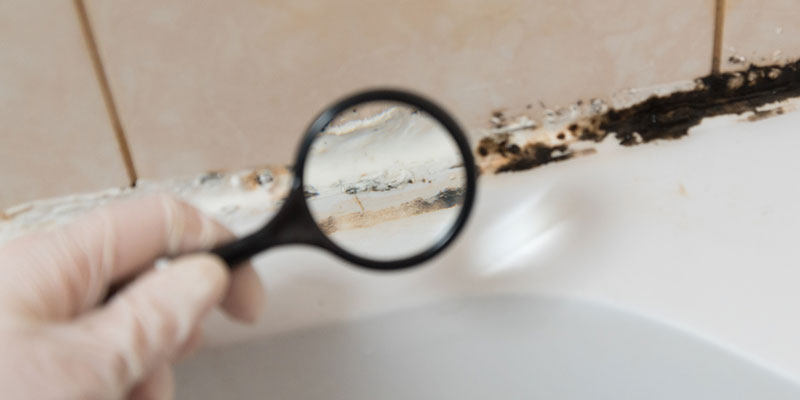
Mold is one of the last things you want to find in your home, as it poses both health and safety risks. Whether the mold is hidden or in plain sight, you’ll want to call a professional right away for a mold inspection. This service will help to identify the cause of the mold growth and the extent of the problem and damage so that you can take the right steps to remove it.
If you have never had a mold inspection at your home before, you probably don’t know what to expect. You might be wondering what technicians look for while they are examining your space, so we want to provide a bit of insight today. Here are some of the key areas we’ll look at during a mold inspection:
If you need a mold inspection in Raleigh, North Carolina, contact us today.
- Water stains- Water stains on your ceiling, walls, or floors may be a sign of mold. Where there is water damage, mold usually follows, and this mold may be hidden within the walls instead of in plain sight. Upon finding water stains, technicians will investigate the problem further to confirm the presence or absence of mold.
- Visible drywall seams- Under normal circumstances, your drywall seams should not be visible to you. If they are, a few things could be wrong. They may have been installed properly or your house may have experienced settling. Or, the culprit may be water damage, which means mold is probably.
- Discoloration on walls- If your walls have discoloration, technicians will suspect mold in most cases, and they will probably be right. This discoloration may take the form of dark patches or greenish and blue spots.
A professional mold inspection is far more rigorous than the quick visual walk-through many homeowners imagine. The work follows protocols developed by the Indoor Air Quality Association (IAQA), the American Industrial Hygiene Association (AIHA), and the IICRC, and it draws on a specific toolkit, thermal imaging cameras, pin and pinless moisture meters, hygrometers, particle counters, and AIHA-LAP accredited laboratory analysis, to convert subjective observations into objective measurements. For homeowners in Raleigh, Cary, Wake Forest, and surrounding North Carolina communities, understanding what a qualified inspector actually does on site sets accurate expectations and gives the homeowner a basis for evaluating whether the inspection they receive meets professional standards. At Remtech Environmental, we have performed thousands of mold inspections across the Triangle, and the process below reflects what an inspection should look like on every project, whether the concern is a small bathroom spot or whole-home air quality issues after a water event. This article walks through the evidence our technicians document, the equipment they use, and the diagnostic logic that turns observations into an actionable remediation plan or a clean bill of health.
The Five Inspection Categories Every Qualified Mold Assessment Covers
A professional inspection is not a single test, it is a layered investigation that combines visual, thermal, hygrometric, and microbiological evidence. The categories below represent the standard protocol our technicians follow on residential inspections in the Triangle region, and they align with the published IAQA and AIHA guidance for indoor air quality assessment.
Visual Indicators of Microbial Growth and Moisture Damage
The walkthrough begins with systematic visual inspection of every accessible area: ceilings, walls, floors, baseboards, window frames, plumbing fixtures, HVAC supply and return registers, attic spaces, crawlspaces, and behind any furniture or stored items the homeowner can move. Technicians document discoloration patterns, including the dark gray, green, brown, and black staining typical of common indoor molds, along with the pink and orange hues sometimes associated with bathroom contamination. We also note water staining, efflorescence on masonry, peeling paint, blistered drywall, warped trim, and unusual seam visibility. North Carolina humidity makes condensation patterns common around windows, exterior wall outlets, and HVAC supply registers, and each pattern carries diagnostic information about the underlying mechanism.
Moisture Mapping With Thermal Imaging and Calibrated Meters
Visible mold is only the part of the problem you can see. The decisive diagnostic work is moisture mapping, which converts hidden conditions into measurable data. Our technicians use FLIR-class thermal imaging cameras to identify temperature anomalies indicating moisture intrusion, condensation patterns, missing or compressed insulation, and air infiltration paths. Thermal images are then verified with pin-type moisture meters that contact wood and drywall directly, and pinless capacitance meters that scan deeper into wall and floor assemblies without surface penetration. Hygrometers record ambient temperature and relative humidity in each zone. Together these tools build a moisture map that reveals where water is, where it has been, and where it is likely going next, evidence that visual inspection alone cannot produce.
Air Sampling With Air-O-Cell Cassettes and Spore Trap Analysis
When air sampling is warranted, our technicians collect samples using calibrated rotary-vane pumps drawing a measured volume of air through Air-O-Cell or comparable spore trap cassettes. Indoor samples are paired with outdoor controls and unaffected indoor controls so the laboratory can compare spore concentrations and species composition across the dataset. The cassettes are submitted to an AIHA-LAP accredited environmental microbiology laboratory under documented chain of custody, where technicians microscopically identify and enumerate the spores by genera. Results indicating elevated indoor concentrations of moisture-indicator species such as Stachybotrys, Chaetomium, or Aspergillus and Penicillium relative to outdoor controls are diagnostic of an indoor amplification source, even when visible growth has not been located.
Surface Sampling Through Tape Lifts, Swabs, and Bulk Samples
Visual evidence often requires laboratory confirmation, particularly when discoloration could be staining, soiling, settled dust, or active microbial growth. Surface sampling provides that confirmation. Tape-lift samples capture suspect material on a clear adhesive that can be examined microscopically without disturbing the substrate. Swab samples collect material from porous surfaces for culture analysis. Bulk samples, small pieces of removed material, are submitted when destructive identification is acceptable and when the laboratory needs sufficient material for thorough analysis. Each sample type produces different information, and an experienced inspector chooses the method that fits the question being asked, rather than defaulting to a single technique for every situation.
HVAC System and Ductwork Inspection
Heating and cooling systems are major contamination vectors and are inspected accordingly. Our technicians examine evaporator coils for biological growth and standing condensate, check primary and secondary drain pans for slime and overflow staining, inspect supply and return plenum interiors for visible contamination, and evaluate accessible ductwork for moisture, debris, and microbial growth. Filter housings and filter media are evaluated for moisture and contamination patterns. In homes with attic-mounted air handlers, condensate line function is verified. When HVAC contamination is suspected, sampling is performed at supply registers and within the air handler cabinet to compare against outdoor and ambient indoor controls. Failure to inspect the HVAC system is one of the most common gaps in lower-tier mold inspections, and contamination that lives in the duct system spreads to every conditioned space in the home.
How IAQA and AIHA Protocols Translate Field Evidence Into Defensible Conclusions
The reason professional inspections produce reliable conclusions is not that any single test is definitive, it is that the protocols developed by the IAQA and AIHA require correlation across multiple evidence categories before any finding is documented. A musty odor by itself is not diagnostic. Visible discoloration by itself is not diagnostic. An elevated air sample by itself is not diagnostic. But combine an elevated indoor spore concentration of moisture-indicator species with a thermal anomaly showing cool spots on an interior wall, a pin meter reading elevated wood moisture content in that same wall cavity, visual evidence of staining at the base plate, and a documented history of plumbing activity in the area, and you have a coherent diagnostic picture that supports a specific remediation scope. The AIHA's published Recognition, Evaluation, and Control of Indoor Mold (the Green Book) provides the framework for this kind of multi-method correlation, and the IAQA's certification programs train inspectors to apply it on real projects. The same protocols also require attention to confounding variables: outdoor spore counts that vary seasonally and during weather events, indoor activities like pet bedding or houseplant maintenance that can elevate certain genera, sampling artifacts caused by air movement during cassette collection, and the documented limitations of any single sampling method. A qualified inspector accounts for these variables in the report and is transparent about confidence levels. When a finding is uncertain, the report says so and recommends additional sampling or further investigation. When a finding is well-supported, the report explains exactly which evidence categories converge on the conclusion. That kind of rigor is the difference between an inspection that supports a defensible insurance claim or real estate disclosure and one that produces a result no one can rely on.
What to Expect During and After Your Inspection
When you schedule a mold inspection with Remtech Environmental, the process begins with a phone consultation in which we ask about the symptoms, history, and any recent water events at the property. That information shapes the inspection plan. On site, the inspection itself typically runs one to three hours for a standard residential property, longer if the home is large or if extensive sampling is required. The technician will work systematically through the home, document findings with photographs and meter readings, and discuss observations with you in real time. If sampling is performed, samples are submitted to an accredited laboratory and results are typically returned within three to five business days. You will receive a written report that summarizes findings, presents laboratory results with reference values, identifies the moisture sources contributing to any contamination, and recommends a specific remediation scope if remediation is warranted. If the inspection finds no evidence of microbial concern, the report will state that clearly and identify any maintenance items that would prevent future issues. The cost of a residential mold inspection in the Triangle region varies based on size, accessibility, and the extent of sampling required, and we provide a transparent quote before any work begins. To schedule your inspection or discuss a specific concern, contact our team today.
Related Reading and Services
Our [mold remediation services](/mold-remediation/) page describes the full remediation process that follows when an inspection identifies contamination. If your inspection reveals crawlspace issues, see our [crawlspace remediation](/crawlspace-remediation/) page for the specific protocols we use beneath North Carolina homes. For inspections triggered by recent water events, our [water damage restoration](/water-damage-restoration/) services address the underlying moisture. Additional homeowner education is available on our [blog](/blog/), and you can [request a free quote](/free-quote/) to schedule an inspection today.
Key Takeaways
- Professional mold inspections combine visual, thermal, hygrometric, and microbiological evidence rather than relying on any single observation.
- Thermal imaging with FLIR-class cameras paired with pin and pinless moisture meters reveals hidden moisture conditions that visible inspection cannot detect.
- Air sampling with Air-O-Cell cassettes and AIHA-LAP accredited laboratory analysis converts subjective indoor air concerns into objective spore concentration data.
- HVAC system inspection is essential because contaminated air handlers and ductwork distribute spores throughout every conditioned space in the home.
- IAQA and AIHA protocols require correlation across multiple evidence categories before findings are documented, producing defensible conclusions for insurance and disclosure.
- A complete inspection report identifies moisture sources, presents lab results with reference values, and recommends a specific remediation scope or confirms a clean result.
Need Help with Environmental Services?
If you have concerns about mold, asbestos, or water damage in your property, contact Remtech Environmental today for a free consultation.
Get a Free Quote