
When a Mold Inspection is Necessary
Published by Remtech Environmental Team · Last updated April 2025
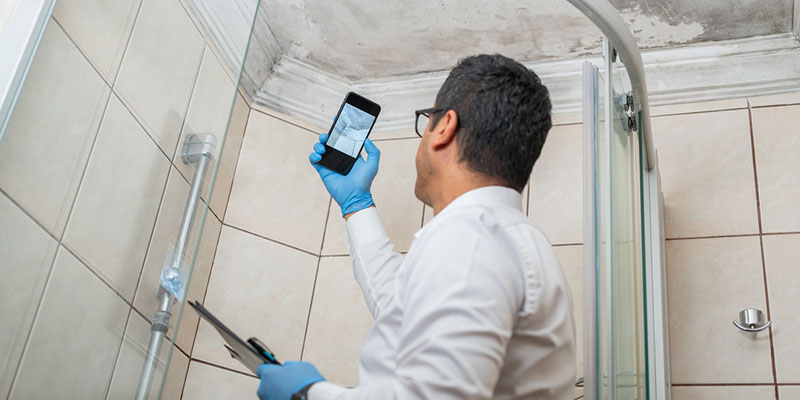
You always want to make sure you’re safe in the space you’re staying in. One of the best things you can do to make sure your home is safe is hiring a mold inspection service. Locating the amount and area of mold in your space can help you determine the next best steps for staying safe from mold-related issues.
If you’re wondering whether or not a mold inspection service is necessary for you, here are some of the times when a mold inspection is a good idea:
At Remtech Environmental, we want to make sure you’re safe from mold in your home, so talk to us today about how our mold inspection service can locate and stop your mold growth problem.
- You see it. You may think an inspection service is unnecessary if you already see mold growth, but mold inspection services can make you aware of additional mold growth that you haven’t noticed. This will help you know where to get mold removal services done, as well as show which areas of your home are most susceptible to mold growth.
- You’re buying a home. Knowing if there’s mold in a home before you buy it is always a good idea. You don’t want to be blindsided by a mold issue on moving day, so hiring a mold inspection service to scope out your potential new home is a great idea.
- You’ve had a mold problem before. If you’ve had to deal with mold growth in the past, it doesn’t hurt to periodically hire a mold inspection service to make sure there isn’t any new growth in those more susceptible areas of your home.
Most homeowners do not think about scheduling a mold inspection until something happens that forces the question. A pipe lets go in a wall cavity over a holiday weekend, a long stretch of humid weather leaves the master closet smelling unfamiliar, a child develops a stubborn cough that gets worse indoors, or a real estate inspection report flags moisture readings in a finished basement. Each of these scenarios sits on a spectrum of urgency, and recognizing where you fall on that spectrum is the difference between an inexpensive precautionary assessment and an emergency remediation project. At Remtech Environmental, we serve homeowners across Raleigh, Cary, Wake Forest, Durham, and the surrounding North Carolina Piedmont, and the people who reach out earliest based on a specific triggering event almost always face simpler, less expensive remediation outcomes. This article focuses on the specific scenarios that should prompt an inspection rather than calendar timing, walking through the underlying risk profile each event reveals.
Five Scenarios That Should Trigger a Professional Mold Inspection
Mold contamination follows water, and water follows specific events that homeowners can identify and react to. The five scenarios below cover the overwhelming majority of legitimate inspection triggers we encounter in central North Carolina, and each one deserves a different scope of investigation depending on the conditions that produced it.
If You Have Had a Plumbing Leak or Slow Drip
A plumbing leak is the single most common precursor to hidden mold growth in residential buildings. Whether the source is a supply line behind a dishwasher, a slow toilet wax ring failure, a pinhole copper leak in a wall cavity, or a slab leak migrating through a chase, the conditions for microbial growth are established within hours. The IICRC S500 Standard for Professional Water Damage Restoration identifies a 24 to 48 hour window during which saturated cellulose materials are at low risk of significant amplification, beyond which the assumption shifts. Even a leak repaired by a plumber leaves moisture trapped in framing, insulation, drywall paper, and subfloor sheathing where it is invisible from the room side. A targeted inspection uses moisture meters, thermal imaging, and cavity sampling to determine whether amplification has occurred behind the visible repair.
If You Notice a Persistent Musty Odor That Will Not Go Away
The earthy, damp basement smell that lingers regardless of cleaning is one of the most reliable olfactory signals of microbial volatile organic compounds, the metabolic byproducts of active fungal colonies. Unlike obvious visible growth, MVOCs travel readily through wall cavities, HVAC returns, and pressure differentials in the building envelope, which means the source can be quite far from the room where the smell is strongest. We have traced odor complaints in second-floor bedrooms back to crawlspace contamination, attic roof leaks, condensation behind built-in cabinetry, and HVAC duct contamination from a humidifier that was never properly maintained. A professional inspection in this scenario combines visual assessment with air sampling, building pressure analysis, and HVAC system evaluation. Persistent odor without obvious growth is one of the most diagnostically useful triggers because it almost always indicates contamination, the question is simply where.
If You Have Unexplained Allergy or Respiratory Symptoms Indoors
Health complaints that improve when occupants leave the home and return when they come back are a classic indoor air quality signal, and mold exposure is one of several possible explanations alongside dust mites, pet dander, VOCs from finishes, and combustion byproducts. The American Industrial Hygiene Association and the Institute of Medicine have both documented associations between damp indoor environments and upper respiratory symptoms, asthma exacerbation, and allergic responses in sensitized individuals. Children, elderly residents, and immunocompromised occupants face elevated risk. When a household is experiencing this pattern, an inspection should include both bulk air sampling for spore counts and surface sampling in suspect areas, with comparison to outdoor control samples analyzed by an AIHA-LAP accredited laboratory. The goal is not to prove mold is present, the goal is to characterize the indoor environment with enough specificity that physicians and remediation professionals can act on actual data.
Before You Buy a Home or Close on a Property
Real estate transactions are the highest-leverage moment to commission a mold inspection because the cost of identifying a problem before closing is dramatically lower than discovering it afterward. A standard home inspection covers structural and mechanical systems but typically does not include a forensic moisture and microbial assessment. North Carolina's housing stock includes a wide range of construction eras, from 1950s slab-on-grade ranches with original windows to 2010s sealed-envelope builds with potential moisture management failures, and each presents different risk profiles. We perform pre-purchase inspections regularly for buyers in the Triangle area, focusing on basements and crawlspaces, attic spaces, plumbing chase walls, around windows and exterior penetrations, and HVAC equipment. The findings can support price negotiation, repair contingencies, or in some cases the decision to walk away from a property whose remediation costs would exceed the value of the deal.
After a Flood, Storm, or Major Water Intrusion Event
When a hurricane remnant tracks through eastern North Carolina or a severe thunderstorm overwhelms storm drains in a Raleigh neighborhood, the immediate aftermath understandably focuses on extraction and visible damage. The mold question arrives a week or two later, after drying is supposedly complete and homeowners begin to notice odors, discoloration, or secondary symptoms. Category 3 water losses, those involving sewage backup, ground surface water, or sustained intrusion from outside the building envelope, carry the highest risk of microbial amplification because the water itself contained pathogens and organic load. Even Category 1 clean water losses progress to Category 2 within 48 hours and Category 3 by 72 hours per the IICRC standard. A post-flood inspection verifies that drying achieved standard moisture content in framing and substrate, identifies any pockets where moisture remained trapped, and screens for amplification before reconstruction proceeds.
Why Scenario-Specific Inspections Outperform Generic Annual Checks
There is a meaningful difference between a routine periodic walkthrough and an inspection commissioned in response to a specific triggering event, and the difference comes down to investigative scope. A generic inspection is essentially a survey where the inspector covers major risk areas of a typical home, looks for obvious indicators, and reports findings. A scenario-driven inspection is a directed investigation where the trigger shapes the methodology. If the trigger is a confirmed plumbing leak, the inspection focuses moisture mapping, cavity inspection, and invasive sampling on the affected zone and spaces it could have migrated to via gravity, wicking, or air pressure differentials. If the trigger is unexplained respiratory symptoms, the inspection emphasizes air sampling, HVAC evaluation, and building pressure analysis to identify how spores might be reaching occupants. If the trigger is a real estate transaction, the inspection adds documentation rigor for negotiation and disclosure purposes. This adaptive scope is why EPA Mold Remediation in Schools and Commercial Buildings guidance and the IICRC S520 Standard both emphasize that assessment must be tied to the specific conditions of the building rather than executed as a checklist. Our inspectors carry the IICRC certifications that align with these standards, calibrating every investigation to the trigger that brought the homeowner to us. This approach finds problems generic surveys miss and avoids the false confidence of a clean walkthrough that simply did not look in the right places.
What to Do If One of These Scenarios Applies to You
The right action depends on which trigger you are facing, but the first move is consistent: document what you observe before disturbing anything. If you have had a plumbing leak, photograph the affected area, note when the leak began and was repaired, and locate any saturated materials. If you are dealing with persistent odor, walk through the home systematically and note where the smell is strongest and whether it correlates with HVAC cycles or weather. For health symptoms, keep a written log of when they occur, where in the home, and whether they resolve outside the building. For real estate transactions, request seller disclosure documents and previous inspection reports. For flood events, preserve insurance correspondence, photographs of water levels, and extraction documentation from the initial response team. With this information in hand, contact Remtech Environmental for a no-pressure consultation. We will discuss your specific trigger over the phone, recommend the appropriate inspection scope, and quote a fair price. Our inspectors arrive with calibrated moisture meters, thermal imaging cameras, and air sampling equipment, and we coordinate with AIHA-LAP accredited laboratories for analytical work.
Continue Your Research and Schedule an Assessment
If your trigger involves visible growth or confirmed contamination, learn more about our [mold remediation services](/mold-remediation/) and the IICRC-aligned process we follow on every project across the Triangle region. For the underlying water events that produced these conditions in the first place, see our [water damage restoration](/water-damage-restoration/) capabilities for emergency extraction and structural drying response. Crawlspace-specific concerns, which often drive whole-house indoor air quality issues for North Carolina homes, are covered in detail on our [crawlspace remediation](/crawlspace-remediation/) page. Additional homeowner education on related environmental topics is available on our [blog](/blog/), or [request a free quote](/free-quote/) to schedule a scenario-specific inspection tailored to the circumstances of your particular trigger.
Key Takeaways
- Plumbing leaks demand inspection within the IICRC S500 24 to 48 hour window because trapped moisture in cavities continues to feed amplification long after surface repairs.
- Persistent musty odor without visible growth is a reliable signal of microbial volatile organic compounds and warrants air sampling combined with HVAC and building pressure analysis.
- Unexplained indoor allergy or respiratory symptoms that resolve when occupants leave the home should prompt AIHA-LAP laboratory air sampling rather than DIY test kits.
- Pre-purchase inspections during real estate transactions deliver the highest leverage because remediation costs are dramatically cheaper to negotiate before closing than after.
- Post-flood inspections verify that Category 1, 2, and 3 water events achieved proper drying to standard moisture content before reconstruction begins.
- Scenario-driven inspections outperform generic walkthroughs because the triggering event shapes the methodology, ensuring the right tools and sampling reach the right locations.
Need Help with Environmental Services?
If you have concerns about mold, asbestos, or water damage in your property, contact Remtech Environmental today for a free consultation.
Get a Free Quote