
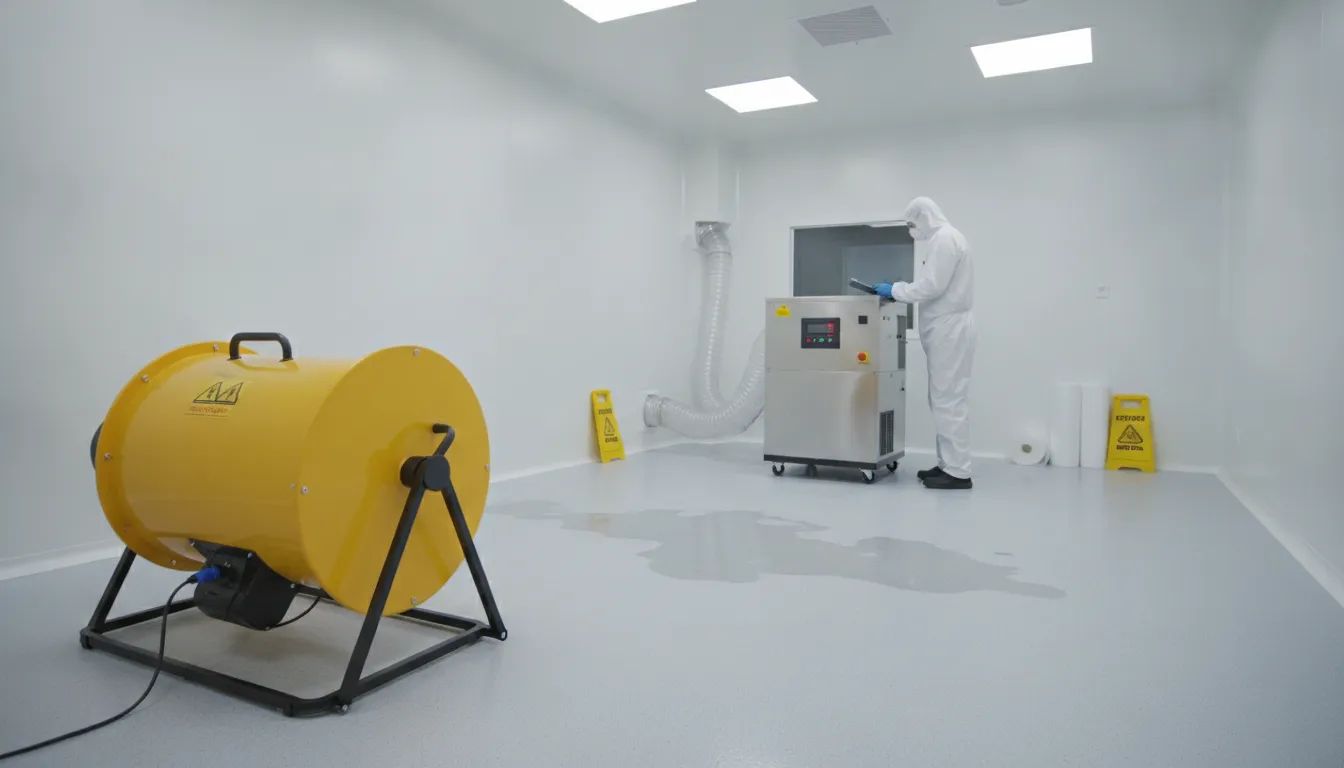
Water damage in your home is stressful and requires immediate action to protect your property and family. When water invades your living space, the clock starts ticking before serious biological hazards develop.
Get a Free Consultation Today to protect your NC property from hidden moisture.
To master how to prevent mold after water damage, you must dry all affected areas and organic materials within a strict 24 to 48 hour window. Mold spores are invisible and float through indoor air, germinating quickly when they land on wet surfaces like drywall, wood, or carpet. To stop colonization, NC homeowners should shut off the water source, extract standing water, remove wet porous materials, and run industrial dehumidifiers to keep relative humidity below 50%. Acting quickly is the single most critical step to protect indoor air quality and structural integrity.
To protect your household from these microscopic threats, you must understand the exact timeline of mold growth. Our guide on How to Prevent Mold After Water Damage: The 24-to-48-Hour Window outlines the critical first steps you need to take right now.
How to Prevent Mold After Water Damage: The 24-to-48-Hour Window
When water leaks into your NC home, you must act fast. Microscopic mold spores exist naturally in the air, and identifying what mold damage looks like in the home is the first step to catching an issue. These tiny, invisible spores enter your living space through open windows, vents, and heating or cooling systems. While they are usually harmless in dry conditions, they reproduce rapidly the moment they find moisture and organic food sources.
The Danger of Mold Germination
Mold germination is a quiet but aggressive process. Once spores land on a damp surface, they can start growing within 24 to 48 hours. This short timeline is why experts emphasize preventing mold after water damage is a race against time. If you do not dry the wet areas completely within this small window, the mold will establish deep roots in your building materials.
Mold does not need much to survive. It only requires oxygen, moisture, and organic matter. Unfortunately, standard homes are full of organic materials that serve as mold food. These include cellulose-rich items such as wood framing, paper drywall backing, cardboard boxes, ceiling tiles, and carpet fibers. When water saturates these materials, it creates the perfect breeding ground for colonization.
Common Types of Indoor Molds
NC homes face several common indoor mold varieties when water damage occurs. The most frequent types include Cladosporium, Penicillium, and Aspergillus. Each of these molds can thrive in damp environments and spread from room to room through airborne spores. Because these molds grow so quickly on common surfaces, focusing on moisture control is the only reliable way to prevent mold after water damage.
To stop these species from taking over, you must eliminate the moisture source immediately. No amount of cleaning will work if water continues to seep into your walls or floors. Securing your home and drying the structure quickly is the primary line of defense against long-term property damage and expensive remediation work.
The Importance of Structural Drying
Drying the visible water is only the first part of the job. Moisture often hides deep inside wall cavities, under wood floors, and behind baseboards. If you leave these hidden areas damp, mold will grow out of sight and eventually damage your home's structure. In towns like Raleigh, choosing professional water damage restoration in Raleigh, NC ensures that every layer of your property is free from excess moisture before spores can settle and grow.
Step-by-Step Actions to Prevent Mold After a Water Leak
If you discover water in your home, you must follow a clear plan to protect your property value and household health. Taking quick, organized actions can keep a minor leak from turning into a major mold infestation. Homeowners who know the signs of potential water damage can jump into action immediately and save thousands of dollars in repairs. If you need help identifying these problems, a professional mold inspection can locate hidden leaks and colonies.
- Shut Off the Water Source: The very first step is to stop more water from entering your home. Locate your main water shut-off valve and close it immediately. If the water is coming from a roof leak or natural disaster, use temporary tarps to cover the area and prevent further water intrusion.
- Extract Standing Water: Remove as much water as possible as quickly as you can. Use a wet-dry utility vacuum, pumps, or a mop and bucket to clear puddles from floors and carpets. The faster you remove the standing liquid, the less time it has to soak into deep structural materials.
- Remove Waterlogged Porous Items: Take wet items outside to dry or be discarded. Porous materials like cardboard boxes, paper documents, damp books, and wet rugs hold onto moisture and mold easily. If a porous item cannot be cleaned and dried completely within 48 hours, it should be removed from your home.
- Photograph and Document Everything: Take clear photos and videos of all damaged building materials, personal belongings, and standing water. This visual evidence is essential for filing successful insurance claims and documenting the full scope of the water damage for professional restorers.
- Increase Air Circulation: Open interior doors and cabinets to help air reach damp corners. If the outdoor air is dry, open windows to promote fresh airflow throughout your house. This natural ventilation helps carry humid air outside and begins the drying process.
Securing Salvageable Materials
Some hard surfaces and non-porous materials can be saved with thorough cleaning. Metal, plastic, glass, and solid wood can usually be dried, sanitized, and kept. However, soft items like carpets, upholstered furniture, and ceiling tiles are much harder to salvage. If these porous items remain wet for over two days, the risk of deep mold colonization becomes extremely high, and replacement is usually the safest option. Following a structured mold removal process can help save what can be salvaged.
Filing Your Insurance Claim
Contact your insurance company as soon as you stop the water. Many homeowners policies cover water damage from sudden leaks, but they may deny coverage if mold grows due to delayed cleanup. Presenting your detailed photos, a timeline of your actions. And a list of wet items will help speed up the process and secure the resources you need for professional restoration.
Using Dehumidifiers and Industrial Fans for Water Damage Mitigation
Simply opening your windows or running standard household fans is rarely enough to dry out structural water damage. Home fans are designed to move air around a room, but they lack the power to pull deep moisture out of walls, subfloors, and studs. To prevent mold from establishing deep roots, professional-grade water damage mitigation equipment is required.
High-Velocity Air Movers vs. Standard Fans
Professional water damage technicians use specialized high-velocity air movers. These powerful machines circulate air at high speeds directly across wet surfaces like floors, walls, and carpets. This high-speed airflow accelerates evaporation, turning liquid water into vapor. However, simply evaporating the water is not enough; you must also extract that moisture from the indoor air.
Specialized air movers are strategically placed by professionals to create a continuous vortex of air. This targeted airflow reaches behind drywall and into tight corners where stagnant pockets of wet air would otherwise linger. By constantly replacing humid boundary-layer air with dry air, these machines ensure that every surface dries evenly and rapidly, preventing localized mold colonies from taking root.
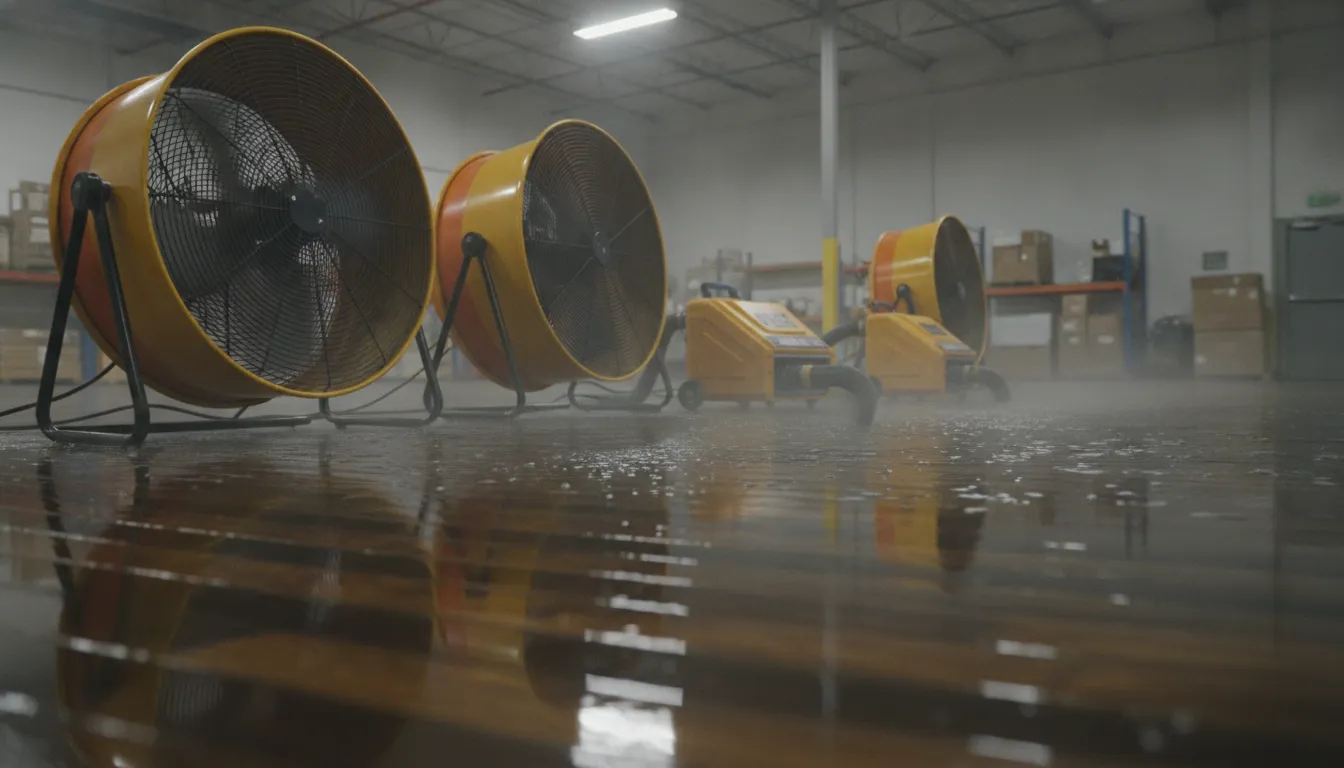
High-velocity air movers are placed strategically to accelerate structural drying and prevent mold colonization.
If you evaporate water without removing it from the air, the relative humidity in your home will skyrocket. This high humidity creates a damp, swamp-like indoor climate where mold thrives. To keep mold spores from settling on dry areas, you must use commercial dehumidifiers in combination with your air movers. Commercial dehumidifiers extract gallons of moisture from the air every day, keeping indoor relative humidity below 50%.
Controlling Relative Humidity Levels
Relative humidity is the key factor in indoor mold control. When humidity levels stay above 60%, mold spores can germinate and colonize dry building materials even without a direct liquid leak. By running commercial-grade refrigerant or desiccant dehumidifiers, you can bring the indoor humidity down to a safe range of 30% to 50%. This low humidity halts mold reproduction and ensures that wet structural materials continue to dry thoroughly.
Electrical Safety Precautions
Before plugging in or turning on any fans or dehumidifiers, you must verify that your home's electrical systems are completely safe. Water and electricity are a deadly combination. Never step in standing water to reach an outlet, and do not use electrical equipment if your circuit breakers have tripped. If you suspect any water has reached electrical outlets or wiring, shut off the power at the main breaker box and call an electrician immediately.
If you need help safely drying out your home, contact our experts at Remtech. Request your free quote today.
What to Spray to Prevent Mold After Water Damage
Many NC homeowners believe that spraying chemicals is the magic solution to prevent mold. However, spraying is only a supportive measure. If you do not completely remove the underlying moisture source, mold will eventually return, regardless of what chemical treatments you apply. Complete drying is always the primary step, but using the correct antimicrobial spray can help sanitize surfaces and prevent mold spores from germinating.
Recommended Antimicrobial Treatments
To sanitize hard surfaces, use water and a mild household detergent. Scrubbing wet-affected concrete, tile, or solid wood with a standard detergent removes surface mold and dirt. After cleaning, you can apply a professional-grade antimicrobial spray. These specialized formulas are designed to inhibit mold growth on non-porous and semi-porous surfaces. They work by creating a protective barrier that kills spores on contact, giving your structural elements extra protection. Homeowners seeking professional help can contact our experts in Cary for mold remediation in Cary, NC, to ensure surfaces are treated with industrial-grade solutions.
Common Home Cleaning Mistakes
One of the biggest mistakes homeowners make is painting or caulking over moldy surfaces. Some believe that sealing the mold under a fresh coat of paint will kill it or stop it from spreading. This is completely false. Painting over mold does not kill the spores; it merely hides them. The mold will continue to grow underneath the paint, eating away at your drywall or wood, and will eventually bubble through the surface. Always fix the water problem and clean up all the mold before you paint or caulk. For safety, understanding what you need to know about mold remediation can save you from making these common mistakes.
Another common mistake is relying on bleach for porous materials like wood or drywall. Bleach is an effective sanitizer for hard, non-porous surfaces like tile or metal. However, bleach has a high water content and cannot penetrate deep into porous wood or drywall. When you spray bleach on wood, the chlorine stays on the surface while the water sinks into the wood, actually feeding the mold roots deep inside. This can cause the mold colony to return even stronger once the chlorine evaporates.
Critical Chemical Safety Warnings
When using any cleaning products or disinfectants, safety must be your top priority. Never mix different cleaning chemicals under any circumstances. Specifically, DO NOT mix bleach and ammonia. Combining these two common cleaning agents creates a chemical reaction that produces dangerous, toxic chloramine vapors. Inhaling these vapors can cause severe respiratory damage, throat irritation, and even death. Always work in well-ventilated areas, wear protective gloves and goggles, and read product labels carefully.
Comparing DIY Mold Prevention vs. Professional Water Damage Restoration
When dealing with water intrusion, NC homeowners often wonder if they can handle the drying process themselves or if they need professional help. While a very small spill is easy to dry with home tools, larger water events present hidden risks. Understanding the differences between homeowner efforts and commercial mitigation ensures you make the right choice for your property's safety.
When to Dry It Yourself
If you have a minor, clean water leak that affects an area smaller than 10 square feet, DIY drying is a practical option. You can clean up the liquid with a mop, move personal items to a dry room, and use household fans to dry the surface. However, you must still work quickly to ensure everything dries completely within 24 to 48 hours. If the water has reached wall cavities, carpets, or large areas of drywall, household tools are simply not powerful enough to protect your home from mold. For larger property issues, utilizing professional water damage restoration in Cary, NC ensures that all moisture is extracted before mold can take hold.
When Professional Restoration is Essential
For larger water events or contaminated water, professional intervention is critical. Water damage is classified into three categories: clean water (Category 1), gray water from appliances (Category 2), and black water from sewage or outdoor flooding (Category 3). Gray and black water contain dangerous bacteria, viruses, and biological hazards that require specialized training and protective equipment to sanitize safely. Furthermore, professional restorers use infrared cameras and moisture meters to locate water trapped deep inside wall cavities and subfloors, drying the entire structure. If mold has already started to develop, you will need a licensed team specializing in mold removal in Raleigh, NC to safely remediate the space.
| Comparison Factor | DIY Mold Prevention | Professional Water Damage Restoration |
|---|---|---|
| Project Scope | Small, localized spills under 10 square feet on hard surfaces. | Large areas, structural flooding, and multi-room water intrusion. |
| Water Classification | Limited to clean water (Category 1) from pipes or sinks. | Handles all types, including gray water (Category 2) and black sewage (Category 3). |
| Drying Equipment | Standard household box fans, towels, and small home dehumidifiers. | High-velocity industrial air movers and commercial refrigerant dehumidifiers. |
| Moisture Detection | Visual inspections and touching surfaces to feel for dampness. | Non-invasive infrared thermal cameras and digital pinless moisture meters. |
| Mold Guarantees | No official guarantees or post-project verification of air quality. | Fully insured, IICRC-certified, and backed by professional drying logs. |
The Value of IICRC-Certified Technicians
The Institute of Inspection, Cleaning and Restoration Certification (IICRC) sets the national standards for water damage restoration. Professionals who hold these certifications are trained in advanced psychrometry, which is the science of drying. They know exactly how air temperature, humidity, and airflow interact to dry building materials as fast as possible. Using a certified service ensures your home is dried according to these strict scientific principles, completely eliminating the environment mold needs to grow.
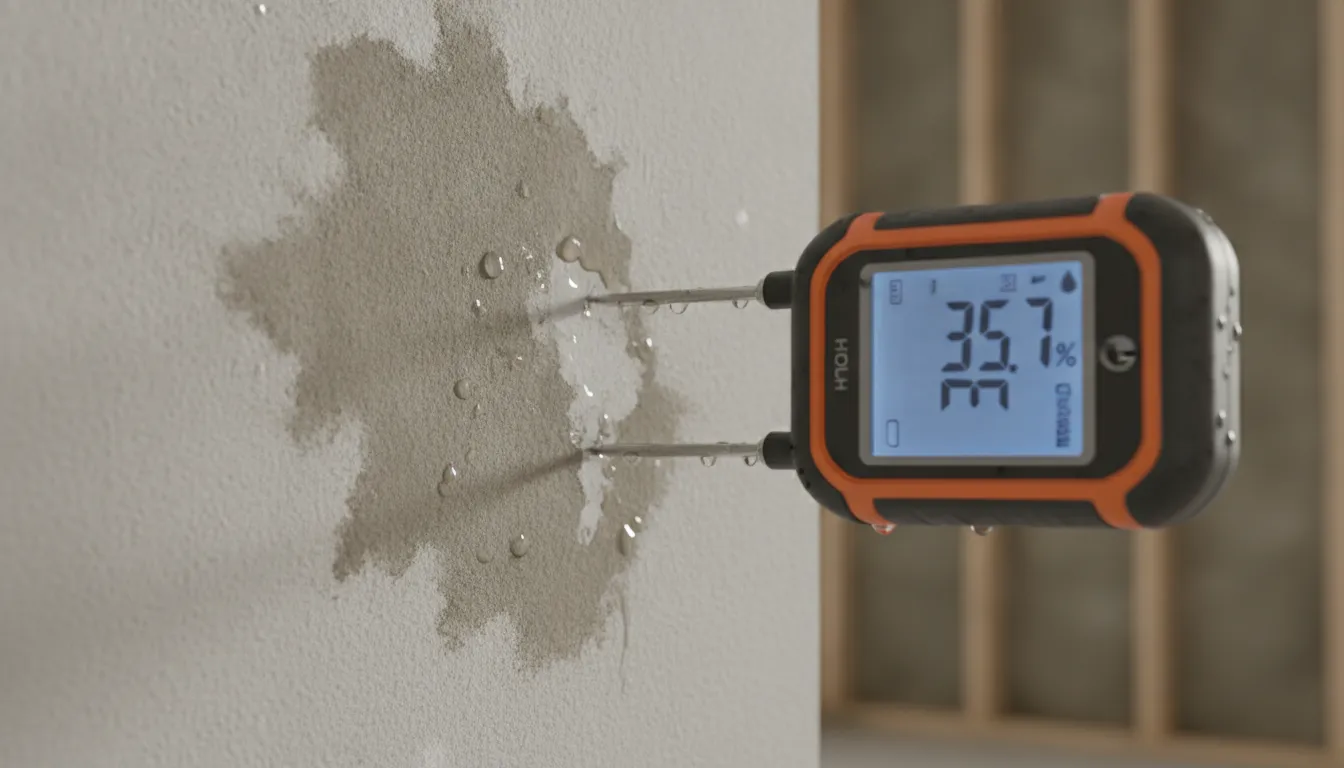
Professionals use digital moisture meters to detect hidden pockets of water behind walls.
Protecting Your Health and Safety During Water Damage Cleanup
Cleaning up after a water leak is not just about saving your furniture and drywall; it is primarily about protecting your family's health. Living or working in a water-damaged building can expose you to elevated levels of indoor mold and bacteria. These microscopic hazards can enter your body through inhalation or physical contact, causing significant health problems for NC families.
Health Risks of Indoor Mold Exposure
Exposure to indoor mold can cause a wide range of allergic and respiratory symptoms. In sensitive individuals, inhaling or touching mold spores can trigger allergic reactions such as sneezing, a runny or stuffy nose, red and watery eyes, and skin rashes. For individuals with pre-existing respiratory conditions like asthma, mold exposure can cause severe coughing, wheezing, and asthma attacks. Even in healthy individuals, long-term exposure can cause throat irritation and a persistent cough, making immediate water damage cleanup essential.
Mandatory Personal Protective Equipment
To keep yourself safe during the cleanup process, you must wear proper personal protective equipment (PPE). Never handle mold-damaged or water-soaked materials with bare hands or without facial protection. Put on a high-quality N95 respirator mask to protect your lungs from inhaling airborne spores. Wear safety goggles without vents to keep spores and cleaning chemicals out of your eyes. Finally, wear thick, long-sleeved rubber gloves and protective clothing to prevent skin contact with contaminated water and chemical solutions.
Establishing Containment Zones
If you are cleaning up a localized water-damaged area, you must prevent mold spores from spreading to unaffected rooms. Set up containment zones by sealing off doorways, vents, and passages with heavy plastic sheeting and tape. This keeps airborne spores from traveling through your home's ventilation systems and settling in dry rooms. Professional restorers also use negative air machines with HEPA filters to continuously scrub the air and prevent cross-contamination, ensuring that the cleanup process remains safe and localized.
By prioritizing education and transparent communication, Remtech Environmental helps NC families navigate the health and safety protocols of water mitigation. Our EPA-accredited and IICRC-certified specialists are trained to follow these strict containment and protection standards. Ensuring your home is restored to a safe, healthy environment without any shortcuts or high-pressure sales tactics.
Frequently Asked Questions
How likely is mold growth after a water leak?
Mold is not a guarantee after every water leak, but the risk is very high if you do not act. The EPA says that indoor mold spores only grow when they land on wet spots. If you control the moisture and dry all items within 48 hours, you can stop spores from growing. Getting help from a pro is the best way to ensure no water stays hidden.
What humidity level prevents mold from growing?
You should keep your home humidity level between 30% and 50% to stay safe. The EPA says that keeping humidity low is a great way to prevent mold from moving in. You can check these levels with a tool called a hygrometer. If your home stays too damp, use a fan or a dehumidifier to pull moist air out of the building. This simple step helps to protect your NC property.
Does home insurance cover mold after a leak?
Many home insurance plans cover mold help if it comes from a fast water leak like a burst pipe. However, they might not pay if the mold grew because of a delay in cleaning. To help your claim, the CDC says to take photos of all wet items and standing water. Contact your agent right away to check your plan and start the work.
Should I throw away wet drywall to prevent mold?
Yes, you must usually replace drywall if it stays wet for more than two days. Drywall is a soft material that serves as a main food source for mold spores. Once water gets into the wall, it is very hard to dry it fast enough to stop mold. Pros often suggest cutting out the bad parts to make sure no mold stays trapped behind your walls where it can spread.
Ready to Protect Your NC Home? Request Your Free Consultation
Water damage is a time-sensitive emergency, and delaying action for even a few hours can lead to serious indoor mold issues. Do not rely on luck or household fans to safeguard your property. The team at Remtech Environmental has over 25 years of NC experience, holding elite EPA accreditations and IICRC certifications to dry your home safely and correctly.
We believe in education-first, transparent service, providing you with clear science and honest recommendations without any scare tactics or high-pressure sales pitches. If you have experienced a water leak or suspect hidden moisture in your property, act now before mold has the chance to colonize.
Contact our local specialists today to secure your property. Request a Free Consultation and let our certified experts dry your home the right way.