
What to Know About Asbestos Popcorn Ceiling Removal
Published by Remtech Environmental Team · Last updated April 2025
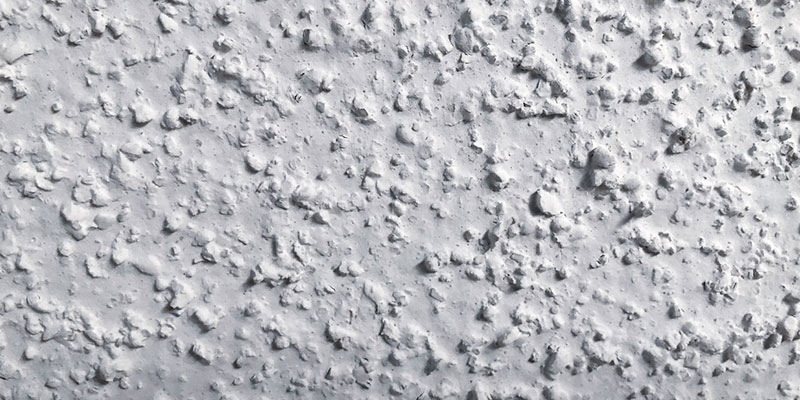
Popcorn ceilings have about zero fans. This type of texturized ceiling was featured prominently in millions of homes between the 1950s and ‘80s, but homeowners seem to have no love for them today, as they’re seen as outdated. Additionally, popcorn ceilings can be more than just an aesthetic problem.
Popcorn ceilings that were applied prior to the 1990s likely contain asbestos, a harmful mineral that was used because of its fire-resistant abilities. Even though asbestos stopped being used in new construction in the U.S. once its detrimental effects on human health became clear, there is a chance your popcorn ceilings contain asbestos if your home was constructed before 1985. In that case, you’ll need asbestos popcorn ceiling removal.
Asbestos popcorn ceiling removal is important, but you might not know what to expect from it. Here’s what you need to know about it:
Contact us today if you need asbestos popcorn ceiling removal.
- It isn’t always necessary. If your popcorn ceilings are in good condition and remain undisturbed, it may actually be safer to just leave them as-is instead of getting asbestos popcorn ceiling removal. If there isn’t any damage to your ceiling, you might not have to take any action at all.
- You should always hire a professional. The EPA does not prohibit DIY asbestos removal in residential settings, but you still should not attempt it. It is unsafe to handle the job yourself, but accredited technicians like those on our team at Remtech Environmental can remove the asbestos in the proper manner.
- It may take a while. The amount of time it takes to remove asbestos from a popcorn ceiling varies from project to project. It may take several days or even weeks, and you don’t want to be present in the home while it is ongoing.
Popcorn ceilings, also called acoustic or stipple ceilings, were sprayed across millions of American homes between roughly 1960 and 1985, and many of them remain intact in North Carolina housing stock today. The texture was inexpensive, hid drywall imperfections, and absorbed sound, which made it a default builder choice for the postwar housing boom. Unfortunately, many of those mixes contained chrysotile asbestos for fire resistance and binding, which is why disturbing an old popcorn ceiling without testing is one of the most common ways homeowners accidentally release regulated asbestos fibers into their living space. Federal rules under the Clean Air Act began phasing asbestos out of new spray-applied coatings in 1973, but inventory continued to be applied for years afterward, which is why 1985 is the practical caution year for residential properties. If your home falls in that window, this guide explains how the texture became so common, why removal is so consequential, and how a professional abatement project actually works in North Carolina.
What Every Homeowner Should Know Before Touching a Popcorn Ceiling
Popcorn ceiling abatement is not a weekend renovation. It is a regulated environmental project that combines federal NESHAP rules, state-level NC DHHS oversight, and IICRC restoration practices. Before you scrape a single square foot, understand the following five realities of the work.
The 1960 to 1985 High-Risk Window
Spray-applied acoustic ceiling textures became widely available in the late 1950s and exploded in popularity through the 1960s and 1970s as builders looked for fast, inexpensive finishes. The Clean Air Act NESHAP amendments of 1973 prohibited new spray applications of materials containing more than one percent asbestos for fireproofing and insulation purposes, and additional EPA actions through 1978 narrowed the allowed uses. However, contractors were permitted to use existing inventories, which is why textures applied as late as the mid-1980s can still test positive. As a practical matter, the safest assumption is that any popcorn ceiling installed before 1985 may contain asbestos, and the only way to know for certain is to have a sample collected by an AHERA-accredited inspector and analyzed at an NVLAP lab. Visual inspection alone cannot rule asbestos in or out.
Why Popcorn Was Used in the First Place
The appeal of popcorn texture was almost entirely economic. A spray-applied stipple coat could finish a ceiling in a single pass, eliminating the multi-step taping, mudding, sanding, and skim-coating that a smooth ceiling requires. It also hid framing imperfections and lighting shadows, which helped production builders meet aggressive construction schedules. Beyond cost, the texture provided a measurable acoustic benefit by scattering sound waves and reducing room reverberation, which is why the technique was favored in apartments, hotels, schools, and large open-plan spaces. Asbestos fibers added fire resistance, dimensional stability, and binding strength to the cement-based slurry, which is why manufacturers reached for them until regulations and litigation forced reformulation. Modern popcorn ceilings, when they are still installed, use polystyrene beads or vermiculite without asbestos, but the legacy product is what most homeowners encounter.
Abatement Versus Encapsulation: Choosing the Right Strategy
If your popcorn ceiling tests positive for asbestos, you have two principal options: abatement, which physically removes the material, or encapsulation, which seals it in place with a specialized coating. Abatement is the right choice when ceilings are damaged, when you intend to renovate the structure, or when you want to permanently eliminate future risk. Encapsulation is appropriate when material is intact, undamaged, and not scheduled for disturbance, and it costs significantly less. A third option, enclosure, involves installing new drywall over the existing texture and is sometimes used in finished basements or remodels where ceiling height permits. The right strategy depends on your timeline, budget, and renovation plans, and a licensed abatement contractor can model each option in writing so you can make an informed decision rather than reacting to pressure.
What a Professional Abatement Project Actually Looks Like
When abatement is the plan, the work happens under negative-pressure containment to prevent any fiber migration. Crews seal HVAC vents, isolate the work area with critical barriers and decontamination chambers built from six-mil poly, and run HEPA-filtered air machines that exchange room volume several times per hour. Technicians wet the texture with amended water, scrape it into double-bagged disposal containers, and HEPA-vacuum the substrate before final wet-wiping. A NC-licensed Supervisor oversees the crew, and an independent third-party industrial hygienist typically performs final clearance air sampling analyzed by phase-contrast microscopy or transmission electron microscopy before containment is taken down. Disposal goes to a permitted asbestos waste landfill with shipping manifests retained for your records. The project produces a paper trail you will keep with the home permanently.
Refinishing the Ceiling After Abatement
Once the asbestos is gone, you have a clean drywall substrate ready for refinishing. Most homeowners choose a smooth Level 5 finish, which involves a thin skim coat of joint compound across the entire ceiling, followed by sanding, priming, and painting. Knockdown texture, orange peel, or light skip-trowel finishes are common alternatives that hide minor substrate imperfections without restoring the dated popcorn look. Plan for the ceiling work to add a few additional days to the project after the abatement clearance, and expect to coordinate with painters, electricians for any new lighting, and HVAC technicians if registers will be relocated. The refinished ceiling typically increases home value, brightens rooms by reflecting more light, and removes a documented liability that future buyers will otherwise question during the disclosure process.
North Carolina Compliance Rules Every Homeowner Should Understand
Asbestos abatement in North Carolina is regulated jointly by the EPA under the Asbestos NESHAP program and by the NC Department of Health and Human Services Health Hazards Control Unit, which administers the state accreditation and notification program. Before regulated asbestos-containing material is disturbed, the abatement contractor must file a written ten working day notification with NC DHHS that identifies the property, scope, start and end dates, disposal facility, and the accreditation numbers of every Supervisor and Worker on site. The notification fee is paid to the state, and start-date changes require amended filings. All workers must hold current NC accreditation as Asbestos Workers, and at least one accredited Supervisor must be present whenever regulated work occurs. Containment must meet NESHAP design standards, including critical barriers, decontamination chambers with shower facilities for projects above defined thresholds, and HEPA-filtered negative-pressure ventilation. Waste must be wetted, double-bagged in labeled six-mil poly, manifested under EPA hazardous waste tracking rules, and transported to a permitted asbestos disposal facility. Final clearance is established by visual inspection and aggressive air sampling, with results below 0.01 fibers per cubic centimeter. Homeowners cannot legally hire an unlicensed contractor or perform abatement themselves on regulated material where the work would otherwise require accreditation, and violations carry significant civil penalties. Confirming compliance is straightforward: ask your contractor for NC accreditation numbers, the project notification confirmation, and the disposal manifest at close.
Planning Your Popcorn Ceiling Project the Right Way
Start by testing before you scrape. Hire an AHERA-accredited inspector to collect at least three bulk samples of the ceiling texture from different rooms, because results can vary across application batches even within the same home. While you wait for lab results, document the rooms with photographs, measure square footage, and gather any original construction records. If results come back negative, proceed with conventional ceiling removal, though wetting and HEPA vacuuming are still good practice for nuisance dust. If results come back positive, request written abatement proposals from at least two licensed contractors and compare them on scope, containment design, clearance protocol, third-party hygienist arrangements, disposal facility, and warranty. Confirm that the contractor will file the NC DHHS notification in their own name, that they carry contractor pollution liability and workers compensation insurance, and that your closeout package includes the ten-day notification, daily logs, final clearance report, and disposal manifest. Plan the project for a window when the rooms can be vacated, and arrange alternate sleeping space if bedrooms are involved. Coordinate with painters and any electrical or HVAC trades for the post-abatement refinishing phase so the project flows smoothly from clearance to final finish without idle days. A well-planned popcorn ceiling abatement is predictable, well-documented, and finished in days rather than weeks.
Related Reading and Services From Remtech
Popcorn ceiling abatement usually overlaps with broader environmental and restoration questions that homeowners want to address all at once. Our companion guides on what to expect from an asbestos inspection and on what to expect from a restoration contractor walk through the inspection, abatement, and reconstruction phases in greater detail. For service-specific information, visit our asbestos abatement, asbestos testing, and popcorn ceiling removal pages. Local clients can also explore our service-area pages for Raleigh, Durham, Cary, Chapel Hill, Greensboro, and Winston-Salem to see local response details. When you are ready to plan a project, request a free quote and a Remtech project manager will follow up promptly.
Key Takeaways
- Any popcorn ceiling installed between 1960 and 1985 should be tested before disturbance, because federal phase-outs allowed legacy inventory to be applied well past the original 1973 NESHAP rule.
- Popcorn texture was used because it was cheap, fast, sound-absorbing, and forgiving of substrate imperfections, with asbestos added for fire resistance and binding strength.
- Abatement, encapsulation, and enclosure are the three legitimate strategies for handling asbestos popcorn ceilings, and the right choice depends on condition, renovation plans, and budget.
- Professional abatement uses negative-pressure containment, NC-accredited Supervisors and Workers, third-party clearance air sampling, and manifested disposal to a permitted facility.
- North Carolina requires a ten working day NC DHHS notification, accredited personnel, and full NESHAP compliance for any regulated abatement project, and homeowners should retain every document at project close.
Need Help with Environmental Services?
If you have concerns about mold, asbestos, or water damage in your property, contact Remtech Environmental today for a free consultation.
Get a Free Quote