
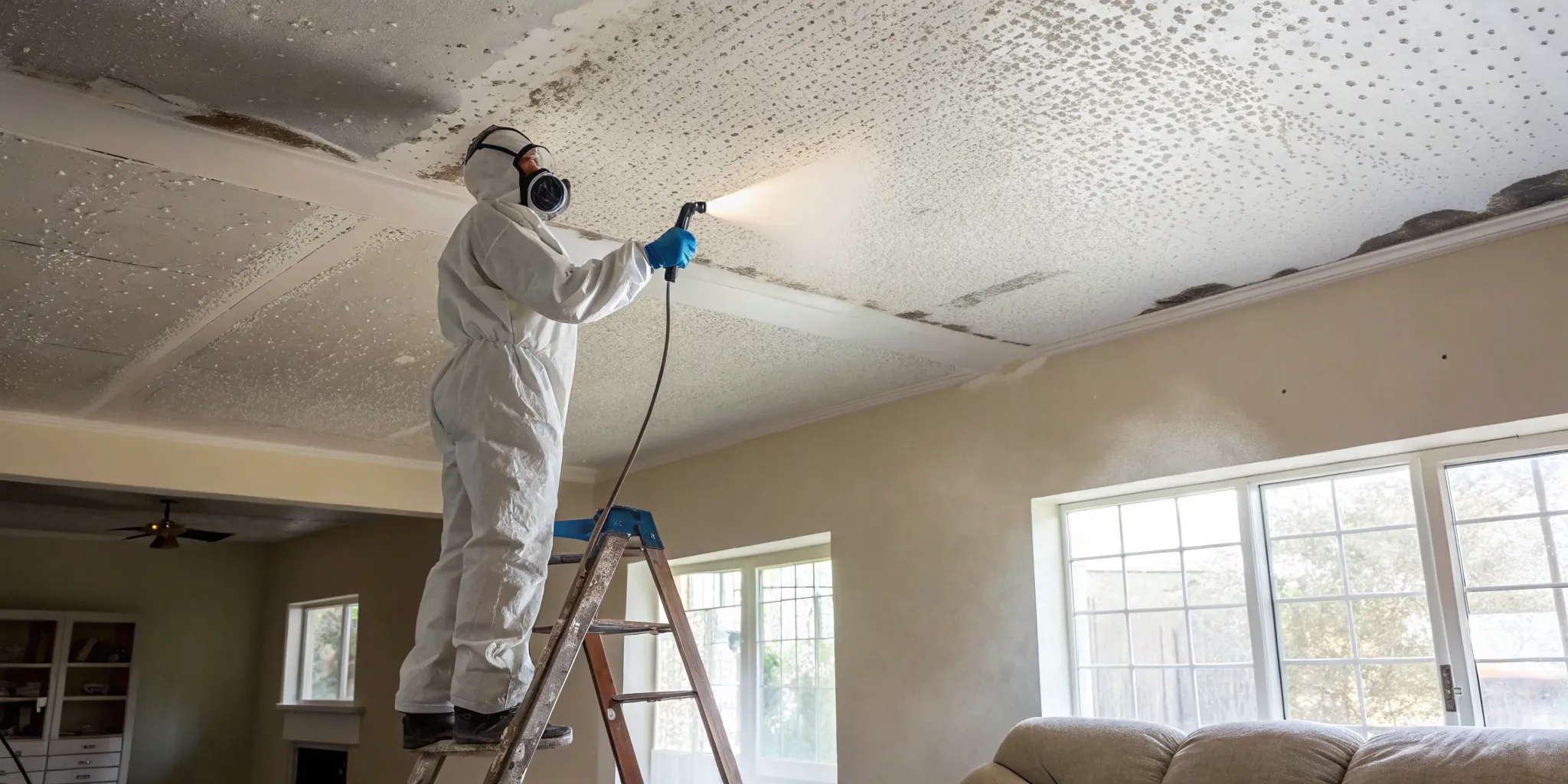
That bumpy, textured ceiling in your living room might feel like a harmless relic from another decade, but if your home was built before the mid-1980s, it could be hiding a serious health hazard. Asbestos, a material once praised for its durability and fire resistance, was a common ingredient in popcorn ceiling texture. The problem is, you can't see, smell, or taste its microscopic fibers. When this material is disturbed, those fibers can become airborne, leading to severe health issues years down the line. This guide will walk you through everything you need to know, from identifying the risk to understanding your options for safe and effective popcorn ceiling asbestos removal.
Key Takeaways
- Confirm Asbestos with a Test: Since asbestos is invisible, professional testing is the only way to know if your popcorn ceiling contains it. This is a crucial first step for any home built before the mid-1980s, especially before you plan any repairs or renovations.
- Choose Your Approach Wisely: After a positive test, you have three main options: professional removal for guaranteed safety, encapsulation to seal a stable ceiling, or a high-risk DIY removal. Your choice should depend on the ceiling's condition, your budget, and your ability to follow strict safety rules.
- Understand the Risks and Rules: Handling asbestos is a hazardous project with serious health risks and legal requirements in North Carolina. Improper work can contaminate your home, so following precise protocols for containment, protective gear, and disposal is non-negotiable.
What Is Asbestos in Popcorn Ceilings?
If you’ve ever looked up in an older home and seen a bumpy, textured surface, you’ve probably seen a popcorn ceiling. This style was a go-to for builders for several decades, but it often came with a hidden ingredient: asbestos. Asbestos is a natural mineral made of microscopic fibers. When these fibers are disturbed and become airborne, they can be inhaled and lead to serious health issues down the road.
Because the fibers are so tiny, you can't see, smell, or taste them. This is why asbestos is often called a hidden danger. If your popcorn ceiling is in perfect condition, the risk is lower. But if it’s crumbling, flaking, or disturbed during a renovation, it can release those dangerous fibers into your home's air. Understanding whether your ceiling contains this material is the first step toward creating a safer environment for your family. Since you can't identify asbestos just by looking at it, the only way to be certain is through testing. If you suspect you have asbestos, it's always best to get professional asbestos testing and abatement to handle the situation safely and give you peace of mind.
Why Was Asbestos Used in Popcorn Ceilings?
It might seem strange to add a known carcinogen to a ceiling, but for a long time, asbestos was considered a wonder material. Builders used asbestos in popcorn ceilings primarily because it was an excellent fire-retardant. It was also strong, durable, and provided some soundproofing. From a construction standpoint, spray-on popcorn texture was a cheap and easy way to hide imperfections in the ceiling’s drywall or plaster. Mixing asbestos fibers into the texture simply made the product better from a functional perspective at the time. You can find more information on common hazardous materials in our resource library.
When Did They Stop Using Asbestos in Ceilings?
Asbestos was a common ingredient in popcorn ceilings from the 1950s until the late 1970s. The U.S. Environmental Protection Agency (EPA) banned spray-applied asbestos products in 1978 under the Clean Air Act. However, the ban didn't require companies to throw away their existing inventory. This means that builders continued to use their remaining stock of asbestos-containing materials into the early 1980s. So, if your home was built or renovated before the mid-1980s, there's a chance your popcorn ceiling contains asbestos. This is a common issue in many homes across our North Carolina service areas.
What If the Ceiling Is Painted?
Many homeowners paint over their popcorn ceilings to give them a fresh look. A layer or two of paint can actually help by sealing the asbestos-containing material, which makes it less likely to release fibers as long as the surface remains undisturbed. However, paint also complicates things if you decide you want the ceiling removed. The paint creates a barrier that makes it much harder to wet the texture, which is a key step in safe removal. Scraping a painted popcorn ceiling is more difficult and can create more dust if not done correctly, increasing the risk of fiber release. If your ceiling is painted, it's a good idea to contact a professional for an assessment.
Why Asbestos in Popcorn Ceilings Is a Health Risk
An undisturbed popcorn ceiling that contains asbestos might not seem like a big deal, but the material becomes a serious health hazard the moment its fibers are released into the air. These microscopic fibers, when inhaled, can lead to severe and often fatal diseases that may not appear for decades. Understanding these risks is the first step in deciding how to handle a popcorn ceiling in your home or business. The primary health concerns are asbestosis, lung cancer, and mesothelioma, each stemming from the body's inability to break down the sharp, durable fibers once they are lodged in the lungs.
Asbestosis
The danger with asbestos lies in its microscopic fibers. They are so tiny you can't see, taste, or smell them. When a popcorn ceiling containing asbestos is disturbed, these fibers can fill the air. If you breathe them in, they can become permanently trapped in your lung tissue. Your body's natural defenses can't break them down, leading to inflammation and scarring over time. This condition is known as asbestosis, a serious, chronic lung disease that causes shortness of breath and a dry cough. As the scarring progresses, it makes breathing increasingly difficult. There is no cure for asbestosis, and the focus of medical care is on slowing the disease and easing symptoms.
Lung Cancer and Mesothelioma
Beyond scarring the lungs, asbestos exposure is a known cause of cancer. The risk of developing lung cancer is significantly higher for individuals who have been exposed to asbestos, and this risk is even greater for those who also smoke. Even more specific to this material is mesothelioma, a rare but very aggressive cancer that attacks the thin lining of the lungs, chest, and abdomen. Unlike other cancers with multiple causes, mesothelioma is almost exclusively linked to asbestos exposure. Both of these cancers are incredibly serious, and their development is a primary reason why asbestos abatement is regulated so strictly. It's a preventative measure to protect your long-term health.
Why Symptoms Can Take Years to Appear
One of the most unsettling facts about asbestos-related diseases is their long latency period. This means that symptoms may not appear for 10 to 40 years or even longer after you were first exposed to the fibers. A person can breathe in asbestos during a home renovation project and feel perfectly fine for decades. Later in life, they might develop symptoms like a persistent cough, shortness of breath, chest pain, or unexplained weight loss. Because these symptoms are common to many other conditions, a correct diagnosis often depends on the patient remembering and reporting their past exposure. This long delay makes it critical to treat any potential exposure with caution today.
When Is Asbestos in Popcorn Ceilings Dangerous?
Asbestos is hazardous when its fibers become airborne. An intact, well-maintained popcorn ceiling that is painted over and left completely alone poses a minimal risk. The danger arises when the ceiling material is disturbed, damaged, or starts to degrade. Activities like scraping, drilling, sanding, or cutting into the ceiling can release a high concentration of fibers into the air. Even something as simple as a water leak that damages the ceiling can cause it to crumble and release fibers. Because popcorn ceiling texture is often "friable," meaning it can be easily crumbled by hand, it doesn't take much to create a hazard. If your ceiling is peeling, cracking, or you're planning a renovation, it's time to contact a professional.
How to Know If Your Popcorn Ceiling Has Asbestos
Figuring out if your popcorn ceiling contains asbestos isn't something you can do with a quick glance. While certain clues can point to a higher likelihood, the truth is that asbestos fibers are microscopic and completely invisible to the naked eye. You simply cannot tell if a material contains asbestos just by looking at it. The only way to know for sure is to have a sample of the ceiling material tested by a certified laboratory.
The age of your home is the biggest indicator. If it was built or renovated before the 1980s, there's a reasonable chance asbestos is present. You have two main paths for testing: using a do-it-yourself (DIY) kit or hiring a professional. While a DIY kit might seem like a simple solution, it comes with the risk of improper sampling and accidental fiber release. For true peace of mind and guaranteed safety, professional asbestos testing is the most reliable way to get a definitive answer and protect your family's health.
Look for These Visual Clues
The most significant clue for potential asbestos is the age of your house. Asbestos was a popular additive in textured ceiling materials from the 1950s through the early 1980s because of its fire-resistant and insulating properties. If your home was constructed during this period, the probability that your popcorn ceiling contains asbestos increases. The visual texture itself, whether it looks like small styrofoam-like balls or has a cottage cheese appearance, isn't an indicator. The key factor is the construction date, not the style. Remember, these are just clues, not a diagnosis. The only way to confirm the presence of asbestos is through proper testing.
How DIY Asbestos Testing Kits Work
You can find DIY asbestos testing kits at hardware stores or online. The process typically involves you collecting a small sample of the ceiling material yourself and mailing it to a laboratory for analysis. These kits require you to follow safety protocols very carefully, such as wearing a respirator and gloves and wetting the area to minimize dust. While these kits can seem convenient, they carry a significant risk. If you don't collect the sample correctly, you could release harmful asbestos fibers into the air, contaminating your home. You also run the risk of collecting an unviable sample, leading to inconclusive results from the lab.
What to Expect from Professional Asbestos Testing
When you hire a professional, you eliminate the guesswork and the risk. A certified inspector will visit your home and follow strict safety procedures to collect samples. They know exactly where and how to take a sample without disturbing the surrounding material or releasing dangerous fibers. The samples are then sent to an accredited laboratory for analysis. Afterward, you’ll receive a formal report detailing the findings, including the type and percentage of asbestos present. This professional assessment gives you a clear, accurate answer, allowing you to make an informed decision with confidence. If you're ready for that certainty, you can contact us to schedule a test.
Common Myths About Identifying Asbestos
The most common myth is that you can identify asbestos just by looking at it. This is completely false. Asbestos fibers are microscopic and can only be identified with specialized lab equipment. Another misconception is that a layer of paint over a popcorn ceiling makes it safe. While paint can help contain the fibers, it doesn't eliminate the danger. If the ceiling is ever scraped, drilled, or damaged, the asbestos can still be released. Finally, not all popcorn ceilings contain asbestos. Many homes built after the mid-1980s have similar textures but were made with paper or styrofoam, so don't assume the worst without confirmation. Testing is always the only way to know for sure.
3 Ways to Handle a Popcorn Ceiling with Asbestos
Once you’ve confirmed your popcorn ceiling contains asbestos, you have a few paths forward. Your decision will likely come down to your budget, your comfort level with the project, and the condition of your ceiling. There are three main ways to approach the situation: professional removal, DIY removal, or encapsulation. Each has its own set of pros and cons, so let’s walk through what each option involves so you can make the best choice for your home and family.
Option 1: Hire a Professional for Abatement
Hiring a certified team for asbestos abatement is the safest and most effective way to handle a contaminated popcorn ceiling. Professionals have the training, specialized equipment, and experience to remove the material according to strict safety regulations. This process involves sealing off the work area, using air filtration systems to capture loose fibers, and safely disposing of all hazardous waste. While it’s the most expensive option, typically costing between $1,500 and $3,000 for a single room, it gives you complete peace of mind. You won’t have to worry about accidental exposure or improper disposal, and the job will be done thoroughly and correctly.
Option 2: Remove It Yourself (DIY)
Tackling asbestos removal yourself is the cheapest option, but it comes with significant health risks. If not done perfectly, you can release dangerous asbestos fibers into the air, contaminating your home and putting your family’s health in jeopardy. If you decide to go this route, you must use extreme caution. This means investing in proper personal protective equipment (PPE), including a high-quality respirator, disposable coveralls, gloves, and goggles. You’ll also need to completely seal the room with plastic sheeting and create a decontamination zone. While the material costs are low, the risk of long-term health consequences from a mistake is incredibly high.
Option 3: Encapsulate or Seal It
Encapsulation is a great alternative if the ceiling is in good condition and you want to avoid the disruption of a full removal. This method involves covering the popcorn texture with a special, paint-like sealant. The encapsulant binds the asbestos-containing material, trapping the fibers and preventing them from becoming airborne. You can also cover the ceiling with a new layer of drywall. This approach is less messy, faster, and more affordable than removal. However, it’s important to remember that the asbestos is still there. Encapsulation is not a permanent solution if you plan on future renovations that might disturb the ceiling.
How to Choose the Right Option for You
Your top priority should always be safety. If your popcorn ceiling is crumbling, flaking, or damaged, the asbestos fibers are likely already being released, and removal is your safest bet. For ceilings in good condition, encapsulation can be a practical choice. While DIY removal is technically an option, the risks are substantial. Consider your own skills, time, and willingness to follow strict safety protocols. If you have any doubts, it’s always best to get a professional opinion. An expert can assess your specific situation and help you understand the safest path forward. If you're unsure, the best first step is to contact a professional for an assessment.
How to Safely Remove a Popcorn Ceiling Yourself
If you’ve confirmed your popcorn ceiling contains asbestos and have decided to handle the removal yourself, it’s crucial to proceed with extreme caution. This is not a typical weekend home improvement project; it involves hazardous materials that can have serious health consequences if handled improperly. While we always recommend hiring a certified professional for asbestos abatement, we understand some homeowners may choose the DIY route. If you are committed to doing it yourself, following a strict safety protocol is non-negotiable to protect yourself and your family.
Before you even think about scraping, you must prepare the room to contain the asbestos fibers. Turn off your HVAC system and seal all vents, doors, and windows with plastic sheeting and tape. Remove all furniture from the room. Anything that can’t be removed should be covered with at least two layers of thick plastic sheeting. Cover the entire floor with plastic as well, extending it up the walls about a foot to create a basin-like area. This containment is your first and most important line of defense against contaminating the rest of your home with invisible, airborne fibers.
Gather Your Safety Gear and Equipment
Your personal safety is the top priority. Do not attempt this work without the right personal protective equipment (PPE). A simple dust mask is not enough. You will need a HEPA-filter mask or a P100-rated respirator to protect your lungs from inhaling microscopic asbestos fibers. You should also wear disposable coveralls with a hood, safety goggles to protect your eyes, and boot covers. All of your PPE should be discarded after the project is complete; don’t try to clean and reuse it. This gear is your personal barrier against exposure, so make sure everything fits properly and is worn correctly throughout the entire removal process.
Follow This Step-by-Step DIY Removal Process
Once your containment and safety gear are in place, you can begin the removal. The key is to keep the ceiling material wet at all times to prevent asbestos fibers from becoming airborne. In a garden sprayer, mix warm water with a small amount of dish soap. Working in small, 4x4-foot sections, thoroughly spray the ceiling and let the water soak in for 15 to 20 minutes. If your ceiling is painted, it will be harder for the water to penetrate, so you may need to spray it multiple times. Once softened, use a 6-inch drywall knife held at a low angle to gently scrape the texture off. Scrape carefully to avoid gouging the drywall underneath.
How to Properly Dispose of Asbestos Waste
Proper disposal is just as important as safe removal. You cannot simply throw asbestos-containing materials in your regular trash. All debris, including the scraped texture, plastic sheeting, and your disposable PPE, must be double-bagged in thick, 6-mil asbestos disposal bags. Seal each bag tightly with duct tape and label it clearly as asbestos waste. You must then transport it to a designated hazardous waste facility. Be sure to check the specific asbestos regulations in North Carolina and contact your local waste management authority for instructions on where and how to legally dispose of the material. Keep records of the disposal for your own files.
How to Encapsulate a Popcorn Ceiling
If the thought of scraping your entire ceiling feels overwhelming, you have another option: encapsulation. Instead of removing the asbestos-containing material, you can seal it in place, preventing harmful fibers from becoming airborne. This approach is often faster, less messy, and more budget-friendly than a full removal.
However, encapsulation isn't a one-size-fits-all solution. It works best when the ceiling is in good shape and you don't have plans for any major renovations that would disturb it. Think of it as putting a protective barrier between your living space and the asbestos.
How Encapsulating Paint Works
Encapsulation uses a special sealant, often a thick, paint-like substance, that is applied directly over the popcorn texture. This coating creates a durable, seamless membrane that traps the asbestos fibers, effectively locking them in place. The goal is to prevent the material from flaking, crumbling, or releasing dust into the air.
Unlike standard house paint, an encapsulant is specifically designed to bond with and seal textured, porous surfaces. Once cured, it forms a tough, long-lasting barrier. While it’s a great way to manage asbestos in place, it’s still important to understand that the asbestos is still there. If you need a permanent solution, you may want to consider professional asbestos abatement.
Follow This Step-by-Step Encapsulation Process
If you decide to encapsulate the ceiling yourself, preparation is key to doing it safely. First, clear the room of all furniture and cover the floors and walls with plastic sheeting. Be sure to turn off your HVAC system to prevent any stray fibers from circulating through your home.
Next, apply the encapsulating paint with a roller or sprayer, following the manufacturer’s instructions carefully. Make sure you apply an even, consistent layer to cover the entire surface. You’ll likely need at least two coats to ensure a complete seal, so let the first coat dry completely before applying the second. After the final coat is dry, inspect your work for any thin spots or missed patches and touch them up.
When to Choose Encapsulation (and When Not To)
Encapsulation is an excellent choice if your popcorn ceiling is in stable condition, without any significant peeling, cracking, or water damage. It’s a practical way to make the ceiling safe without the disruption of a full removal, especially if you don't plan on drilling into it for new light fixtures or other projects.
On the other hand, if your ceiling is already crumbling or showing signs of damage, encapsulation won't solve the problem. The sealant needs a solid surface to adhere to. Likewise, if you’re planning a major remodel that involves removing walls or altering the ceiling, it’s better to have the asbestos removed completely. If you're unsure which path is right for your home, it's always a good idea to get in touch with an expert for a professional assessment.
What Does Popcorn Ceiling Asbestos Removal Cost?
Understanding the costs associated with asbestos popcorn ceilings is a huge part of making a confident decision for your home. The final price tag depends on which path you take: hiring a professional, doing it yourself, or sealing it away. Each option has a different budget and level of effort. Let's break down what you can expect to spend on each approach so you can figure out what works best for your situation and your wallet.
Cost of Professional Removal
Hiring a licensed contractor is the safest and most thorough way to handle asbestos. Professional removal typically costs between $5 and $20 per square foot. For a standard-sized room, this can translate to a total cost of around $1,500 to $3,000. While this is the most expensive option, the price includes the expertise, specialized equipment, and peace of mind that comes with knowing the job is done correctly and safely. A professional team handles containment, removal, and proper disposal, ensuring your family isn't exposed to dangerous fibers. This is the required route in many situations, especially for extensive or damaged asbestos materials.
Cost of DIY Removal
If you decide to tackle the project yourself, your primary expenses will be for tools and safety gear. You can expect to spend about $100 to $300 per room on materials. This includes a high-quality respirator, disposable coveralls, gloves, goggles, scrapers, and plastic sheeting to seal off the area. This price does not account for your time or the strict labor involved. You must keep the ceiling wet while you work to minimize dust and follow very specific rules for bagging and disposing of the hazardous waste. This path requires careful research and a commitment to following every safety step without fail.
Cost of Encapsulation
Encapsulation is a less invasive and more affordable alternative to removal. This process involves applying a special sealant or paint directly over the popcorn ceiling, which traps the asbestos fibers and prevents them from becoming airborne. It’s a great option if your ceiling is in good condition with no crumbling or damage. The cost is much lower than removal because it involves less labor and no hazardous waste disposal. While it doesn't get rid of the asbestos, it effectively contains it. This makes it a practical choice for homeowners looking for a simpler, budget-friendly solution.
Factor in These Hidden Costs
No matter which method you choose, it’s important to be aware of potential hidden costs. If you’re doing a DIY removal, you’ll face disposal fees for hazardous waste, which can be surprisingly high. The condition of your ceiling also plays a role; if it has been painted over, the removal process becomes more difficult and may cost more in labor or supplies. Additionally, complying with all local safety and disposal rules can add unexpected expenses. Factoring these potential costs into your initial budget will help you avoid surprises and ensure your project stays on track. You can find more information in our resource library.
Is DIY Asbestos Removal Legal in North Carolina?
This is one of the most common questions we get, and the answer is a bit more complex than a simple yes or no. In North Carolina, state law does permit homeowners to remove asbestos from their own single-family, owner-occupied homes. However, just because you can do something doesn't always mean you should. The process is governed by strict regulations designed to protect you, your family, and the environment from dangerous asbestos fibers. These rules are in place for a very good reason: asbestos is a known carcinogen, and improper removal can release millions of invisible fibers into your home’s air.
Before you even think about grabbing a scraper and a ladder, it’s critical to understand the legal requirements you’re responsible for. These aren't just suggestions; they are rules that carry real consequences if ignored. This includes everything from how you handle the material to how you notify state agencies and dispose of the waste. Failing to follow these protocols can not only expose you to serious health risks but could also create legal and financial headaches down the road, especially when it comes time to sell your home. Let's walk through exactly what you need to know.
North Carolina's Asbestos Removal Regulations
If you decide to proceed with a DIY removal, you are required to follow the same safety protocols as the pros. North Carolina’s regulations are not relaxed for homeowners. This means you must completely seal off the work area with plastic sheeting to create a containment zone, preventing asbestos fibers from spreading to other parts of your house. You’ll also need to wear specific personal protective equipment (PPE), including a respirator with HEPA filters, disposable coveralls, and gloves. The goal is to minimize your exposure and keep the microscopic, toxic fibers from becoming airborne, where they can be easily inhaled.
Know the Notification Requirements
This is a step you absolutely cannot skip. If you are removing more than 160 square feet of asbestos-containing material (about the size of a 12-by-13-foot room), you are legally required to notify the North Carolina Department of Environmental Quality (DEQ) at least 10 working days before you start. This formal notification ensures your project is on the state’s radar and that you are accountable for following proper procedures. You can typically find the necessary forms and instructions on the state’s website. Think of it as filing a flight plan; it’s a crucial step for a safe journey.
What to Know About Certificates and Disclosures
Once the asbestos is gone, your work isn't quite done. While you won't get an official "abatement certificate" like a licensed firm would provide, you must maintain meticulous records of your project. This includes photos, receipts for disposal, and a copy of your DEQ notification. When you sell your home, you are legally required to disclose that asbestos was present and removed. Having this documentation proves you handled the situation responsibly, which can give potential buyers peace of mind. Without it, you may face difficulties during the home inspection and closing process.
When You Must Hire a Professional
While the law allows for DIY removal in your own home, there are many situations where you must hire a professional. If the asbestos is in a commercial building, a rental property, or a multi-family residence, you are legally required to use a licensed contractor. Furthermore, if the material is friable (meaning it crumbles easily), the risk is significantly higher, and professional intervention is strongly recommended. If you feel overwhelmed by the safety requirements or simply want the assurance that the job is done right, calling a certified team is the smartest move. A professional asbestos abatement team handles every step, from containment to disposal, and provides you with the official documentation needed for a clean bill of health.
What Does Professional Asbestos Abatement Involve?
When you hire a professional for asbestos abatement, you're getting much more than just a scraped ceiling. It's a highly controlled process designed to remove the hazard without spreading dangerous fibers throughout your home. Certified technicians follow strict federal and state guidelines to ensure the safety of your family and property from start to finish. Here’s a look at what you can expect when a team of experts, like the ones at Remtech, handles your popcorn ceiling removal.
Step 1: Containment and Prep
First, the team will create a fully sealed containment zone. This involves covering floors and walls with thick plastic sheeting and using tape to seal off doorways, vents, and any other openings. They will also completely shut down your HVAC system to prevent any airborne fibers from circulating through your home. This step is critical because it isolates the work area, ensuring that the rest of your house remains free from asbestos contamination. Think of it as creating a protective bubble around the room before any removal work begins.
Step 2: Wet Removal and Safe Scraping
Professionals use a technique called "wet removal" to minimize dust. Before scraping, they carefully spray the popcorn ceiling with a water-based solution. This wets the material, weighing down the asbestos fibers and preventing them from becoming airborne when disturbed. After letting the solution soak in, technicians use specialized scrapers to gently remove the texture. This methodical approach is one of the most important safety measures in the entire process, as airborne asbestos is what poses a health risk. It requires patience and skill to ensure all the material is removed safely.
Step 3: Disposal and Final Cleanup
Once the asbestos material is removed, it can't just be thrown in the trash. Professionals carefully place all waste into thick, leak-proof disposal bags that are clearly labeled as containing asbestos. They handle all the paperwork and transport the material to a designated landfill that is licensed to accept hazardous waste. After the material is gone, the team performs a final, detailed cleanup of the containment area using HEPA vacuums and wet-wiping techniques to capture any remaining microscopic fibers. This ensures the room is safe to use again.
Questions to Ask Your Abatement Contractor
Before you hire anyone, it’s smart to ask a few key questions to make sure you’re working with a qualified and trustworthy company. A reputable contractor will be happy to provide clear answers.
Here’s what to ask:
- Are you licensed and insured for asbestos abatement in North Carolina?
- Can you provide references or show me customer testimonials?
- What specific steps will you take to contain the work area?
- How will you clean the area after the removal is complete?
- What is included in your quote, and what could cause the price to change?
- How do you handle the legal disposal of the asbestos waste?
When to Call a Professional Asbestos Abatement Company
Let's be honest, tackling a home renovation project yourself can be incredibly satisfying. But when it comes to popcorn ceilings in older homes, there's a major red flag you can't ignore: asbestos. If your home was built before the early 1980s, you have to assume asbestos could be present. Before you even think about scraping, the first step is always to get the material tested. This isn't just a suggestion; it's a critical safety measure for you and your family.
If that test comes back positive, it’s time to put down the tools and pick up the phone. In many situations, the law requires you to use a licensed contractor for removal. Even if it's not legally mandated for your specific project, handling asbestos is dangerous. Professionals have the training, specialized equipment, and containment procedures to remove it without sending hazardous fibers airborne throughout your home. This isn't the time for a weekend DIY project; the health of your family is on the line.
Think about the complexity. Is your ceiling painted over? That makes removal significantly more difficult and messy. Are you prepared to follow strict disposal regulations for hazardous waste? A certified team handles all of this for you. Hiring a professional asbestos abatement company ensures the job is done safely, correctly, and in compliance with all regulations. You get the peace of mind that your home is truly safe once the work is finished, which is something you can't put a price on.
Related Articles
- What to Know About Asbestos Popcorn Ceiling Removal
- Asbestos Popcorn Ceiling Removal, Asheville, NC
- Do You Need Asbestos Popcorn Ceiling Removal?
- Asbestos Popcorn Ceiling Removal, Greensboro, NC
- Asbestos Popcorn Ceiling Removal, Durham, NC
Frequently Asked Questions
My popcorn ceiling is painted. Does that mean it's safe? A coat of paint can help seal the asbestos-containing texture, which is a good thing. As long as the paint and the ceiling underneath remain in perfect condition, the risk of fibers being released is low. The problem is that paint doesn't make the asbestos disappear. If the ceiling gets scraped, damaged, or starts to degrade, those fibers can still get into the air. Paint also makes professional removal more difficult because it creates a barrier that prevents water from soaking into the texture.
What if my ceiling only has a small crack or water stain? Is it really that dangerous? Any damage to a popcorn ceiling with asbestos is a reason for concern. Asbestos is most dangerous when its fibers become airborne, and a crack or water damage can easily cause the texture to crumble and release those fibers. Even a small, seemingly minor issue can create an ongoing hazard in your home. It's not about the size of the damaged area, but the fact that the material is no longer stable and contained.
Is it cheaper to just cover the popcorn ceiling with new drywall? Covering the existing ceiling with a new layer of drywall is a popular form of encapsulation, and yes, it is often faster and more affordable than a full removal. This method effectively seals the asbestos away and gives you a new, smooth surface. It's a great option if your ceiling is in good structural shape. Just remember that the asbestos is still there, so you'll need to be careful during any future projects and disclose its presence if you sell your home.
How long does a professional asbestos removal project usually take? The timeline depends on the size and complexity of the job, but for a single, standard-sized room, you can typically expect the process to take one to three days. This includes setting up the full containment area, performing the wet removal, completing the detailed cleanup, and having the waste properly packaged for disposal. A reputable company will give you a clear timeline for your specific project before they begin any work.
If I have the asbestos professionally removed, is my home safe to live in right away? Yes, and that's one of the biggest benefits of hiring a certified team. A professional abatement project isn't finished until the area is completely safe. After all the material is removed and bagged, the team performs a meticulous cleanup using special HEPA vacuums and wet-wiping methods. Some companies will also conduct air quality testing inside the containment zone to verify that the air is clear before they take down the plastic barriers, giving you total confidence that your home is safe again.