
Do You Need Asbestos Popcorn Ceiling Removal?
Published by Remtech Environmental Team · Last updated April 2025
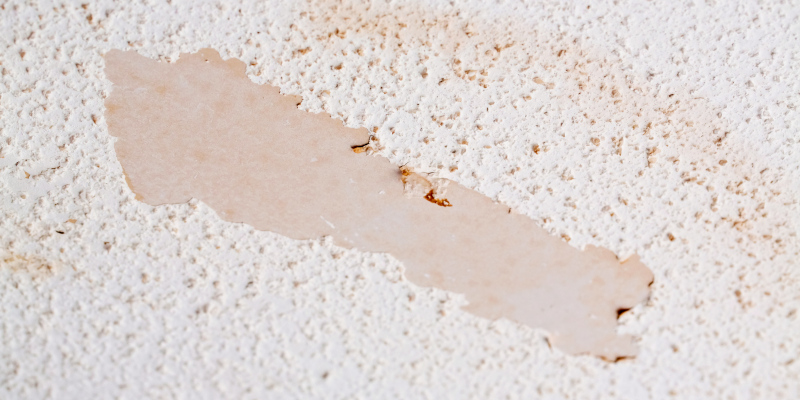
Our team at Remtech Environmental has the right accreditations to remove asbestos. In case you aren’t aware, asbestos is a mineral once prized for its useful qualities, such as fire resistance, but it has since been proven to pose serious health risks. Asbestos was used in all kinds of building materials for decades, but it has largely been phased out due to the medical risks it poses.
One common place to find asbestos is in old popcorn ceilings, which is why our team offers asbestos popcorn ceiling removal services. In this article, we will go over some key information to help you determine whether you require this service.
If you’re worried about the state of your popcorn ceiling, you can contact our team to have us assess its condition and give you our expert recommendation.
- Age of Your Ceiling – One way to determine if you need asbestos popcorn ceiling removal is to consider the age of the ceiling. As we mentioned above, asbestos use fell significantly by the mid-1980s (but not to zero), so your ceiling is less likely to contain this material if it was built after 1985. However, if your ceiling was built prior to that, then the risk of it containing asbestos is higher.
- Condition of Your Ceiling – Another thing to consider when deciding whether to use our asbestos popcorn ceiling removal services is the condition of your ceiling. Asbestos becomes dangerous when its fibers (which are microscopically thin) are disturbed, as this allows the fibers to be inhaled into the lungs, where they can do serious damage to the tissues. An intact, undamaged popcorn ceiling is usually safe, even if it does contain asbestos, but when the asbestos material is damaged, then it becomes a hazard. If you have a renovation planned that could disturb your popcorn ceiling, you need to be concerned and have it removed by an accredited, properly insured, and experienced asbestos professional.
Popcorn ceilings, technically known as acoustic textured or stippled ceilings, were one of the most common interior finishes in American residential construction for roughly twenty-five years. In North Carolina, that era covers the post-war expansion of Raleigh, Durham, Greensboro, and Winston-Salem and the build-out of countless ranches, split-levels, and rental duplexes still in service today. If your home was built between 1960 and 1985 and still has a textured ceiling, the question of whether it contains asbestos is not academic. Until 1978, asbestos was a routine ingredient in spray-on textured ceiling products because it added mechanical strength, fire resistance, and a workable spray pattern. The 1978 EPA ban was incomplete in practice. Existing inventory continued to be used until at least the mid-1980s. This article walks Triangle and Triad homeowners through the risk window for asbestos popcorn ceilings, the warning signs of damage that elevate immediate hazard, the renovation scenarios that force action, and the realistic tradeoffs between full abatement and certified encapsulation.
The 1960 to 1985 Risk Window and Why It Matters
Signs of Damage and the Renovations That Force a Decision
Intact, undisturbed popcorn ceiling in a quiet bedroom is, by federal and state guidance, generally considered low immediate hazard. Asbestos becomes dangerous when its fibers are released into breathable air, and a flat ceiling surface that no one touches typically does not release significant fibers under normal occupancy. The risk profile changes quickly when damage is present or when the ceiling is about to be disturbed. Look for the following indicators during a self-walkthrough. Water stains, ranging from faint yellow rings to active brown drips, mean the substrate above the texture has been wet, which softens the binder, breaks the matrix, and elevates friability. Sagging, peeling, or visibly detaching texture indicates that the joint compound or paint film bonding the popcorn to the gypsum has failed, and even minor air movement or vibration can release fibers. Cracking that radiates from corners, light fixtures, or HVAC registers reveals structural movement, which sets up future flaking and dust generation. Loose granules accumulating on top of dressers, picture frames, or floor registers underneath the ceiling are direct evidence of ongoing friability and active fiber release. Any of these conditions warrant professional inspection before further occupancy in the affected room, and absolutely before any renovation. Even more important than damage are the renovations that necessarily disturb the ceiling. Any of the following projects require pre-project asbestos sampling on a pre-1985 popcorn ceiling. Recessed lighting installation, which cuts holes through the texture. Ceiling fan installation in rooms that did not previously have one. HVAC replacement that requires new register cuts or duct rerouting. Bathroom or kitchen remodeling adjacent to or below textured ceilings, where dust migration is likely. Roof leak repair, where attic work and water intrusion may have already disturbed the assembly. Whole-house repainting projects that involve scraping or sanding ceilings. Whole-room scraping for cosmetic update, which is the highest-risk scenario short of demolition. None of these projects can be safely completed by a general contractor or homeowner working without containment and licensed abatement support if the texture tests positive for asbestos.
Cost, Encapsulation Tradeoffs, and What to Do Next
Once a popcorn ceiling tests positive for asbestos above the one-percent regulatory threshold, North Carolina homeowners face a decision between licensed removal and professional encapsulation. Each path has costs, regulatory implications, and long-term consequences worth understanding before signing any contract. Licensed abatement involves containment of the work area in six-mil polyethylene, HEPA-filtered negative air, wet-method scraping by workers in P100 respirators and Tyvek, manifested waste disposal at a permitted landfill, and post-abatement clearance air sampling. For a typical 200 to 400 square foot residential ceiling, licensed abatement in the Triangle and Triad runs roughly 4 to 12 dollars per square foot, with most single-room projects falling between 1,500 and 4,500 dollars and whole-house projects between 6,000 and 18,000 dollars depending on access, prep, and reconstruction. The benefit is that the asbestos is gone. There is no future disclosure issue, no future re-encapsulation requirement, and no risk of release during subsequent renovations. Professional encapsulation, performed by a licensed abatement contractor using a commercial bridging encapsulant rather than hardware-store paint, runs roughly 1.50 to 4 dollars per square foot. It is faster, less disruptive, and produces no regulated waste. The drawbacks are real. Encapsulation must be re-inspected periodically, typically every three to five years, to confirm the bridging coating remains intact. Any future disturbance still requires licensed abatement, so renovations are not simplified. Disclosure obligations follow the encapsulated material to every future owner. Lenders, inspectors, and buyers increasingly view encapsulation as deferred risk and price homes accordingly. Most North Carolina homeowners planning to renovate, sell within ten years, or eliminate the worry permanently choose abatement. Encapsulation makes sense for short-term holds, rental properties with limited renovation plans, or budget-constrained owners who need an interim measure while planning a future remodel. The wrong answer for almost every homeowner is the DIY paint-and-pray approach. It is not encapsulation in any defensible sense, and it sets up the owner for both health risk and future liability.
Schedule Asbestos Popcorn Ceiling Inspection in the Triangle or Triad
Remtech Environmental performs licensed asbestos inspections, bulk sampling, and full abatement of popcorn ceilings across central North Carolina. Our North Carolina-accredited inspectors collect samples on the same visit, coordinate NVLAP-accredited lab analysis, and provide written abatement scopes that property owners and contractors can rely on for permitting and insurance. Visit our asbestos popcorn ceiling removal page for project details and pricing ranges, our Raleigh and Cary service area pages for Wake County response, our Durham and Chapel Hill pages for the Triangle east and west, and our Greensboro and Winston-Salem pages for Triad coverage. If you are planning a renovation, request a pre-project inspection at least three to four weeks before your scheduled start date so abatement, if needed, can be sequenced ahead of your general contractor and your finish trades.
Key Takeaways
- Popcorn ceilings installed before 1985 in North Carolina homes have a high probability of containing regulated levels of asbestos and should be tested before any disturbance.
- Water stains, sagging, cracking, and loose granules on furniture below the ceiling are signs of active friability and warrant immediate professional inspection.
- Recessed lighting, ceiling fans, HVAC replacement, roof leak repair, and ceiling scraping all force a decision and must not proceed on pre-1985 textured ceilings without bulk sampling.
- Licensed abatement runs roughly 4 to 12 dollars per square foot in the Triangle and Triad and permanently eliminates the hazard and the disclosure obligation.
- Professional encapsulation is cheaper short term but requires periodic re-inspection, follows the home through every future sale, and does not simplify future renovations.
Need Help with Environmental Services?
If you have concerns about mold, asbestos, or water damage in your property, contact Remtech Environmental today for a free consultation.
Get a Free Quote