
Let’s get straight to the point: mold is a symptom of a bigger problem. The real issue is always excess moisture. Without a water source from a leak, condensation, or high humidity, mold simply cannot grow. That’s why reaching for a mold test as your first move can be a distraction from what truly matters. It’s like taking your temperature when you have a broken arm; it gives you a piece of information, but it doesn’t address the actual injury. Instead of focusing on identifying the type of mold, your energy is better spent finding and fixing the water source. This article will explain why moisture control is the key to a long-term solution and help you determine if a test is a helpful tool or an unnecessary detour.
Key Takeaways
- A visual check is your best first step: If you can see or smell mold, you have already confirmed a problem exists. Instead of paying for a test to tell you what you know, focus your energy on finding the moisture source that is feeding the growth.
- DIY kits lack essential context: A home test will almost always show mold because spores are everywhere. What it will not tell you is the type or concentration, which is the critical information you need to understand the actual risk to your home and health.
- Some situations demand professional help: Do not take chances with widespread mold (larger than 10 square feet), persistent health issues, or suspected hidden problems. A professional provides an accurate diagnosis and a safe, effective plan to fix the issue for good.
What is a Mold Test? (And Do You Really Need One?)
If you’ve ever spotted a strange patch of discoloration on your wall or caught a whiff of a musty smell in your basement, the thought of mold has probably crossed your mind. So, what exactly is it? Mold is a type of fungus that’s a natural part of the environment. The Centers for Disease Control and Prevention (CDC) explains that mold spores are everywhere, both indoors and out, and they thrive on wet or rotting materials. A mold test is simply a tool used to identify the presence and type of mold in a specific area of your home.
But here’s the big question: do you actually need one? In many cases, the answer is no. Experts, including the Minnesota Department of Health, often advise against testing as the first step. Why? Because if you can already see or smell mold, you’ve confirmed you have a problem. A test will just tell you what you already know, and every type of mold needs to be removed regardless of its name. The real issue isn't just the mold itself; it's the underlying moisture that’s feeding it. Your focus should be on finding that water source and creating a plan for safe and effective mold removal.
Telltale Signs You Need a Mold Test
Instead of thinking about signs you need a test, let's focus on the signs you have a mold problem. If you notice any of these, it’s time to take action. The most obvious sign is visible growth. This can look like fuzzy spots, slimy patches, or discoloration on walls, ceilings, or around plumbing fixtures. Another major red flag is a persistent musty or earthy odor. Your nose is a powerful tool, and if something smells off, trust your gut. Finally, consider any history of water damage. A past roof leak, a flooded basement, or even just consistently high humidity creates the perfect breeding ground for mold. These signs are your cue to investigate the moisture source and call a professional.
How Mold Exposure Affects Your Health
Beyond the damage it can do to your home, mold can also impact your well-being. Exposure can trigger a range of health issues, including allergic reactions like sneezing and itchy eyes, respiratory problems, and skin irritation. For people with asthma or compromised immune systems, the effects can be more serious. While you may have heard scary terms like "toxic mold," the CDC clarifies that the molds themselves aren't poisonous. Instead, certain types can produce substances called mycotoxins. The most important thing to remember is that any mold growing in your home points to a moisture problem that needs to be fixed to protect both your property and your family’s health.
Start with a Visual Inspection: Here's Why
Before you add a DIY mold test kit to your online shopping cart, let’s talk about a more effective, and free, first step: a visual inspection. It might sound too simple, but trusting your eyes and nose is often more reliable than an initial air sample. In fact, the Centers for Disease Control and Prevention (CDC) notes that a close look around your home or smelling a musty odor are dependable ways to identify a potential mold problem. This is exactly where a professional starts, because it gets to the heart of the issue.
Think of it this way: a mold test can tell you what types of spores are in the air at a single moment in time, but it doesn't tell you where the problem is coming from or how to fix it. It's like a doctor telling you that you have a fever without checking for an infection. A thorough visual check, on the other hand, helps you pinpoint water damage, track down musty smells, and find visible growth. If you find obvious mold, you’ve already confirmed you have an issue. The next step isn’t more testing; it’s creating a plan for removal. By starting with an inspection, you can save yourself time, money, and the confusion that often comes with interpreting a test kit result that lacks context.
What a Professional Looks For During an Inspection
When our team performs an inspection, we’re essentially detectives looking for clues. We search for any visible signs of mold, which can appear as black, green, or white specks and splotches, often in damp areas like basements, bathrooms, and kitchens. More importantly, we look for evidence of water intrusion. This includes water stains on ceilings or walls, peeling paint, warped wood, and condensation on windows. A persistent musty smell is another major red flag. The ultimate goal isn't just to find mold but to identify the moisture source that’s allowing it to grow. Fixing the leak or humidity issue is the only way to ensure a long-term solution for mold removal.
When You Can Skip the Test
Here’s a piece of advice that might surprise you: if you can already see mold, you generally don’t need to test it. The Minnesota Department of Health agrees, stating that testing is rarely the best first step. A test will only confirm what you already know, and the recommendation will be the same regardless of the mold type: it needs to be removed safely. Mold tests provide a "snapshot" of a specific area at a specific time, and spore counts can change dramatically from one hour to the next. Instead of spending money to confirm the obvious, it’s better to put those resources toward addressing the root cause and getting the area professionally cleaned.
Why a Little Mold is Normal
It’s important to know that mold is everywhere. Spores are a natural part of the environment, floating in the air both outside and inside your home. Finding some mold spores in an air sample is completely normal and expected. The issue arises when these spores find a damp surface to land on and begin to multiply, forming a visible colony. So, don't panic if a test kit shows the presence of common mold types. The problem isn't the existence of a few spores; it's concentrated growth on your walls, ceilings, or floors. Understanding this distinction can help you focus on what truly matters: controlling moisture and preventing growth. You can learn more about environmental safety in our Resource Library.
DIY vs. Pro Mold Testing: Which is Right for You?
When you suspect mold, it’s tempting to grab the first solution you see. You’re standing at a crossroads: do you go with a quick DIY kit or call in a professional? Understanding the key differences between these two paths is the first step toward making a confident, informed decision for your home and your health. Let's break down what each option really offers.
The Pros and Cons of DIY Mold Kits
Walking down the hardware store aisle, you’ve probably seen them: DIY mold test kits. They seem like a simple, affordable first step. And in some ways, they are. These kits can confirm the presence of mold spores in your home, which might give you a starting point. The main appeal is their low cost and immediate availability, offering a quick check without a major commitment.
However, here’s the catch: home mold kits almost always come back positive. Why? Because mold spores are a natural part of every indoor environment. The real question isn't if you have mold, but how much and what type. A DIY kit can’t answer that. It provides a simple yes-or-no result without context, which can cause unnecessary stress without offering a clear path forward for mold removal.
The Benefits (and Cost) of Professional Testing
While a DIY kit is like taking a single photo, professional testing is like watching the whole movie. A certified mold inspector provides a comprehensive analysis of your home’s air quality and surfaces. Using specialized equipment, they can identify the specific types of mold present, determine the concentration of spores, and find hidden sources of growth that a simple kit would miss. This is the kind of detailed information you need to create an effective remediation plan.
Yes, professional testing costs more than a kit from the store. But think of it as an investment in accuracy and your health. You’re paying for expertise and definitive answers, not just a petri dish. A professional assessment from a team like Remtech Environmental gives you a complete picture of the situation and a clear, actionable plan to fix it for good.
Common Myths About Home Mold Test Kits
Let's clear the air about a few things. The biggest myth is that a DIY kit gives you a full assessment of your home's mold situation. In reality, these tests only capture a "snapshot" in time. Mold levels can change based on airflow, humidity, and activity, so one test from one spot isn't very reliable. It’s like trying to judge a whole swimming pool by testing a single drop of water.
Another common misconception is that a positive result means you need to panic. Since mold is everywhere, a positive test is practically guaranteed. The kit won't tell you if the levels are normal or dangerously high. This lack of data is why many experts don't recommend them. If you're concerned enough to test, you're better off getting information you can actually use by contacting a professional for a proper inspection.
Exploring Your Mold Testing Options
Once you’ve done a visual check, you might decide a test is the right next step. When you start looking, you’ll find a few different paths you can take, from simple kits you can buy at the hardware store to comprehensive professional assessments. Each option has its own process, cost, and level of detail. Understanding the differences will help you choose the best approach for your home and your peace of mind.
Common DIY Test Kits
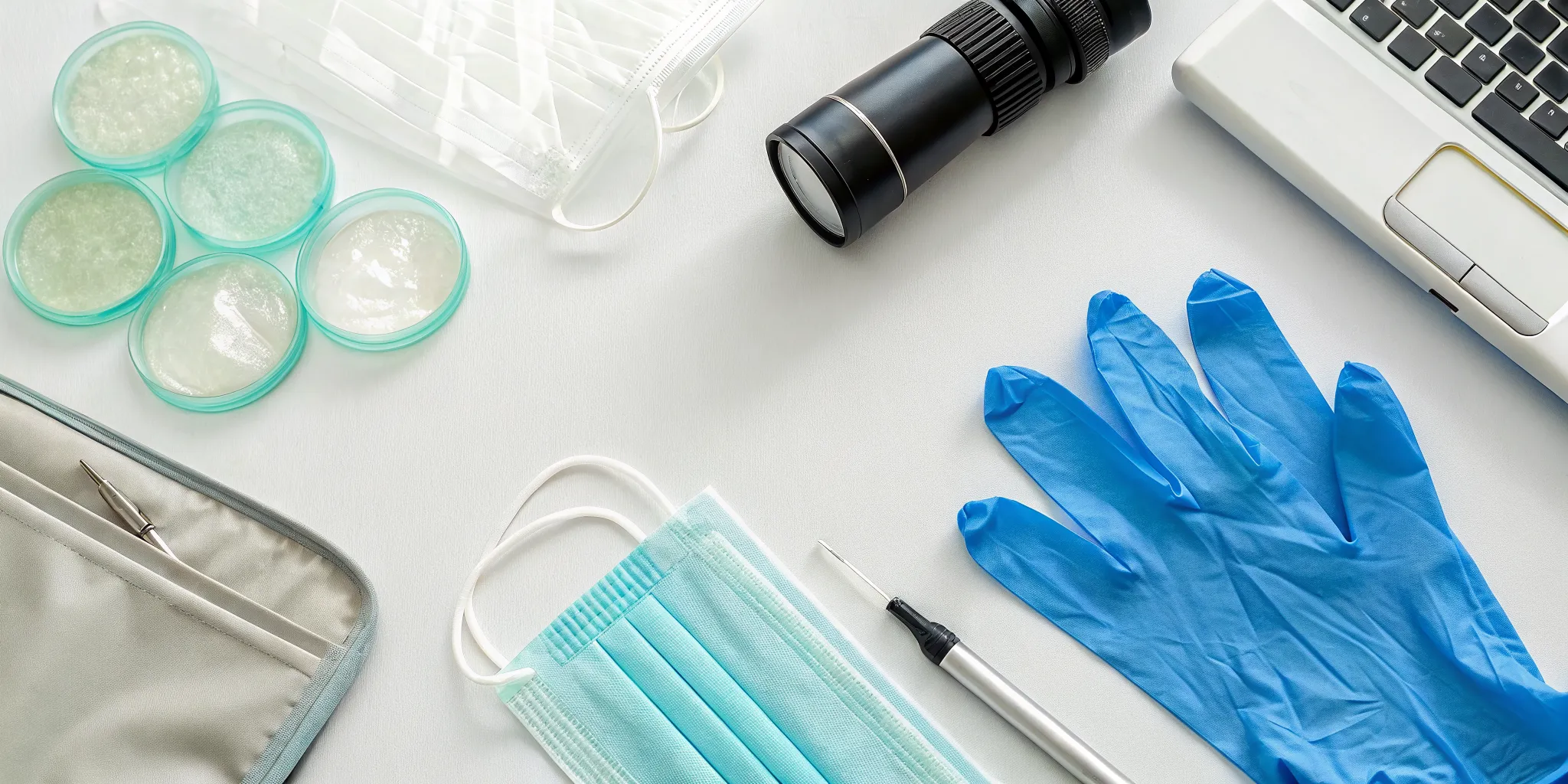
Do-it-yourself mold test kits are often the first thing people reach for when they suspect mold. They’re accessible, affordable, and designed to be used without any special training. Most of these kits use a proven method for detecting the presence of mold spores, giving you a basic "yes" or "no" answer. Typically, you'll use a petri dish to collect a sample from the air or a swab to test a specific surface. While they won’t tell you the exact type or concentration of mold, they can confirm your suspicions and indicate that a closer look is needed. Think of them as a preliminary screening tool.
Mail-in Lab Analysis Kits
If you want more detail than a basic DIY kit can provide, a mail-in lab analysis kit is a great middle ground. These kits are favored for their reliability and give you access to a professional lab without the cost of a full on-site inspection. You’ll collect a sample using the provided tools, which might include swabs, tape lifts, or air collection cassettes. Then, you simply mail the sample to the designated lab. In return, you get a report that often identifies the types of mold present and sometimes even the concentration of spores. This gives you much more specific information to work with.
Instant Result Kits
For those who want answers quickly, instant result kits are an appealing choice. An excellent option for fast feedback, these kits typically use a petri dish that you leave out to collect air samples or a swab for surfaces. After about 48 hours, you can see for yourself if mold colonies have started to grow. The main advantage is speed, as you don’t have to wait for shipping or lab processing times. However, what you gain in speed, you lose in detail. These kits confirm mold is present but won’t tell you what kind it is or how significant the problem might be.
Professional Testing Services
While DIY kits have their place, nothing beats the accuracy of professional testing services. When you hire a certified mold inspector, you’re getting more than just a test; you’re getting expertise. Professionals use advanced equipment like air pumps and thermal imaging to find hidden moisture and mold sources. They provide more accurate results because they know exactly where and how to collect samples for the most meaningful data. A professional report will give you a complete picture of the situation, including mold types, spore counts, and a clear plan for remediation. If you have visible mold, widespread issues, or health concerns, calling a pro is always the best decision.
Comparing Mold Tests: Accuracy, Methods, and Cost
Once you start looking at mold tests, you’ll quickly realize they aren't all the same. The market is filled with different types, each with its own method, level of accuracy, and price tag. It can feel a little overwhelming, but figuring out the differences is the key to choosing a test that actually gives you useful information. Some tests use air samples, while others require you to swab a surface. Some give you instant results in a petri dish, and others need to be mailed to a lab for a detailed report.
The right test for you depends entirely on your situation. Are you trying to identify a visible spot of mold, or are you concerned about the air quality in your home? Understanding what each test is designed to do will help you get the answers you need. Ultimately, the goal of any test is to inform the next step, which is often professional mold removal. Let’s break down the key factors so you can compare your options like a pro.
Air vs. Surface vs. Bulk Samples: What's the Difference?
When you buy a mold test, it will be designed to collect a specific type of sample: air, surface, or bulk. Air tests use a collection plate or pump to capture airborne spores, giving you a snapshot of what you’re breathing. This is helpful if you smell a musty odor but can't find a visible source. Surface tests use a swab or tape to lift a sample directly from a suspicious-looking spot on a wall or other surface. This is great for identifying a specific, visible growth.
Finally, a bulk sample involves cutting out a piece of affected material, like drywall or carpet, to be analyzed. This is the most invasive method and is typically done by professionals. The best mold test kits are designed to identify a wide range of mold types, and the sample type you choose will directly influence the results you get.
Lab Analysis vs. Instant Results: Which is Better?
DIY kits generally fall into two categories: those that provide instant results and those you mail to a lab. Instant kits, like the common petri dish tests, promise a quick answer. You simply leave the dish out to collect spores and wait 48 hours to see what grows. While fast and affordable, these tests can be misleading. Since mold spores are everywhere, something will almost always grow, but the test can't tell you if it's a problem.
For more accurate results, it’s best to choose a kit that includes lab analysis. As one review notes, even if you have some expertise, a professional lab has better equipment. Sending a swab or air sample to a certified lab will give you a detailed report on the specific types of mold present and their concentration levels, which is far more useful information.
Why Your Test Might Be Wrong: False Positives and Other Limits
It’s important to approach DIY mold tests with a healthy dose of skepticism because they have significant limitations. One major issue is the high potential for user error. If you don't follow the instructions perfectly, you can easily contaminate the sample and get a false positive. A petri dish left near an open window, for example, will likely grow mold, but that doesn't mean you have a mold problem in your home.
Conversely, you could get a false negative if you test the wrong area and miss the actual source of the mold. Even kits that advertise a "proven method for detecting mold" can't account for the fact that mold spores are a normal part of our environment. A positive result on a DIY test doesn't automatically signal a crisis; it just confirms that mold exists, which we already knew.
Breaking Down the Costs: What Are You Paying For?
When you see a $10 mold test kit on the shelf, it seems like a bargain. However, the sticker price is often just the beginning. Many of these kits, like the popular Pro-Lab Mold Test Kit, require you to pay an additional fee, typically $40 or more, for the lab analysis. Without paying that fee, the kit itself is pretty much useless. Suddenly, your cheap test isn't so cheap anymore.
When you factor in the lab fees, the cost of a DIY kit starts to creep closer to the price of a professional assessment, which offers far more value. A professional inspection provides not just accurate testing but also an expert evaluation of your entire property to find the source of the moisture. To understand the full picture, it’s always a good idea to contact a professional for a quote.
How to Choose a Good DIY Mold Test Kit
If you've decided to go the DIY route, you’ll quickly find a dizzying number of mold test kits on the shelf. They aren't all the same, and picking the wrong one can give you a false sense of security or unnecessary panic. To make a smart choice, you need to know what you’re looking for. It comes down to a few key factors: how the kit collects samples, whether it includes professional lab analysis, how easy the results are to understand, and a few other reliable features. Let's break down what separates a helpful tool from a waste of money.
Check the Collection Method and Detection Range
First, look at how the kit actually collects mold. Most kits use a petri dish to capture airborne spores or a swab for testing visible spots on a surface. A key feature to look for is a proven method for detecting mold that ensures you can get an accurate sample, even if you’ve never done this before. The instructions should be crystal clear. Beyond the collection method, consider the detection range. The best mold test kits are designed to identify a wide variety of mold types. A kit that only looks for one or two common molds might miss something important growing in your home.
Look for Certified Lab Analysis
This is a big one. Some kits, often called "petri dish tests," simply grow whatever spores land on the dish. You’ll see growth, but you won’t know what it is. Better kits include the option to mail your sample to a certified laboratory. This is the most important factor for getting meaningful results. A lab analysis can identify the specific species of mold in your home. The Pro-Lab Mold Test Kit is a popular option because it offers this feature. Without professional analysis, you’re essentially just confirming that dust and spores exist in your air, which we already know is true for any home.
Prioritize Easy-to-Understand Results
A lab report filled with scientific names you can’t pronounce isn’t very helpful. Before you buy a kit, try to find out what the final report looks like. Does it simply list the mold types, or does it offer context? A good report will explain whether the identified molds are common allergens or species that are known to cause more significant health issues. You want a report that gives you clear answers, not more questions. If you can’t find examples online, check customer reviews to see what other people say about the clarity of the results.
Key Features of a Reliable Test
So, what does a reliable kit look like? It often includes options for both surface and air testing, like the Mold Armor kit that comes with a swab and a petri dish. It should have clear, step-by-step instructions and a reasonable turnaround time for results. Most importantly, it should offer optional lab analysis to identify the mold species. But remember, even the best DIY test has its limits. It gives you a piece of the puzzle, but not the whole picture. Once you have your results, the next step is figuring out the source of the moisture and creating a plan for safe and effective mold removal.
Can You Save Money on Mold Testing?
Everyone wants to be smart with their money, and dealing with potential mold is no exception. You might be wondering if you can cut costs on testing without cutting corners on safety. The answer is yes, but it involves understanding where you can save and when it pays to invest in professional expertise. It’s all about balancing your budget with the need for accurate, reliable information about your home’s environment. Let’s break down how you can approach mold testing thoughtfully to protect both your wallet and your well-being.
Finding Deals on DIY Kits
If you’re looking to save some money upfront, a DIY mold test kit can feel like an attractive option. You can find affordable choices, like petri dish tests, that give you results in as little as 48 hours without needing to mail anything to a lab. These kits are designed to be user-friendly, so even if you’re a novice, you can get a basic sense of whether mold is present. Many of the best mold test kits are surprisingly accurate for simple detection, making them a decent first step if you’re on a tight budget and just want a preliminary check.
The Value of Professional Services & Potential Savings
While a DIY kit can save you a few dollars initially, a professional test is an investment in certainty. Professionals provide a much more comprehensive analysis, measuring the exact amount of mold spores in your air and, crucially, identifying the specific types of mold you’re dealing with. This level of detail is something most home kits can't offer, and it’s essential if you have health concerns. Plus, professional labs use superior equipment for more accurate results. Getting a definitive answer from a professional mold removal team can actually save you money in the long run by ensuring the problem is correctly diagnosed and handled the first time.
When to Skip the DIY and Call a Pro
While tackling a home project yourself can be satisfying, mold isn't the place to take chances. DIY test kits have their limits, and some situations require a professional from the start. Knowing when to put down the test kit and pick up the phone can save you time, money, and a lot of stress. If you’re on the fence, certain red flags indicate it’s time to call in an expert for a thorough assessment and a real solution.
Warning Signs That Demand a Professional
Sometimes, the signs of a mold problem are too significant to ignore or handle on your own. If you notice a large area of mold, generally bigger than 10 square feet, it’s a clear signal to call for help. Widespread growth often points to a larger, hidden moisture issue that a professional needs to address. Another major warning sign is your health. If you or your family are experiencing persistent allergy-like symptoms, headaches, or respiratory issues that seem to improve when you leave the house, it’s wise to seek professional mold removal. An expert can safely contain and remove the contamination without risking further exposure.
Focus on Moisture Control First
Mold is a symptom of a bigger problem: excess moisture. The Minnesota Department of Health suggests that before you even think about testing, you should perform a thorough check for moisture issues. Where there’s mold, there’s a water source feeding it. This could be a leaky pipe behind a wall, a crack in your foundation, poor ventilation in a bathroom, or condensation around windows. A professional inspection doesn't just look for mold; it identifies and addresses the root cause. Without fixing the water problem, the mold will simply return. Focusing on moisture control first is the most effective way to create a long-term solution for a healthy home.
When a DIY Test Just Won't Cut It
A DIY mold test can feel like a good first step, but it has serious limitations. These kits often provide what’s called a "snapshot" result, showing only what was present in one small spot at a single moment. Mold levels can fluctuate daily, so a single test can easily be misleading or provide a false negative. If you suspect a hidden issue or need to understand the full scope of your problem, a DIY test just won't cut it. Professionals use advanced methods to measure airborne spore concentrations and identify specific mold types, which is information you need to assess the risk accurately. When you need a complete picture of your indoor air quality, it’s best to get in touch with a professional.
Frequently Asked Questions
My DIY mold test came back positive. Should I be worried? A positive result on a home test kit can feel alarming, but it's almost always the expected outcome. Mold spores are a natural part of every environment, so a petri dish will nearly always grow something. The kit confirms that mold exists, which is true for any home, but it can't tell you if the amount or type is a problem. Instead of worrying, use this as a cue to perform a thorough visual inspection for signs of water damage, musty smells, or visible growth, which are much better indicators of an actual issue.
If I can see mold, do I really need to test it? In most cases, no. If you can already see mold on a wall or ceiling, you have all the confirmation you need that there's a problem. A test will only tell you what you already know, and the solution is always the same regardless of the mold's specific name: it needs to be removed safely, and the moisture source must be fixed. It’s more effective to put your resources toward a professional inspection and remediation plan rather than paying to identify a problem you can already see.
Why would I pay for a professional inspection when a DIY kit is so much cheaper? Think of it as paying for a diagnosis instead of just a symptom checker. A cheap DIY kit gives you a simple "yes" or "no" answer without any real context. A professional inspection, on the other hand, is a comprehensive investigation. An expert uses specialized tools to find the exact source of the moisture, identify the full extent of the mold growth (even what's hidden), and give you a detailed, actionable plan to fix it for good. You're investing in a complete solution, not just a piece of data.
Is a little bit of mold normal? Yes, finding some mold spores in your home is completely normal. Spores are everywhere in the air around us, both inside and outside. The issue isn't the presence of a few stray spores; it's when those spores find a damp surface, like a leaky wall or a humid corner, and begin to multiply into a visible colony. That concentrated growth is what indicates a moisture problem that needs to be addressed to keep your home healthy.
What's more important: testing for mold or finding the water source? Finding the water source is, without a doubt, the most important step. Mold is just a symptom of a larger problem, which is always excess moisture. You can clean a patch of mold, but if you don't fix the underlying leak, high humidity, or condensation issue, it will simply grow back. A true, long-term solution always starts with identifying and repairing the water problem first.