
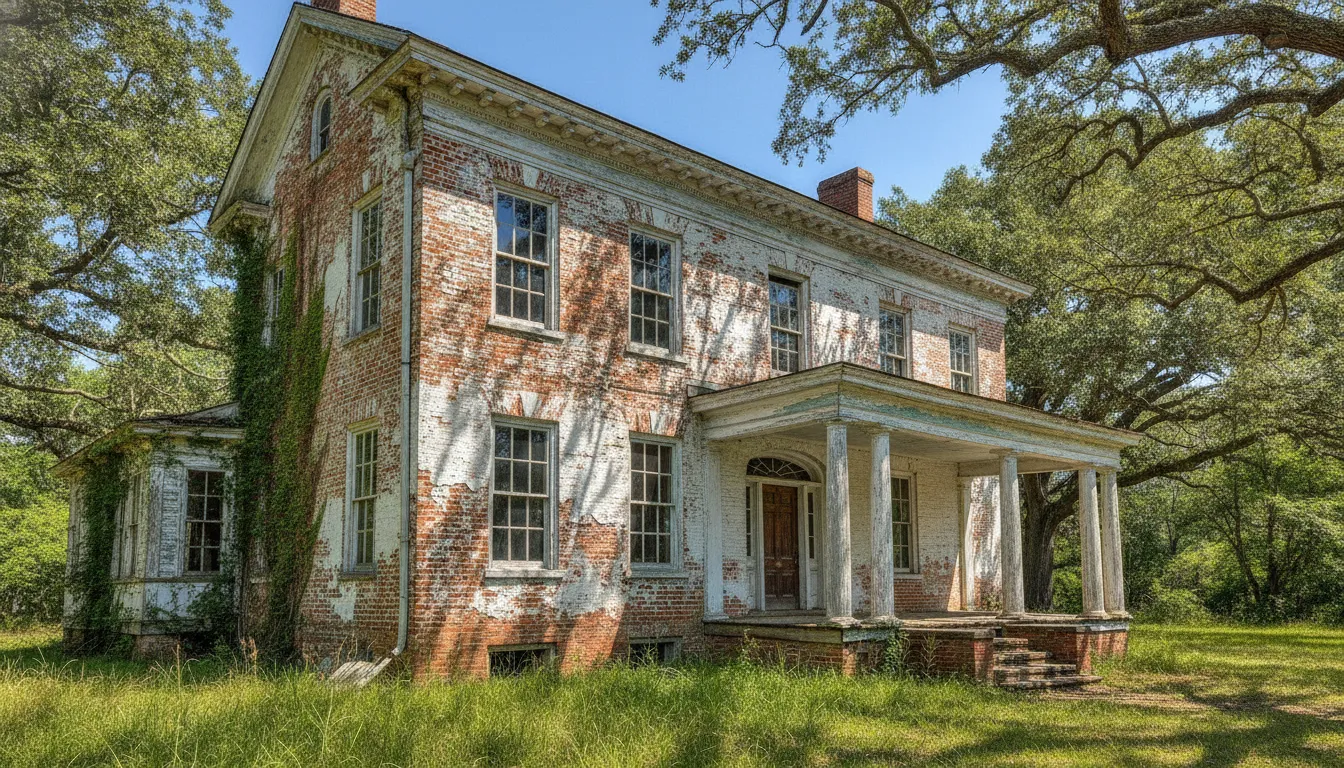
If you own a home built before 1978 in North Carolina, layers of lead-based paint may still be present beneath modern finishes. Understanding the federal and state rules that govern lead-based paint NC is essential for keeping your family safe, staying legally compliant, and protecting your property value.
Lead-based paint NC rules combine federal EPA regulations with North Carolina-specific laws. The EPA banned lead-based paint for residential use in 1978. The Lead Disclosure Rule requires sellers and landlords to disclose known lead hazards before selling or renting. The EPA Renovation, Repair and Painting (RRP) Rule mandates that contractors working on pre-1978 homes be certified and use lead-safe work practices. North Carolina enforces these federal standards through the Lead Hazard Management Program under NCDHHS, adding state-level oversight for renovation projects across the Raleigh area.
Request a free quote from Remtech Environmental for certified lead-based paint inspection and abatement services in Raleigh and the Triangle area.
For homeowners in the Triangle who are buying, selling, or renovating an older property, navigating these overlapping regulations can feel overwhelming. This guide walks you through every layer of lead-based paint NC law. From federal disclosure mandates to state-level certification requirements, so you know exactly what is required and when to call a professional.
Lead-Based Paint NC: What Are the Federal Rules for Lead-Based Paint in NC?
Federal lead paint regulations apply to every home built before 1978 in North Carolina. The EPA RRP Rule requires any contractor paid to disturb painted surfaces in pre-1978 homes to be EPA-certified and follow lead-safe work practices. Certified firms must designate a trained lead-safe renovator on every job site and maintain records for at least three years.
The most significant federal action on lead-based paint NC came in 1978, when the EPA banned lead-based paint for residential use nationwide. Homes constructed before that date often contain multiple layers of lead paint hidden beneath newer coats. The presence of that old paint triggers a web of federal requirements that affect how you maintain, renovate, sell, or lease your home.
The EPA RRP Rule for Older Homes
The Renovation, Repair and Painting Rule is the primary federal standard governing work on pre-1978 housing. This regulation applies to any renovation activity that disturbs painted surfaces in homes, apartments, and child-occupied facilities built before 1978. Common projects like window replacement, siding repair, kitchen remodeling, and plumbing work all fall under the RRP Rule if they disturb more than six square feet of painted surface per room or 20 square feet on exterior surfaces.
If you need lead paint services in Raleigh, confirm that your contractor holds valid EPA certification before they begin. According to the EPA, even small-scale renovations can generate enough lead dust to pose a measurable health risk, particularly to children under six. Proper containment and HEPA-filtered cleanup are not optional extras\u2014they are legal requirements.
Firm Certification and Training Requirements
Federal law mandates that any firm performing renovation work on pre-1978 homes be certified by the EPA. A trained and certified lead-safe renovator must be present at each job site to oversee containment, waste handling, and final cleanup verification. These professionals ensure the crew uses proper containment tools, including heavy-duty plastic sheeting, HEPA vacuums, and negative air pressure systems when needed.
Choosing professional lead-based paint removal through a certified firm keeps your project legally compliant and your living space safe. Without proper certification, homeowners risk fines, liability exposure, and lingering contamination that standard cleaning cannot remove.
Record Keeping Requirements
Under the RRP Rule, certified firms must maintain detailed records of every lead-safe renovation they perform. These records must be retained for at least three years following project completion. Documentation must include the location of the job, a description of the work performed, copies of the lead-safe renovator certification, and confirmation that containment and cleaning protocols were followed.
These records serve a dual purpose. They demonstrate regulatory compliance and provide a paper trail that protects both the contractor and the homeowner if questions arise during a future home sale or inspection. At Remtech Environmental, maintaining thorough records is part of our commitment to doing the right work the right way.
What North Carolina State Regulations Should You Know?
North Carolina enforces lead-based paint regulations through the Lead Hazard Management Program (LHMP), codified in NC General Statute 130A-453.01 through 453.11. These state laws adopt federal EPA RRP standards and add state-level enforcement through the NCDHHS Health Hazards Control Unit. North Carolina RRP rules in 10A NCAC 41C .0900 mirror federal requirements but authorize state agencies to conduct inspections and levy penalties.
Federal rules establish the baseline, but North Carolina adds its own layer of oversight. The North Carolina Lead Hazard Management Program (LHMP) administers and enforces lead safety regulations across the state. This program extends federal protections to any pre-1978 residential property as well as child-occupied facilities.
State Law Framework for Lead Hazard Management
The statutory foundation for lead-based paint NC regulation at the state level is North Carolina General Statute Section 130A-453.01 through 453.11. These statutes grant the NCDHHS authority to regulate lead abatement activities, certification of lead professionals, and enforcement of safe work practices. Companion regulations appear in 10A NCAC 41C .0800 through .0809, which detail the specific training, certification, and work practice standards that North Carolina abatement professionals must meet.
At Remtech Environmental, our team follows both federal EPA standards and the North Carolina-specific requirements in these codes. When we provide professional lead-based paint removal, our protocols exceed the baseline EPA requirements with additional verification steps that reflect North Carolina's regulatory environment.
The NCDHHS Health Hazards Control Unit actively monitors compliance across the state. They conduct inspections, investigate complaints, and have the authority to issue stop-work orders when firms fail to follow approved lead-safe work practices. This enforcement layer means that hiring an unqualified contractor in North Carolina carries greater risk than just the health consequences.
North Carolina RRP Rule Requirements
North Carolina RRP regulations are codified in 10A NCAC 41C .0900. These rules align with the federal EPA RRP framework but grant North Carolina the authority to enforce them directly rather than relying on EPA enforcement. Any contractor compensated for renovation work on a pre-1978 North Carolina home must hold current certification and use lead-safe work practices throughout the project.
For homeowners, the practical implication is straightforward: verify certification before hiring. A valid North Carolina RRP certification confirms that the contractor has completed EPA-accredited training and understands the containment, cleaning, and disposal protocols required by law. You can verify a contractor certification through the EPA lead-certified firm database before signing any agreement.
Beginning your project with professional lead paint inspection services is the smartest first step. A certified inspection tells you whether lead is present before any work begins. If testing confirms lead, our team can walk you through the abatement options, explain the timeline, and outline exactly what containment measures will be used. We believe homeowners make better decisions when they have clear, accurate information, not fear-based sales pressure.
What Are the Lead Disclosure Rules for Sellers and Landlords in NC?
The EPA Lead Disclosure Rule requires sellers and landlords of pre-1978 housing to disclose known lead-based paint hazards to buyers and tenants. Sellers must provide the EPA pamphlet "Protect Your Family From Lead in Your Home," share any existing lead inspection reports, and include a lead disclosure addendum in the sales contract. North Carolina mandates a specific contract addendum through the NC Real Estate Commission. Buyers receive a 10-day testing period. Landlords face the same disclosure obligations for lease agreements.
The Lead Disclosure Rule applies to most residential properties built before 1978. Both sellers and landlords must comply, and real estate agents share responsibility for ensuring their clients fulfill these obligations. Non-compliance carries substantial penalties.
Federal Disclosure Obligations
Sellers and landlords must provide three things to prospective buyers or tenants. First, they must disclose any known lead-based paint or lead hazards in the property. Second, they must provide the EPA information pamphlet titled "Protect Your Family From Lead in Your Home." Third, they must share any existing records or reports related to lead inspections or risk assessments conducted on the property.
Real estate agents must ensure their clients understand these disclosure requirements. If a seller or landlord knowingly fails to disclose known lead hazards, they face federal penalties of up to triple the damages plus attorney fees. The EPA website provides detailed guidance on these disclosure obligations.
North Carolina Contract Addendum Requirements
North Carolina adds a specific documentation requirement for real estate transactions. The North Carolina Real Estate Commission provides a mandatory lead-based paint contract addendum that must be included in every sales contract for pre-1978 homes. This form documents what the seller knows about lead-based paint on the property, confirms that the buyer received the EPA pamphlet, and establishes the buyer's right to conduct independent testing.
Most North Carolina purchase contracts allow buyers a 10-day due diligence period for lead testing. During this window, buyers can hire professional lead paint inspection services to identify hidden hazards before closing. Landlords are exempt from the 10-day testing requirement but must still provide written disclosure and the EPA pamphlet before a lease is signed.
| Obligation | Sellers | Landlords |
|---|---|---|
| Provide EPA Pamphlet | Required | Required |
| Disclose Known Lead Hazards | Required | Required |
| Share Existing Test Records | Required | Required |
| 10-Day Testing Period | Required | Not Required |
| Contract Addendum | NC Real Estate Commission Form | Lease Clause Required |
Understanding these disclosure requirements protects you whether you are buying, selling, or renting in the North Carolina market. Sellers and landlords who follow the law protect their neighbors and avoid significant legal exposure. If testing reveals lead hazards, the safest next step is to schedule a free consultation with a certified abatement professional.
What Health Risks Does Lead Paint Pose in Older Homes?
Lead is a toxic metal that accumulates in the body over time. In homes built before 1978, deteriorating lead-based paint creates invisible dust that settles on floors, window sills, and children's play areas. Children under six absorb lead more rapidly than adults, and the CDC states no safe blood lead level has been identified for children. Common exposure points include friction surfaces on windows and doors where paint breaks down from regular use.
Lead exposure is a cumulative health concern. The metal builds up in bones and soft tissues over time, and it is particularly damaging to developing neurological systems. CDC research confirms that even low-level lead exposure can affect cognitive development, attention span, and academic performance in children.
Why Children Face Higher Risks
Children under six are the most vulnerable population for lead poisoning. Their developing brains and nervous systems absorb lead more readily than adult bodies, and their hand-to-mouth behavior increases the likelihood of ingesting lead dust or paint chips. The CDC emphasizes that no safe blood lead level has been identified for children. Any detectable lead carries some level of risk.
Pregnant women are another high-risk group. Lead stored in bone can be released during pregnancy and cross the placental barrier, potentially affecting fetal development. For families with young children living in pre-1978 homes, testing for lead-based paint is a proactive health measure, not a regulatory formality.
How Lead Dust Accumulates in Older Homes
Lead-based paint that is intact and in good condition poses minimal risk. The hazard emerges when paint deteriorates or is disturbed. As paint ages, it can peel, chip, crack, or chalk. These processes generate fine dust particles that settle on surfaces throughout the home. The EPA identifies deteriorating lead-based paint as the primary source of lead exposure for children in the United States.
Friction surfaces create concentrated lead dust. Every time a window opens and closes, it grinds against painted frames, generating fine particles that accumulate in window troughs and on sills. Door jambs, stair railings, and porches experience similar friction. Homes built before 1978 in the Raleigh area are particularly likely to contain lead-based paint, given the region's large inventory of historic and mid-century housing stock.
Protecting Your Family from Lead Hazards
You can reduce lead exposure through consistent maintenance practices. Use a wet cloth or mop to clean window sills, floors, and other flat surfaces weekly. This captures settling dust before it can be inhaled or ingested. If you notice paint that is flaking, bubbling, or chalking, do not attempt to sand or scrape it yourself. Dry sanding generates airborne lead particles that can circulate throughout the house via HVAC systems.
Common lead risk areas in older homes include peeling or chipping paint on walls, window trim, doors, and baseboards. Visible dust on window sills and floor tracks near painted surfaces also signals risk. Bare soil adjacent to exterior walls where paint has flaked off the siding is another concern. Worn paint on porches, railings, fences, and garage doors that move against painted surfaces can create fine dust. Kitchen cabinets and built-in shelving manufactured before 1978 may also contain lead paint.
If your home was built before 1978 and you are planning renovations or have young children in the home, lead-based paint testing and abatement provides the clarity you need to move forward safely.
Professional Lead Abatement vs. DIY: Why Certified Removal Matters
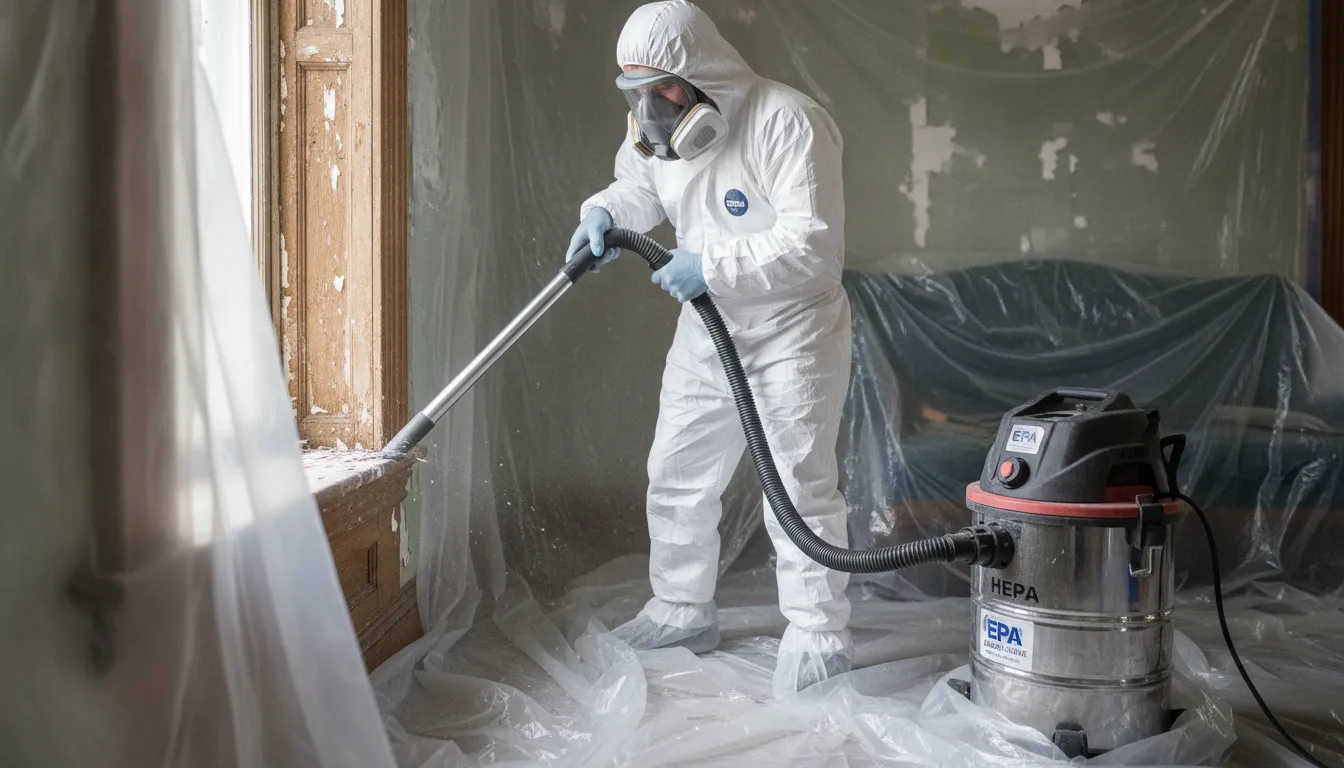
Removing lead-based paint is not a standard home improvement project. Improper removal can generate hazardous lead dust that contaminates the entire living space. The EPA RRP Rule requires certified professionals for any paid renovation work that disturbs paint in pre-1978 homes. Professional abatement teams use HEPA filtration, plastic containment barriers, negative air pressure, and post-abatement clearance testing to ensure the space is safe for reoccupancy.
While many homeowners are tempted to handle lead paint removal themselves to save money, DIY removal carries serious health and legal risks. The fine dust generated during sanding, scraping, or heat-gun removal can penetrate deep into carpets, upholstery, and HVAC systems, creating contamination that standard cleaning cannot remove.
Risks of DIY Lead Removal
Using power sanders, heat guns, or chemical strippers on lead-painted surfaces can aerosolize lead particles, creating invisible contamination throughout the home. The EPA warns that improper removal can increase lead hazards by spreading contaminated dust beyond the immediate work area. Once distributed, this dust is extremely difficult to contain and remove without professional equipment.
Beyond health risks, DIY lead removal creates legal exposure. If you hire a contractor who lacks EPA certification, both you and the contractor can face penalties under the RRP Rule. Selling a home where unpermitted lead work was performed can also create disclosure complications down the road.
Professional Abatement Safety Protocol
Certified lead abatement teams follow a rigorous, multi-step process to ensure complete containment and removal. These protocols are designed to protect both the occupants and the workers throughout the project.
- Containment setup. The work area is sealed with heavy-duty polyethylene sheeting. Vents, doors, windows, and HVAC registers are covered to prevent dust migration. Negative air pressure units filter the air inside the containment zone before it exhausts outside.
- HEPA-filtered equipment. All vacuums, sanders, and power tools used in the work area are equipped with HEPA filtration to capture lead particles at the source. Standard shop vacuums are never used because they can disperse fine lead dust back into the air.
- Waste handling and disposal. Lead-contaminated materials are double-bagged in heavy-duty plastic, sealed with tape, and labeled according to EPA and state hazardous waste guidelines. Disposal follows strict protocols to prevent environmental contamination at the landfill.
- Final clearance testing. After removal and cleanup, an independent third party conducts clearance testing. This typically involves either a visual inspection combined with dust wipe sampling or an XRF (X-ray fluorescence) analysis to confirm that no lead hazards remain.
Remtech Environmental brings certified lead abatement specialists to every project. Our team holds current EPA and North Carolina certifications and follows the containment and disposal protocols outlined in this section. We believe homeowners deserve complete transparency about the process, not a sales pitch or a scare tactic.
When Should You Test for Lead-Based Paint in Your Home?
Testing is the only way to confirm whether lead-based paint is present in your home. You cannot determine the presence of lead by visual inspection alone. Even paint that appears to be in good condition may contain hazardous levels of lead beneath the surface.
You should test for lead-based paint if any of these situations apply to you:
- Your home was built before 1978 and you have not previously tested for lead.
- You are planning a renovation, remodeling, or painting project that will disturb painted surfaces.
- You are buying or selling a pre-1978 home.
- You have young children under the age of six living in or regularly visiting the home.
- You notice paint that is visibly deteriorating with peeling, chipping, or chalking.
- You are a landlord with pre-1978 rental properties in North Carolina.
Types of Lead Testing Available
There are two main approaches to testing for lead-based paint in residential properties.
EPA-recognized test kits are available at hardware stores and allow homeowners to perform a preliminary assessment. These kits typically use a chemical swab that changes color when lead is present. While affordable and accessible, test kits have limitations. They can produce false negatives, and they only test the specific spot where you apply the swab. A negative result in one area does not mean the entire property is lead-free.
Professional lead inspection and risk assessment is the gold standard for identifying lead hazards. A certified lead inspector uses an XRF analyzer, which is a handheld device that measures lead content in paint without damaging the surface. The inspector can test every painted component in the home and produce a comprehensive report identifying the location, extent, and severity of lead hazards. For homeowners concerned about thoroughness and accuracy, lead-based paint testing and abatement from a certified firm provides the most complete picture.
Renovation, real estate, and child safety are the three main triggers for professional testing. A certified inspection costs a fraction of what you might pay in medical bills or legal fees if lead exposure goes undetected.
Why Remtech Environmental for Lead-Based Paint Abatement in Raleigh?
Remtech Environmental is your local partner for certified lead-based paint removal serving Raleigh and the surrounding 60-to-70-mile radius across the Triangle. Our team combines technical expertise with honest, education-first communication. We do not use high-pressure sales tactics. We do the right work the right way.
Our lead abatement team holds EPA RRP certification and North Carolina-specific credentials to perform lead remediation in compliance with all state and federal regulations. Every project follows the containment, HEPA-filtration, waste disposal, and clearance testing protocols described throughout this guide.
We serve homeowners, property managers, real estate professionals, and insurance adjusters who need reliable, professional lead abatement services. Whether you are preparing a home for sale, closing on an older property, or proactively addressing a known lead hazard, we provide the expertise and documentation you need to move forward with confidence.
Get a free quote from Remtech Environmental for lead testing, inspection, and abatement services in Raleigh and the greater Triangle area.
Frequently Asked Questions About Lead-Based Paint NC
Do I have to disclose lead-based paint when selling my home in NC?
Yes. Federal law requires sellers of homes built before 1978 to disclose any known lead-based paint hazards to prospective buyers. North Carolina law adds a mandatory contract addendum through the NC Real Estate Commission that must be included in every sales contract for pre-1978 homes. You must also provide the EPA pamphlet "Protect Your Family From Lead in Your Home" and allow buyers a 10-day due diligence period for lead testing.
What happens if lead-based paint is found during an inspection?
If testing confirms lead-based paint, you have several options depending on the condition of the paint and the type of transaction. Intact paint in good condition can often be managed through encapsulation or ongoing monitoring. Deteriorating paint or paint that will be disturbed during renovations requires professional abatement. A certified lead inspector can help you determine which approach is appropriate for your specific situation.
How much does professional lead abatement cost in North Carolina?
The cost of professional lead abatement varies based on the size of the affected area, the type of surface being treated, and the extent of contamination. For an accurate estimate tailored to your property, contact Remtech Environmental for a free consultation and quote.
Can I remove lead paint myself if I am the homeowner?
While homeowners are legally permitted to perform lead abatement on their own property, it is not recommended. Improper removal can create severe health hazards and legal complications. The EPA RRP Rule requires that any paid renovation work on pre-1978 homes be performed by certified professionals. Even for DIY projects, following EPA lead-safe work practices is essential, and the risk of generating undetectable lead dust throughout your home is substantial without professional containment equipment.
Does North Carolina require a license for lead abatement contractors?
Yes, North Carolina requires lead abatement professionals to be certified through the Lead Hazard Management Program (LHMP) under the NCDHHS. This certification ensures the contractor has completed EPA-accredited training and adheres to both federal and state lead-safe work practice standards. You can verify a contractor's certification through the EPA lead-certified firm database.
How long does lead abatement take?
The timeline depends on the scope of the project. A single-room abatement may take one to two days, while a whole-house project could take one to two weeks including containment, removal, cleanup, and clearance testing. Your Remtech Environmental project manager can provide a detailed timeline during your initial consultation.
Summary
Lead-based paint NC regulations create a comprehensive framework that protects homeowners, tenants, and families from the serious health risks of lead exposure. Federal EPA rules, including the RRP Rule and Lead Disclosure Rule, establish the baseline standards for safe renovation, disclosure, and abatement across all states. North Carolina adds its own enforcement layer through the Lead Hazard Management Program and NC General Statute 130A-453.
For homeowners in Raleigh and the Triangle area, understanding these regulations is the first step toward protecting your property and your family. Professional testing, certified abatement, and full compliance with disclosure requirements are not just legal obligations. They are investments in your family's health and your property's long-term value.
If you suspect lead-based paint in your Raleigh-area home, start with professional testing and take the next step with confidence. Contact Remtech Environmental for a free consultation and quote.