
The historic neighborhoods of Raleigh, North Carolina, such as Oakwood, Boylan Heights, and Five Points, are celebrated for their beautiful historic homes and unique architectural charm. However, owning a property built before 1978 comes with specific responsibilities, chief among them being the management of lead-based paint. If your historic Raleigh home has peeling paint or is scheduled for a renovation, understanding how to test for and safely manage lead paint is essential.
At Remtech Environmental, our EPA-certified lead abatement specialists believe in transparent explanations, safe procedures, and professional solutions. We focus on "doing the right work the right way" to protect your family's health and preserve your historic home's integrity without high-pressure sales tactics.
If you are planning a renovation or suspect lead paint on your property, get a free quote from Remtech Environmental or call our Raleigh office today.
The Historic Connection: Pre-1978 Raleigh Homes
Before the federal government banned lead-based paint in residential housing in 1978, lead was a common additive in paint. It was highly valued for its durability, quick drying times, and moisture resistance, which made it a popular choice for both interior walls and exterior trim.
If your Raleigh home was built before 1940, there is an 87% chance it contains lead paint. For homes built between 1940 and 1959, the probability is 69%, and for homes built between 1960 and 1977, the chance is 24%. In many historic homes, this lead paint is buried deep beneath multiple layers of modern, lead-free latex paint. While covered lead paint is relatively safe if it remains intact, it becomes an active hazard if the top paint layers begin to chip, crack, or are sanded down during a remodeling project.
How to Test for Lead Paint Safely
Because lead paint looks identical to standard paint, professional testing is the only way to confirm its presence.
Professional XRF analyzer testing
The most efficient and non-destructive testing method is X-Ray Fluorescence (XRF) testing. Certified lead inspectors use a portable XRF device that sends low-level radiation through all layers of paint down to the wood or plaster substrate. Within seconds, the machine measures the lead concentration without damaging your walls, trim, or historic siding.
Paint chip laboratory analysis
If XRF testing is not available or if the surface is uneven, paint chip sampling is used. An inspector carefully scrapes a small sample containing all paint layers from a representative area and sends it to an accredited laboratory for chemical analysis. This is a highly accurate method but does require minor cosmetic damage that must be patched and repainted.
Lead Abatement vs. Lead-Safe Renovation
If lead-based paint is found on your historic property, the appropriate response depends on whether you are simply maintaining your home or planning a major renovation.
Lead-safe renovation: the RRP rule
The EPA's Renovation, Repair, and Painting (RRP) rule requires that any renovation work that disturbs more than six square feet of interior painted surfaces or twenty square feet of exterior painted surfaces in pre-1978 homes be performed by EPA-certified RRP firms. These contractors use lead-safe work practices, including:
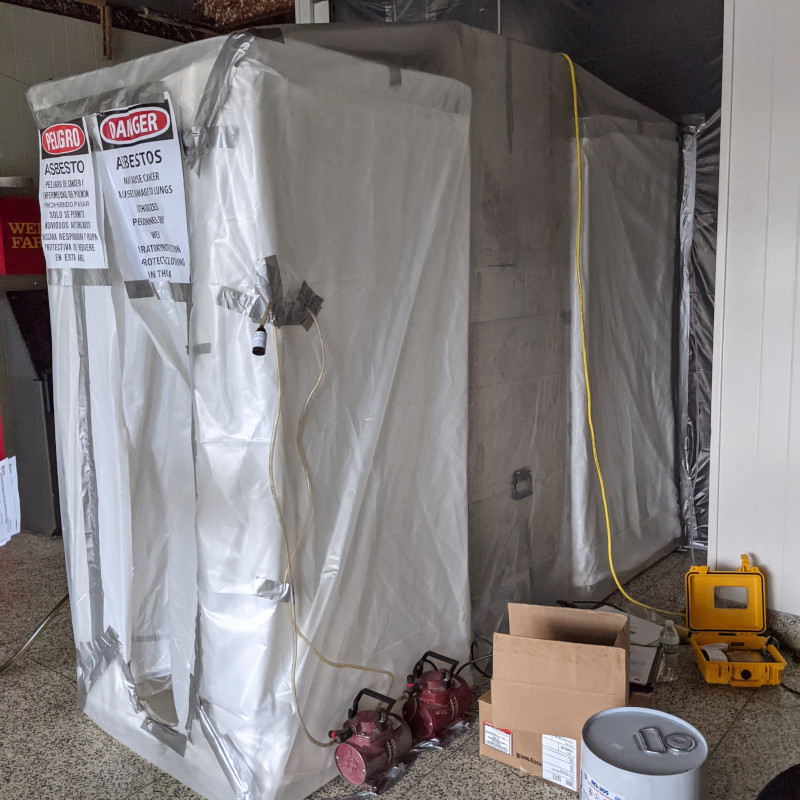
- Containment: Sealing off the work area with plastic sheeting to prevent dust from traveling to other rooms.
- Minimizing dust: Using wet sanding, wet scraping, and HEPA-shrouded tools to keep paint dust heavy and localized.
- Thorough cleanup: Vacuuming the entire workspace with specialized HEPA-filter vacuums and wet-mopping all surfaces before containment is removed.
Lead paint abatement: permanent solutions
While RRP practices protect homes during standard repairs, lead abatement is a specialized, permanent process designed to completely eliminate lead paint hazards. This is often recommended if you have young children, if the paint is severely deteriorated, or if required by local housing programs. Abatement methods include complete component replacement (such as installing new window sashes to replace lead-painted ones), enclosure with permanent drywall barriers, or complete paint removal using wet scraping and specialized chemical strippers.
Preserving Historic Integrity Safely
One of the challenges of lead abatement in historic Raleigh homes is preserving the unique architectural elements, such as original heart pine trim, crown molding, and hand-carved siding. Uncertified contractors may simply recommend ripping out these historic materials, which ruins the home's historic value.
Certified environmental specialists understand how to perform targeted lead paint stabilization and encapsulation, allowing you to seal and protect lead-painted historic features without removing them. By applying specialized liquid encapsulants, we create a durable, long-lasting seal that prevents lead dust from escaping while keeping your home's historic details completely intact.
Trust Raleigh's Local Environmental Experts
At Remtech Environmental, we combine deep technical expertise with a commitment to the Raleigh-Durham community. Our EPA-certified lead abatement specialists are fully trained, insured, and dedicated to delivering safe, long-lasting solutions.
To discuss your historic home's lead testing or abatement options, contact Remtech Environmental today for an expert consultation.