
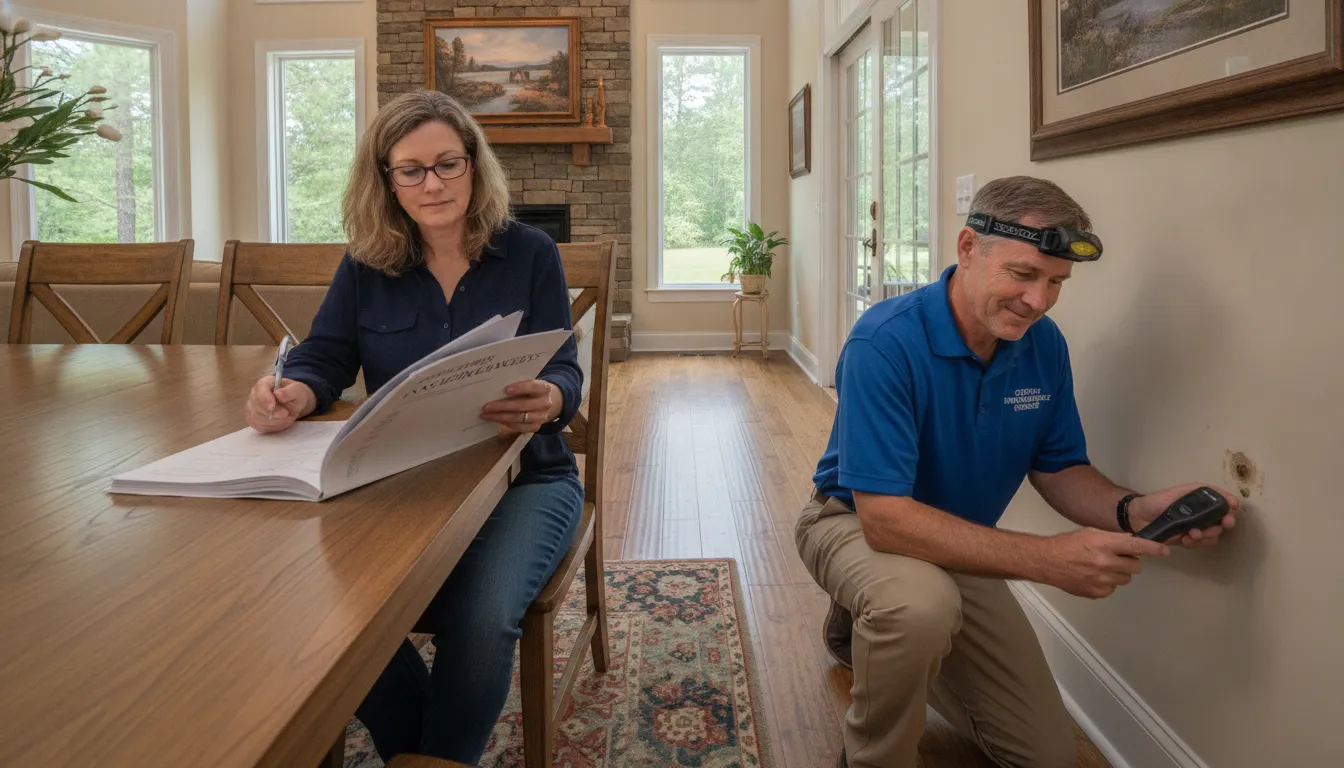
Finding mold at home raises two urgent questions: what caused it, and who will pay for the cleanup? The practical answer depends less on the presence of mold than on the moisture event behind it. Homeowners insurance policies vary, so the policy language, exclusions, endorsements, limits, and facts of the loss all matter. This guide explains the usual coverage patterns, the records an insurer may request, and how a professional remediation company can help North Carolina property owners understand the work ahead without promising an insurance outcome.
Get a Free Quote Today for a project-specific mold remediation assessment.
Does homeowners insurance cover mold?
Homeowners insurance may cover mold when it results from a sudden, accidental event that the policy covers, but it usually does not cover growth caused by long-term leaks, humidity, maintenance problems, or excluded events. Your insurer must decide coverage under your specific policy and the documented cause.
The phrase "covered peril" is central to the decision. A peril is an event that causes property damage. Depending on the policy, an abrupt plumbing discharge or a sudden appliance failure may be covered. If that covered event leads to mold before the affected materials can be dried, some resulting mold assessment, removal, and repair costs may qualify. Coverage is never automatic simply because mold appeared after water was present.
The cause matters more than the mold itself
An adjuster usually investigates the chain of events. The insurer may ask when the moisture started, when the homeowner discovered it, what steps were taken to limit additional damage, and whether the source was repaired. A short, well-documented timeline can support the conclusion that a loss was sudden. Widespread staining, repeated repairs, or records of an unresolved leak may instead suggest a gradual condition.
Maintenance-related mold is commonly excluded because homeowners policies are designed for unexpected losses, not routine upkeep. Examples may include a pipe that dripped slowly for months, recurring condensation, an unvented bathroom, or moisture entering through a deteriorated exterior surface. Even if the mold itself was hidden, an insurer may still examine whether the underlying condition developed gradually and whether reasonable maintenance could have prevented it.
Policy language, endorsements, and sublimits
Two homeowners with similar mold problems can receive different coverage decisions because their policies differ. Some policies exclude fungi or microbial growth broadly. Others add limited mold coverage through an endorsement. A policy may cover mold remediation only when a covered loss caused it, and it may impose a separate dollar limit for testing, removal, damaged materials, or additional living expenses. Deductibles also affect the amount available after a claim is approved.
Read the declarations, coverage forms, endorsements, exclusions, and duties-after-loss section together. Ask the insurance representative to identify the language that applies to the decision. If any wording is unclear, request an explanation in writing. A remediation contractor can document conditions and propose a scope of work, but only the carrier and its representatives can interpret the policy and make a coverage determination.
Coverage patterns for common mold scenarios
Sudden, accidental, and covered causes are more likely to qualify than gradual moisture, poor maintenance, or excluded causes, but every scenario still requires a policy-specific review.
The following comparison describes common patterns, not guarantees. The precise cause and policy terms can change the outcome. It is also possible for one part of a loss to be covered while another part is excluded. For example, a policy might address resulting damage but not the failed appliance or worn component that caused it.
| Scenario | Typical coverage pattern | What the insurer may review |
|---|---|---|
| Sudden pipe rupture inside a wall | May be covered if accidental plumbing discharge is a covered peril | Timeline, plumbing report, photos, and mitigation records |
| Unexpected appliance supply-line failure | May be covered, subject to policy terms and limits | Cause of failure, date discovered, and resulting damage |
| Slow leak under a sink over many months | Often excluded as gradual damage or maintenance | Age of damage, prior signs, and repair history |
| Persistent bathroom humidity and condensation | Often excluded as an ongoing moisture condition | Ventilation, maintenance, and duration |
| Groundwater or external flooding | Usually excluded from a standard homeowners policy | Source of water and any separate applicable coverage |
| Roof opening caused by a covered storm event | May be covered if the storm damage and resulting intrusion qualify | Storm evidence, roof condition, and prompt response |
Costs that may be part of an approved claim
When coverage applies, the claim may involve several categories of work. These can include evaluating the affected area, establishing containment, removing contaminated porous materials, cleaning remaining surfaces, managing airborne particles, and confirming that the remediation scope has been completed. Repairs to damaged drywall, flooring, insulation, or other building materials may be considered separately from remediation.
Personal property, temporary relocation, and repairs to the moisture source may also be handled under different policy provisions. Do not assume that approval for one category means every related cost is approved. Ask for the applicable limits and authorization process before making non-emergency commitments. Keep every estimate, invoice, receipt, report, and written decision in one claim file.
Costs that are often excluded or limited
Policies commonly limit or exclude mold tied to neglect, deferred maintenance, repeated seepage, construction defects, or external flooding. The cost to replace the worn or failed item itself may also be excluded even when resulting damage is covered. For instance, an insurer might treat damage from an abrupt supply-line failure differently from the cost of replacing the old supply line.
Mold endorsements may carry sublimits lower than the main dwelling limit. Testing or preventive improvements can also be treated differently from removal of confirmed contamination. Request written approval where the policy or claim process requires it, but do not delay reasonable steps needed to prevent additional damage. If coverage is uncertain, ask the insurer what documentation it needs and what actions it expects under the duties-after-loss provision.
What should you do after finding mold?
Protect people, avoid disturbing visible growth, document the conditions, address an active moisture source through the appropriate qualified provider, notify the insurer promptly, and arrange a professional mold assessment when the affected area or scope is uncertain.
Start with safety. Keep children, pets, and anyone with respiratory sensitivities away from the affected area. Do not brush, sand, cut, or aggressively clean visible growth, because disturbance can spread particles beyond the original location. If there is an immediate electrical hazard, structural concern, or active plumbing problem, contact the appropriate emergency or trade professional.
A practical first-day checklist
- Record what you found. Take wide and close photographs, video, and notes before moving items or changing the scene.
- Identify the apparent moisture source. Note a failed fixture, roof opening, condensation, damp crawl space, or other visible condition without guessing beyond the evidence.
- Limit additional damage safely. Follow the insurer's instructions and use the proper trade professional for the source. Mold remediation is a separate specialty from plumbing, roofing, or disaster response.
- Notify the insurer. Report the loss promptly and ask what documentation, inspections, and approvals are required.
- Preserve evidence. Do not discard damaged materials or belongings until the carrier provides direction, unless keeping them creates a safety issue. Photograph anything that must be moved.
- Request a remediation assessment. A qualified company can evaluate the affected area and prepare a project-specific scope.
Visible growth can be only one clue. Musty odors, discolored materials, and changes near a known moisture source may help establish where an assessment should begin. This guide to what mold damage can look like in a home explains additional signs without suggesting that appearance alone identifies the species or full extent.
Build a clear claim record
Create a timeline with dates and times for discovery, notifications, inspections, repairs to the source, and remediation work. Save claim numbers, names of representatives, emails, letters, estimates, reports, and receipts. After each phone call, write a short summary of what was discussed and any next step. Organized records help the insurer evaluate the facts and help contractors understand what has already occurred.
Photographs should show context as well as detail. Capture the full room, the affected material, the apparent moisture source, and nearby undamaged areas. Do not label a cause as certain unless a qualified professional has confirmed it. Accurate language such as "discovered staining below the supply line on June 20" is more useful than an unsupported conclusion about how long the condition existed.
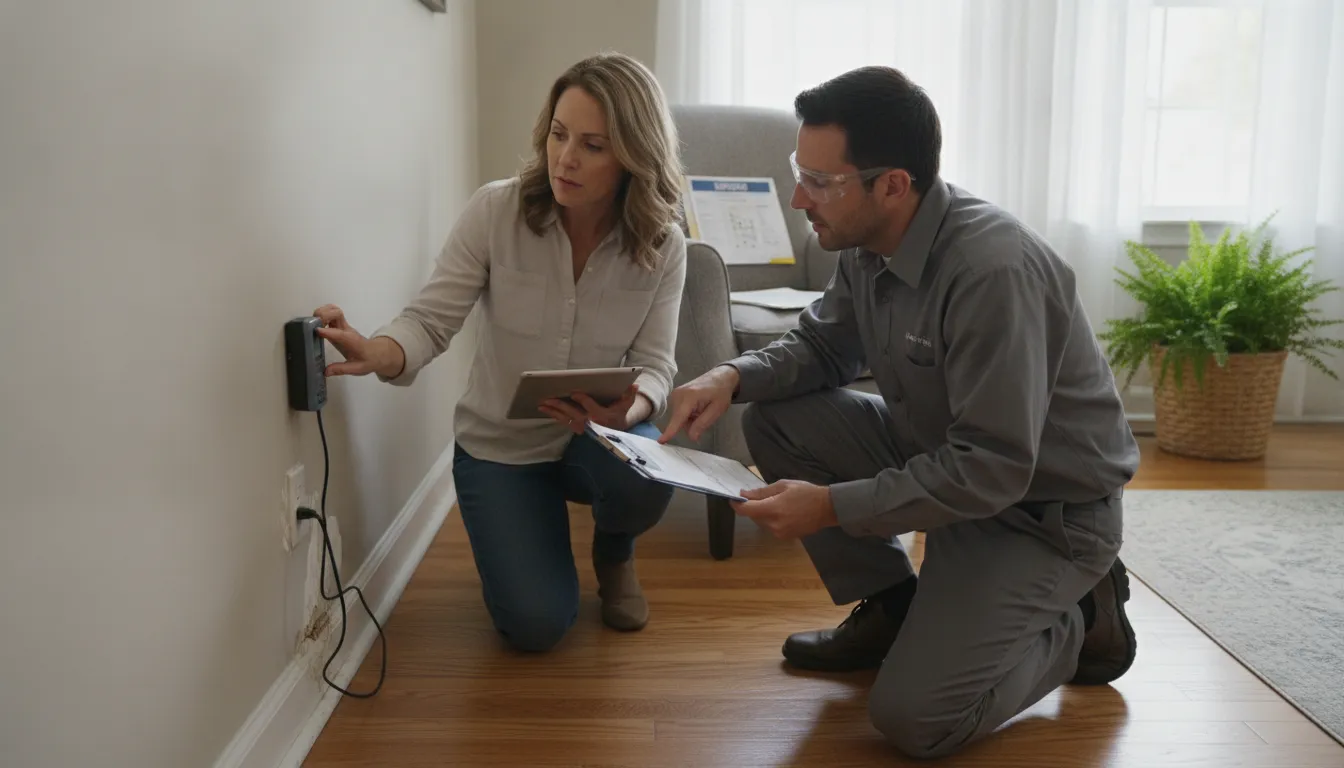
A professional assessment can document affected materials and support a project-specific remediation plan.
Professional remediation and the insurance process
A professional mold remediation company can assess conditions, define the cleanup scope, perform specialized remediation, and document its work, while the insurance carrier remains responsible for deciding whether the policy covers the loss.
Remediation is not the same as simply wiping a stained surface. A project may require controlled access, containment, air management, careful removal of materials that cannot be cleaned, detailed cleaning, and documentation. The appropriate approach depends on the location, affected materials, size of the area, and source of moisture. A reputable contractor should explain the proposed scope and provide a project-specific quote rather than a standardized price.
How a remediation team can support documentation
A contractor's records may include observations, photographs, moisture readings, a written scope, daily work notes, change orders, completion documentation, and invoices. These records can help an adjuster understand the remediation performed. They do not guarantee payment, prove a covered cause on their own, or replace documents from a plumber, roofer, engineer, industrial hygienist, or other specialist when those records are needed.
Before work starts, ask who will communicate scope changes, how contents will be handled, and what completion documentation will be provided. Share insurer instructions with the contractor, and share the contractor's scope with the adjuster when requested. Clear communication can reduce misunderstandings about what work is authorized, what the project requires, and which costs remain the property owner's responsibility.
North Carolina homes and crawl-space moisture
North Carolina's climate makes moisture management especially important. Crawl spaces can be affected by ground moisture, outdoor humidity, drainage conditions, plumbing issues, or inadequate moisture controls. Insurance coverage still depends on the cause and policy, even when growth is found in a hard-to-reach area. A crawl-space condition that developed gradually may be evaluated differently from damage tied to a sudden covered event.
After remediation and correction of the source, some properties may benefit from longer-term moisture-control measures. Learn about the role of crawl-space encapsulation and discuss whether it is appropriate for the property. Preventive improvements should not be represented as part of an insurance claim unless the carrier confirms coverage.
Get a free consultation from Remtech Environmental to discuss a North Carolina mold remediation plan tailored to the property.
How can you reduce the chance of future mold?
Routine inspections, prompt repairs, humidity control, proper ventilation, and attention to crawl spaces and exterior drainage can reduce mold risk, although no prevention plan can eliminate every possibility.
Look for early evidence of moisture rather than waiting for visible growth. Check beneath sinks, around appliance connections, near tubs and showers, around windows, below roof penetrations, and along foundation walls. Watch for peeling finishes, recurring stains, warped materials, condensation, or musty odors. Repair leaks promptly through the appropriate qualified provider and retain the invoices as part of the home's maintenance record.
Maintenance and moisture-control habits
Use bathroom and kitchen exhaust fans as designed, keep gutters and drainage functioning, and monitor indoor humidity. Inspect crawl spaces and less-used rooms periodically. If a previous event affected a wall or floor assembly, confirm that the underlying source was corrected before cosmetic repairs conceal the area. Maintenance records can also help show that a future sudden event was not simply the continuation of a known unresolved condition.
Coverage and prevention are related but separate topics. An insurer may require reasonable action to prevent additional damage after a covered loss, yet preventive upgrades may not be reimbursable. Ask before assuming a particular improvement belongs in the claim. A contractor should explain why a measure is recommended, while the carrier should explain whether the policy pays for it.
Choose the right help for each part of the problem
Mold remediation specialists address mold-affected materials and contamination controls. Other sources require the appropriate trade, such as a plumber for plumbing repairs or a roofer for roof repairs. Remtech Environmental specializes in mold, asbestos, and lead-based paint removal; it does not provide water-damage restoration, flood response, or 24/7 emergency response. Separating these roles helps homeowners contact the right provider and keeps project records clear.
Remtech serves residential and commercial properties in North Carolina through teams supporting the Triangle, Western North Carolina, and coastal and eastern markets. Review the Remtech Environmental service areas to see where consultation and remediation services are available.
Frequently asked questions about mold insurance claims
These brief answers cover common claim questions, but the insurer's written decision and the specific policy control each outcome.
Can mold from a burst pipe be covered?
It may be covered when the pipe rupture is sudden, accidental, and covered by the policy, and when the resulting mold falls within applicable terms and limits. Prompt notice, photographs, plumbing records, and remediation documentation can help the insurer evaluate the claim. Coverage is not guaranteed.
Does insurance cover mold caused by a slow leak?
Many policies exclude gradual leakage, repeated seepage, wear, or poor maintenance. If the evidence shows that moisture accumulated over an extended period, the related mold is less likely to qualify. Review the policy and ask the insurer for a written explanation of its decision.
Should mold be removed before the adjuster visits?
Notify the insurer and ask for instructions as soon as possible, while taking reasonable steps to protect people and prevent additional damage. Photograph conditions before materials are moved. Do not disturb visible growth unnecessarily, and do not delay action when a safety issue requires immediate attention.
Can a remediation company confirm insurance coverage?
No. A remediation company can assess the property, recommend a scope, perform specialized work, and provide documentation. Only the insurance carrier and its authorized representatives can determine coverage under the policy. Remtech Environmental does not give legal or insurance guarantees.
A clear plan for North Carolina property owners
The strongest next step is to separate the coverage question from the remediation question: ask the insurer to evaluate the policy and documented cause, then ask a qualified mold specialist to evaluate the affected property and propose appropriate work.
Remtech Environmental takes an education-first approach to mold remediation. The team explains observations, recommended controls, and the project-specific scope without scare tactics or pressure. For homeowners, property managers, businesses, real estate professionals, and insurance adjusters, that clarity makes it easier to coordinate the next step while respecting the carrier's role in coverage decisions.
For more detail on the professional process, review Remtech's mold removal and remediation service information.
Get a Free Quote Today to discuss the affected area, the available documentation, and an appropriate remediation plan.