
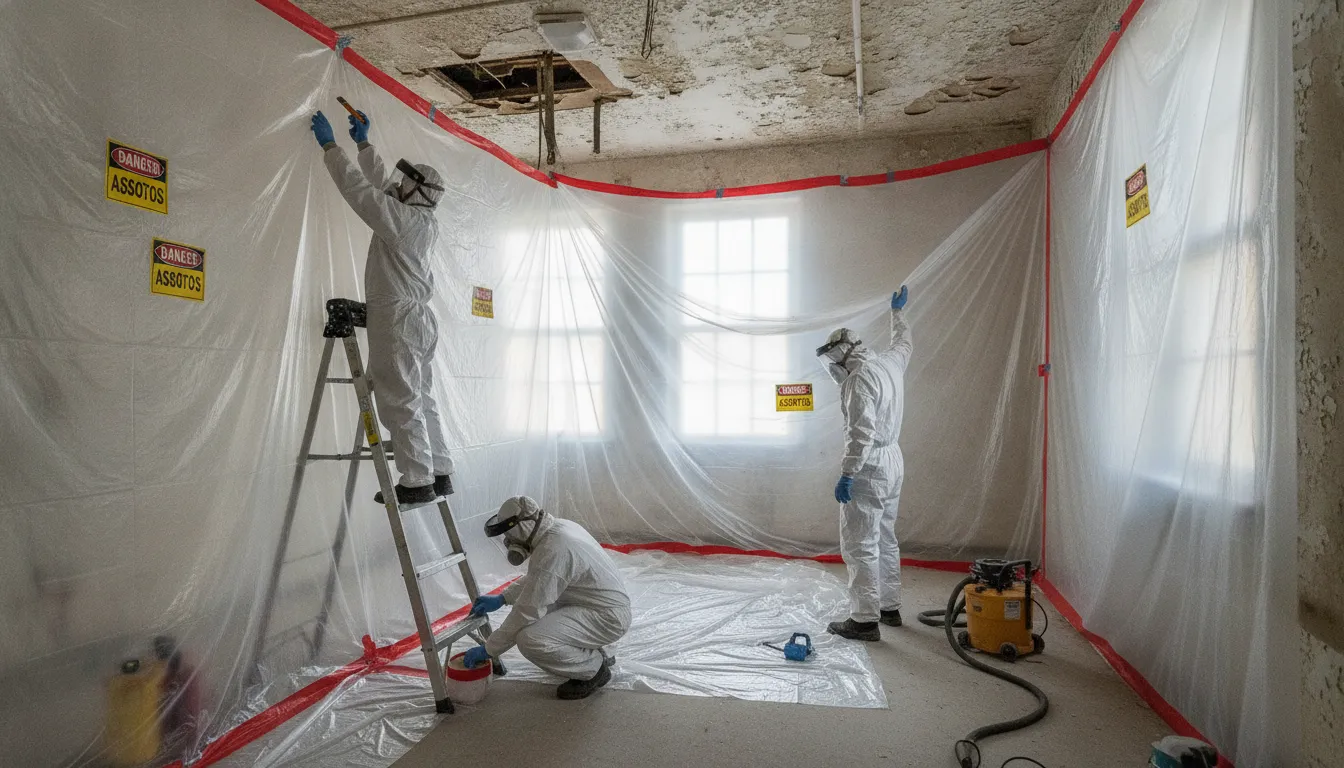
Asbestos fibers can stay hidden in ceiling tiles and floor glue for decades. They become a health risk when damaged or disturbed. Professional asbestos abatement is the safest way to manage these materials in your property.
Get a free asbestos abatement quote from Remtech Environmental.
Asbestos abatement is a strict, legal process used to control the release of toxic fibers during building repairs or teardowns. While many people use the term "removal," true abatement involves a wider range of safety steps like inspection, blocking, and air checks. These work practice standards are required by the Environmental Protection Agency to keep toxic dust from entering the air we breathe. A professional team will seal off the work area with plastic sheets and use special vacuums to trap every tiny particle. This careful approach ensures that your property remains safe for people to live or work in after the project ends. By following these rules, owners can avoid health risks and legal fines while keeping their buildings in good shape for years to come.
Property owners often find the legal rules for risky materials to be quite confusing. You need to know how these safety steps differ from simple trash removal before you start your next repair. To make the best choice for your building, you must first ask, What does asbestos abatement mean? The path begins with understanding what asbestos abatement means.
What does asbestos abatement mean?
Asbestos abatement is more than just taking old parts out of a home. It is a full way to find and fix risks from asbestos. Many people think it only means moving the stuff out, but it is much more than that. Abatement follows rules that make sure a home is safe for people to use. It includes checking the site, making a plan, and making sure no bad fibers get into the air.
Abatement vs removal
People often use the terms abatement and removal to mean the same thing. But asbestos abatement is the broad term for how we handle these risks. Removal is just one way to do it. Sometimes, a pro will seal the asbestos instead of taking it out. This is called sealing. In other cases, they might build a wall around it to keep it from getting loose. Abatement means using the best tool for the job to stop the risk.
Safety rules for your home
The goal of asbestos abatement is to keep people safe. This work follows strict rules set by groups like the EPA. These rules help stop the release of tiny fibers that you cannot see. These fibers can stay in the air for a long time. If you breathe them in, they can lead to health problems like mesothelioma or lung cancer later in life.
To keep the air clean, pros use wet methods and special air filters. They also set up plastic sheets to block off the work area. This keeps the rest of the house or office safe while they work. Doing this right helps prevent the spread of dust that could harm your family or team.
When to call a pro
You usually need to think about abatement before you start a big home project. If you plan to tear down a wall or pull up old tiles in an older home, you should get a test first. Most buildings built before 1989 likely have asbestos in them. You cannot tell by just looking at a part if it has these fibers. You need a professional asbestos abatement team to take samples and test them in a lab. Taking your own samples is not a good idea. If you do it wrong, you could release fibers and put yourself at risk.
At Remtech, we believe in a teaching-first way. We want to help you make the best choice for your home. Our team uses top-tier skills and tools to handle any asbestos job in North Carolina. Whether you are in Raleigh or Asheville, we can help you find a safe path forward.
Asbestos abatement vs. removal: the key difference
Property owners often use the terms "abatement" and "removal" to mean the same thing. But in the world of safety rules, they have different meanings. Asbestos removal is just one part of the broader asbestos abatement process. Abatement is a full set of steps used to control or stop the release of hazardous fibers from materials in your home or building.
The Environmental Protection Agency (EPA) sets strict rules for how to handle these materials. These rules focus on work practices that keep tiny fibers out of the air. While removing the material is often the best choice, it is not the only way to keep people safe. Other methods can keep the asbestos in place while making it harmless to the people nearby.
The role of abatement
Abatement is a regulated process that includes inspection, planning, and containment. It follows laws from groups like the EPA and OSHA to protect public health. The goal is to manage the risk of asbestos so that no one breathes in the invisible fibers. This process is much more than just taking out old tiles or insulation.
When you start an asbestos abatement process, a team will look at the condition of the material. If the material is in good shape and you do not plan to move it, you may not need to take it out. But if you plan to remodel or if the material is falling apart, you must take action to stop the spread of dust.
Comparing your options
There are three main ways to handle asbestos. Removal is the most common, but you may also hear about enclosure or encapsulation. Enclosure builds a tight wall around the material to keep fibers trapped. Encapsulation coats the material with a thick sealant so the fibers cannot get loose. Each method has its own set of rules and costs.
| Method | What it does | Best use case |
|---|---|---|
| Removal | Takes out the material | Remodeling or damage |
| Encapsulation | Coats with sealant | Hard-to-reach areas |
| Enclosure | Builds a barrier | Large flat surfaces |
Choosing the right path
The best choice for your property depends on your plans for the building. If you want to tear down a wall, you must use asbestos abatement and removal first. This is because any work that breaks the material will release fibers. Professionals use water to wet the material and special air filters to keep the area safe while they work.
For some owners, keeping the asbestos in place with a sealant is faster and costs less. However, this means you must check the material often to make sure the seal is still strong. If the material is not disturbed, it generally stays safe. At Remtech, we help you find the best plan for your North Carolina home or business by focusing on safety and clear facts.
When is removal necessary, and when can material stay in place?
You may not always need to remove asbestos as soon as you find it. Building materials that contain these fibers are often safe if they stay in good shape. The Environmental Protection Agency (EPA) says you should leave materials alone if you are in doubt. If the items are not damaged and will not be moved, they do not pose a risk to your health.
When you can leave materials alone
Asbestos is mainly dangerous when it breaks down into tiny dust. If tiles or insulation stay solid and whole, the fibers stay trapped inside. You do not usually need a check if your materials are in good repair and you do not plan to change them. This path of watching the site is common for many owners in North Carolina who want to keep a safe space without the cost of full removal.
Managing the material in place is a good path for many homes and businesses. You should keep a close eye on the area to ensure no cracks or wear appear over time. If the material stays hidden behind walls or under floors, it can often stay there for years. Many people choose to learn more about professional asbestos abatement to track the state of their building safely.
When removal becomes the best choice
Removal is a must when materials show signs of wear. If you see crumbling drywall or insulation that is falling apart, the risk of breathing in fibers goes up. Damaged material can release dust that leads to lung issues. In these cases, asbestos abatement and removal is the safest way to protect people. You should always have a pro look at the site if the materials are not whole.
Plans for home repairs also make removal needed. Cutting or pulling down walls will stir up hidden fibers. Before you start a project, you must find out if asbestos is there. A pro can help you set up an asbestos abatement process to clear the hazard before work starts. This ensures that your project stays safe and follows laws for waste.
Making a safe plan for your property
The choice to remove or keep materials in place depends on the state of your building. Every project is unique, so you should seek expert help for your site. Remtech Environmental gives project-specific help to find the best path. You can Get a Free Consultation to learn about the state of your home and the best ways to manage any risks.
What happens during a professional asbestos abatement project?
Expert asbestos abatement follows a strict set of rules to keep people safe. It is not just about taking old items out of a building. The goal is to stop tiny fibers from getting into the air where people can breathe them. These rules come from the Clean Air Act and are enforced by the Environmental Protection Agency (EPA) to protect public health.
Finding the risk
The process starts with a full check of the site. You cannot tell if a part has asbestos just by looking at it. A trained expert must take samples and test them in a lab. This is a key part of any asbestos abatement process. Most buildings made before 1989 are likely to have these fibers in walls, floors, or pipes.
Once the expert finds the risk, they make a plan. This plan shows how the team will handle the work and keep the site safe. In North Carolina, building owners must often tell the state before they start a big project. This notice helps ensure that all work meets legal safety rules.
Setting up the work zone
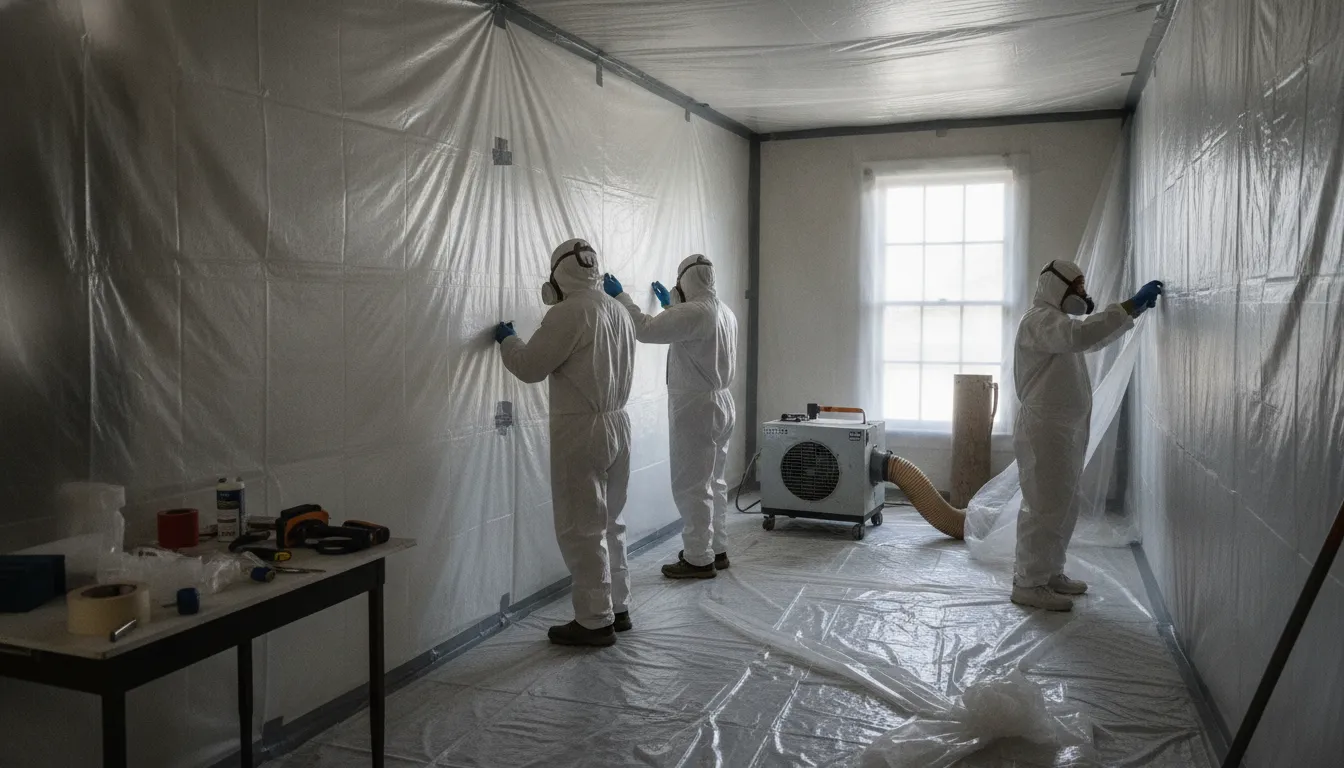
The team must seal off the area before any work begins. They use thick plastic sheets and tape to build a room within a room. This is called a containment area. It keeps dust and fibers from spreading to other parts of the home or office. Large fans pull air through filters to keep the air clean and safe.
Workers must wear special gear to stay safe. This includes suits that cover the whole body and masks that filter the air. No one else is allowed inside the work zone during the project. This strict control is what makes an asbestos abatement and removal project safe for everyone.
Safe handling and cleanup
The core of the project is the safe handling of the fibers. Teams often wet the items before they move them. Wetting the material keeps fibers from flying into the air. Workers then put the waste into thick, sealed bags. These bags have labels to show they hold risky waste.
- Testing: A professional checks the building and tests samples in a lab to find asbestos.
- Planning: Experts create a map and a safety plan for the work area based on the test results.
- Notice: The owner or worker tells the right state office about the project before work starts.
- Sealing: The team seals the work zone with plastic and sets up fans to clean the air.
- Wet Removal: Workers wet the items and take them out carefully to stop fibers from spreading.
- Cleanup: The team cleans the area with special tools and takes the waste to a safe landfill.
- Final Check: A third party tests the air to make sure the site is clean and safe to use again.
After the removal is done, the team cleans every surface. They use special vacuums and wet cloths to pick up any remaining dust. A third party often checks the air one last time. Once the air is clear, they take down the plastic walls. The project is only done when the site is proven to be safe.
What should North Carolina property owners know before work begins?
Planning a renovation or demolition in North Carolina requires careful steps to stay safe. Many older buildings across the state still contain hidden hazards. Before you disturb any surfaces, you must know the risks and rules. Proper planning helps you avoid health issues and legal problems later.
Check for hidden hazards
You cannot tell if a material has asbestos by looking at it. Many common items like roofing, floor tiles, and wall plaster used these fibers until the late 1900s. The Environmental Protection Agency (EPA) notes that materials should be treated as hazardous if you are in doubt. Professional asbestos abatement is the best way to handle these materials safely.
Buildings built before 1989 are very likely to have these fibers inside. If your property has damaged walls or crumbling insulation, you should get a professional inspection. Sampling materials yourself is not a good idea. Doing it wrong can release tiny fibers that stay in the air and hurt your lungs.
Understand rules and safety
North Carolina property owners have specific duties before major work starts. Federal rules require a full inspection before you demo or remodel most facilities. You may also need to notify a state agency before you begin. These rules help stop the release of dangerous fibers into the local air. Following the right asbestos abatement process ensures your project stays on track and keeps everyone safe.
Remtech Environmental has served the state for over 25 years. We have offices in Raleigh, Asheville, and Morehead City to help local owners. Our team uses expert specialists to manage every step of the project. We focus on teaching our clients so they can make the best choices for their property. You can get a free consultation to learn more about your project needs.
Work with certified experts
Safe removal is about more than just taking out old materials. It involves using water to keep fibers down and sealing the area to protect others. These work standards are set by the EPA to keep the public safe. Using a pro ensures that all waste is handled in the right way.
Remtech exceeds state needs by using technicians with national certifications. We do not use high-pressure sales or scare tactics. Instead, we give you a clear plan based on your specific site. Every project is different, so we provide custom quotes for each job we do.
How are scope and cost determined?
Planning a safe job starts with a close look at your home. Every site has its own layout. Expert teams must see the space to know what tools they will need for asbestos abatement. They look for certain things that change how much work is needed. This helps them give you a clear and fair price. At Remtech Environmental, we believe in being open about these costs. We do not use high pressure or scare tactics.
Finding the scope of work
The first step is to find just where the asbestos is. Experts check if the parts are soft or hard. Soft means it can crumble easily by hand. This is more risky because it can send dust into the air. If the part is hard and in good shape, the risk is lower. The state of the item sets the path for the whole job.
Teams also check how much of the stuff is there. They look at pipes, floors, and walls. A full EPA check helps set the right plan. It is also vital to know if the building will be in use. Working in a full home takes more care. Workers must make sure that no dust reaches the people who live there. This careful look at the scope keeps everyone safe from start to finish.
What drives the project cost?
The price of asbestos abatement and removal changes based on several facts. Labor is often the largest cost. Workers must wear full suits and masks to stay safe. They also need to build a sealed area. This uses thick plastic and tape to trap all dust. Special fans then pull the air through filters to keep it clean. The more rooms you have, the more time and gear it takes.
How easy it is to reach the parts also matters. A crawl space or a high attic can make the work slow. If the team has to move stuff or strip out walls, the price will go up. Disposal is the final cost factor. All waste must go to a safe site that takes unsafe items. Once the work is done, the air must be tested. This final check makes sure your home is safe for you to enter again. We focus on teaching our clients so they can make the best choices for their safety.
Questions for your contractor
Before you hire a pro, ask these questions. They help you find a team you can trust. A good expert will have clear answers for every step. Use these to check for quality and safety.
- Are all of your workers trained and certified?
- How will you stop dust from spreading to other rooms?
- Will you use high-tech air filters during the job?
- Do you provide a full report once the air is clear?
- What is your plan for the safe disposal of the waste?
We serve families across North Carolina. You can reach our pros at our offices in Raleigh-Durham, Asheville, and Morehead City. We offer a free consultation to help you start with your asbestos abatement. Let us help you keep your property safe the right way.
How do you choose an asbestos abatement contractor?
Choosing the right team for asbestos abatement is a big choice for any property owner. Since asbestos can cause serious lung diseases like cancer, you must find a group that follows strict safety rules. A top team will focus on teaching you about the risks rather than using scare tactics to close a sale.
Check for proper training
First, look for a team with the right skills and papers. In North Carolina, workers should be EPA-accredited to handle hazardous materials. Remtech Environmental uses EPA-accredited specialists and IICRC-certified technicians who know how to keep your home safe. These pros follow federal rules to stop the spread of tiny fibers during the work.
Review the work plan
A good contractor will give you a clear, written plan for the job. This scope should explain how they will seal off the area and keep fibers from getting into the air. Federal law says teams must use work practice standards like wetting materials and using sealed bags. If a company cannot show you a clear safety plan, they may not be the best choice.
Ask about insurance and waste
Always ask if the team has the right insurance for asbestos work. General liability is not enough; they need specific pollution coverage to protect you. Also, ask how they will get rid of the waste. Proper professional asbestos abatement means the crew must take the waste to a site that is allowed to accept it. They should provide a document showing the waste was dropped off safely.
Demand clear communication
Look for a team that values honesty and clear talk. They should be ready to answer your questions about the asbestos abatement process without rushing you. A true pro will also tell you that costs vary for each home. Since pricing is project-specific, stay away from groups that give a fixed price before they see your property.
Frequently Asked Questions
How much does asbestos abatement cost?
According to Remtech Environmental, the cost for this work depends on the project. Things like the size of the area and the type of material change the total. Since every home or business is different, experts do not give set rates. A pro check is the best way to get a real price. This helps make sure you only pay for the work your building needs to stay safe for everyone.
Can I remove asbestos from my property myself?
You should not try to remove these materials on your own. Doing this work the wrong way can let tiny fibers into the air. These fibers are too small to see but can cause health issues if you breathe them in. The EPA warns that doing this yourself can be more dangerous than leaving it alone. It is much safer to hire trained pros to handle the job and keep your home safe.
When is asbestos abatement required for a building?
Laws often need a full check before you start any renovation or teardown project. These tasks can stir up hidden hazards and let them into the air. According to the EPA, owners must often tell state agencies before starting large jobs. If you plan to fix up an older building, a pro check is needed for asbestos abatement. This helps you follow the law and keep people safe.
Is asbestos dangerous if it is not disturbed?
Asbestos is usually not a risk if it is in good shape and left alone. It becomes a threat when the material is broken or crumbling. When this happens, it can let out tiny fibers that people might breathe in. If your building materials are not damaged and you do not plan to move them, the EPA says a check is usually not needed. But you should watch the material for any new signs of damage.
Ready to get a free quote for asbestos abatement?
Waiting to start your asbestos project can lead to higher costs and health risks for everyone in your home. These old building parts often break down over time and let tiny fibers into the air. If you wait, you risk breathing in these fibers or facing fines for not following state rules. Acting now keeps your family safe and ensures your property stays in good shape for years to come. Our team can help you find the best path and start the work right away. You do not have to handle these hazards on your own. We give you the clear facts you need to make the right choice for your building today.
Ready to get a free quote? Contact our North Carolina team to protect your property today.