
Asbestos was once hailed as a miracle building material due to its exceptional resistance to heat, fire, and chemical erosion. However, we now know that exposure to microscopic asbestos fibers poses severe long-term health risks, including lung cancer, mesothelioma, and asbestosis. If you own an older residential or commercial property in Raleigh, Durham, or the surrounding North Carolina areas, understanding how to handle asbestos safely is vital for protecting your indoor air quality.
At Remtech Environmental, our EPA-accredited asbestos abatement specialists believe in transparent explanations, safe procedures, and honest communication. We serve NC property owners with an education-first approach, ensuring you understand the necessary safety steps without high-pressure sales tactics.
If you suspect asbestos in your ceiling tiles, flooring, or siding, get a free quote from Remtech Environmental or call our Raleigh office.
Where is Asbestos Found in Raleigh Homes?
Because asbestos was heavily used in thousands of building materials from the early 1900s through the late 1970s, it is common in many historic and mid-century homes throughout the Triangle area. It is typically hidden inside other materials and cannot be identified by sight alone.
Common asbestos-containing materials
- Popcorn ceilings: Textured acoustic ceilings installed between 1945 and 1980 frequently contain asbestos fibers to help bind the texture.
- Vinyl floor tiles: Nine-inch and twelve-inch vinyl flooring tiles, along with their adhesive backing, commonly contain asbestos.
- Pipe and boiler insulation: Older heating systems often utilized asbestos-wrap insulation around pipes and hot water boilers.
- Siding and roofing: Exterior transite siding shingles and roofing felts frequently incorporated asbestos for weatherproofing and fire resistance.
- Drywall joint compound: The joint compound used to seal drywall seams before 1980 often contained chrysotile asbestos.
If these materials are in good condition and left undisturbed, they do not pose an immediate health hazard. The risk arises when they become damaged, worn down, or are cut, sanded, or broken during remodeling, which releases the microscopic fibers into the air.
The Asbestos Abatement Process: Safe Removal Steps
Asbestos abatement must follow strict state and federal regulations to prevent the release of dangerous airborne fibers. Certified professionals utilize specialized engineering controls and containment procedures to isolate the work zone.
Detailed containment setup
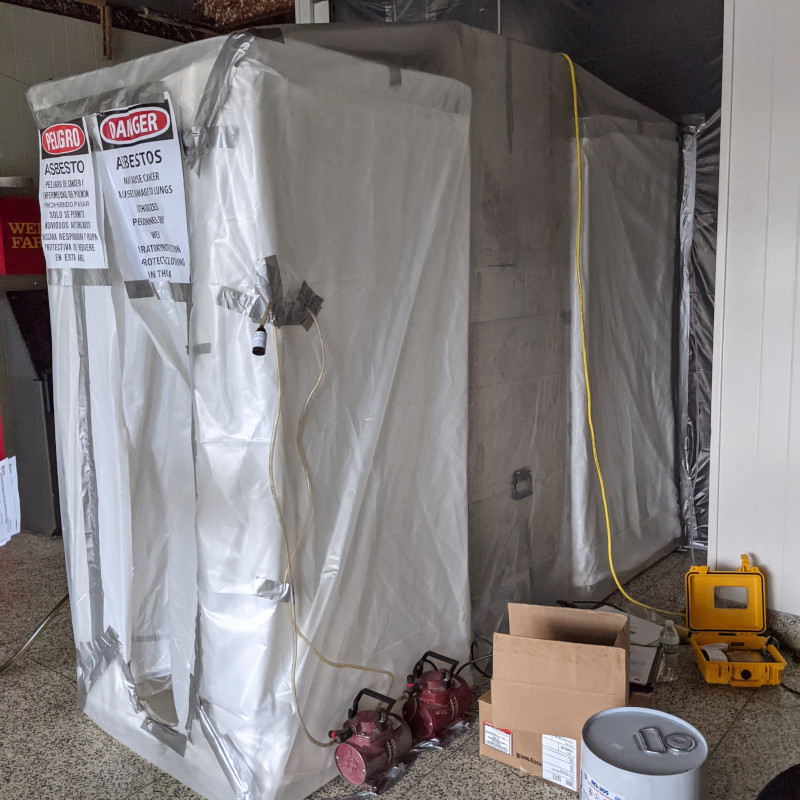
Before any asbestos is disturbed, technicians seal off the work area using heavy-duty plastic sheeting and industrial tape. They install negative-pressure air machines equipped with HEPA filters. These machines constantly pull air out of the containment zone and pass it through a filtration system, preventing any loose asbestos fibers from escaping into other areas of the building.
Wet-removal techniques
To prevent fibers from becoming airborne, specialists saturate the asbestos-containing materials with water or a specialized wetting agent before removing them. This keeps the fibers heavy and damp, making them much easier to handle safely. Materials are carefully placed into heavy-duty plastic waste bags, labeled, and sealed for transport.
Post-asbestos cleanup and testing
Once all target asbestos has been removed, the containment area is thoroughly cleaned using HEPA vacuums and specialized wet wiping. Before the plastic containment barriers are taken down, a third-party environmental inspector should perform air clearance testing. This involves taking air samples inside the workspace and analyzing them under a microscope to confirm that the air is clean and safe for occupancy.
Why DIY Asbestos Removal is Never Worth the Risk
Some home projects are great for weekend DIY enthusiasts, but asbestos removal is not one of them. Standard household dust masks do not block microscopic asbestos fibers, which are so small that they can hang suspended in the air for hours or days.
Disturbing asbestos without negative-pressure containment will contaminate your entire home. The fibers will settle inside your carpets, furniture, and HVAC ductwork, where they can be recirculated and inhaled for years to come. In addition, North Carolina has strict regulations governing the transport and disposal of asbestos waste. Certified firms ensure that all waste is delivered to approved hazardous waste landfills equipped to handle the material.
Trust Certified NC Experts for Safe Removal
When it comes to environmental hazards, "doing the right work the right way" is our guiding principle at Remtech Environmental. Our team is fully accredited, insured, and experienced in handling complex residential and commercial asbestos abatement projects.
To schedule an asbestos inspection or learn more about our certified removal procedures, contact Remtech Environmental today to speak with a specialist.