
Why You Shouldn’t Handle Mold Removal on Your Own
Published by Remtech Environmental Team · Last updated April 2025
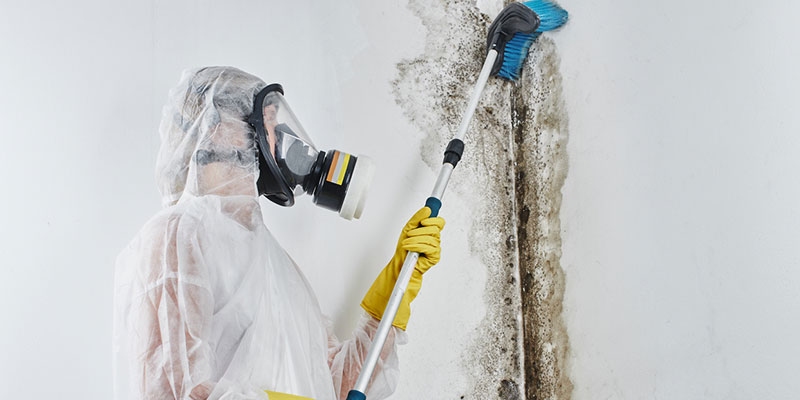
If you’ve got a mold presence in your home, don’t bring out the bleach quite yet. You may want to take care of the mold removal right then and there, and while it’s a good idea to take care of this mold as soon as possible, that doesn’t mean you should tackle mold removal on your own.
Professional mold handling experts are best equipped to handle mold removal. Here are some of the top reasons why:
When it comes to mold removal, our services at Remtech Environmental are second to none, so contact us for all of your mold removal needs.
- Mold can travel. If you have mold contained within one area of the home, the last thing you want is for this mold to travel. However, this is a real possibility when mold removal is handled without professional help. You may accidentally spread mold to other areas of your home, but professionals know how to confine the mold before safely getting rid of it.
- Professionals are more thorough. Proper mold removal can be more intense than you may think. An untrained person may stop cleaning once they no longer see spores, but that doesn’t mean that all of the mold has been taken care of. Professionals will know where to check for any more growth before finishing the job and are more thorough in the mold removal process.
- You can save money. You don’t want to buy a lot of high-grade cleaning materials, only to miss growth spots or improperly clean. When you hire professional services, you don’t have to worry about spending money on costly materials or those that aren’t right for the job.
Every weekend across North Carolina, well-intentioned homeowners carry a spray bottle of bleach into a moldy basement or attic and make the problem dramatically worse. We see the aftermath constantly. A homeowner discovers a patch of black mold on bathroom drywall, scrubs it with bleach and a stiff brush, sees it disappear, and feels accomplished. Six months later we are removing the entire bathroom wall, the adjacent bedroom carpet, and a section of HVAC ductwork because the original disturbance aerosolized millions of spores into the home. DIY mold removal is not just ineffective. In humid Cfa-climate states like North Carolina, it actively accelerates contamination, exposes occupants to mycotoxins, voids insurance coverage, and creates legal liability when the home is later sold. This article details why mold removal belongs to certified professionals, what OSHA and the EPA actually require, and what specifically goes wrong when an untrained person tries to handle it alone.
The Real Risks of DIY Mold Removal
DIY mold removal goes wrong in predictable ways. Here are the five categories of failure we encounter most often when homeowners call us after their own attempts.
Mycotoxin and Spore Inhalation
Many common indoor molds, including Stachybotrys chartarum, Aspergillus, Penicillium, and Chaetomium, produce mycotoxins as secondary metabolites. When dry mold colonies are physically disturbed by scrubbing, sanding, or tearing out drywall, spore concentrations in the air can spike from a few hundred per cubic meter to over one million within minutes. A standard N95 dust mask filters 95 percent of particles 0.3 microns and larger but does nothing to stop the volatile organic compounds and mycotoxins that off-gas during disturbance. OSHA recommends a half-face respirator with P100 cartridges at minimum for any mold disturbance work, plus a Tyvek suit, nitrile gloves, and full eye protection. Most homeowners own none of this gear. The result is acute exposure that can trigger asthma, hypersensitivity pneumonitis, sinusitis, and in immunocompromised occupants, invasive fungal infections.
Cross-Contamination Through HVAC Systems
Disturbing mold without containment turns the home's HVAC system into a distribution network. Forced-air systems pull return air through every grille in the house, and a single hour of running the air handler during a DIY removal can deposit spores in every room, every duct run, and every soft surface. We have inspected homes where the original mold problem was a 12-square-foot patch in a guest bathroom and post-DIY air sampling showed elevated Aspergillus counts in seven separate rooms plus the supply trunk. Remediating that level of contamination costs five to ten times what the original bathroom job would have cost. Professional remediators seal HVAC registers and run negative air pressure precisely to prevent this outcome.
Bleach Does Not Kill Mold on Porous Surfaces
The persistence of bleach as a folk remedy for mold is one of the most damaging misconceptions in residential maintenance. Sodium hypochlorite is a surface disinfectant that requires direct contact to kill organisms. On porous materials like drywall, wood framing, OSB, and grout, the water carrier in bleach soaks into the substrate and feeds the very fungi the chlorine was supposed to kill, while the chlorine itself evaporates within minutes. The visible mold on the surface bleaches white, giving the appearance of a successful clean, but the colony continues to grow underneath. The EPA has explicitly stated that biocides like bleach are not recommended as a routine practice during mold remediation. Professionals use EPA-registered antimicrobials with documented kill claims and proper dwell times on the specific organisms present.
Failure to Identify the Moisture Source
Mold is a symptom. The disease is moisture. North Carolina homes generate moisture problems from dozens of sources: failed flashings around chimneys, cracks in foundation walls, oversized HVAC systems that short-cycle and never dehumidify, vapor drive through vented crawlspaces during summer, condensation on supply registers in humid attics, and slow plumbing leaks behind cabinetry. A DIY remediator focused on visible mold almost never identifies the underlying source, so the colony returns within months. We use moisture meters, thermal imaging, and sometimes borescope inspections to trace the water back to its origin before recommending the remediation scope. Without this step, a homeowner is essentially mowing weeds without pulling roots.
Insurance and Real Estate Consequences
Most North Carolina homeowner policies require mold remediation be performed by an IICRC-certified firm in order to honor a claim, and many cap mold coverage at $5,000 to $10,000 unless work is documented. A DIY remediation generates no documentation, no clearance testing, and no chain of evidence, which means a future claim for related damage will likely be denied. Even worse, NC residential disclosure law requires sellers to disclose known mold history. A buyer's inspection that flags mold post-DIY can derail a closing or trigger demands for full re-remediation at the seller's expense. We routinely produce documentation packages used in real estate transactions, and that paperwork only exists when certified professionals do the work from the start.
What to Do Instead of DIY
What OSHA, EPA, and IICRC Actually Require
Professional mold remediation is governed by overlapping standards that almost no homeowner is aware of. OSHA does not have a specific mold standard but enforces hazard communication, respiratory protection (29 CFR 1910.134), and bloodborne pathogen rules whenever workers are exposed to biological hazards. Any contractor disturbing mold must have a written respiratory protection program, fit-testing for each respirator user, and medical clearance for respirator use. The EPA publishes Mold Remediation in Schools and Commercial Buildings, which establishes the engineering controls, personal protective equipment, and containment levels required at different scales of contamination. The IICRC S520 standard, now in its fourth edition, defines three contamination conditions and corresponding remediation methods. North Carolina specifically licenses asbestos and lead workers but does not yet license mold remediators, which means homeowners must vet contractors on certifications rather than state license. Remtech Environmental's technicians hold IICRC AMRT (Applied Microbial Remediation Technician) and WRT (Water Restoration Technician) certifications, and our supervisors carry CMRS (Certified Mold Remediation Supervisor) credentials. When you hire us, you are buying compliance with all three standards documented end to end. A DIY effort does not even attempt this. The financial and health costs of skipping the standards almost always exceed the cost of doing it right the first time.
Get Professional Help in NC
If you have discovered mold or suspect a hidden moisture problem, do not pick up a bleach bottle. Remtech Environmental provides certified mold remediation throughout central North Carolina with documented IICRC compliance. Our crews respond to Raleigh, Durham, Cary, Chapel Hill, Greensboro, Winston-Salem, and Wilmington with full assessment, containment, and clearance testing. We work directly with insurance adjusters and produce the documentation real estate transactions require. Call before you scrub. The cost of a professional assessment is a fraction of what a botched DIY remediation costs to fix.
Key Takeaways
- Disturbing mold without containment can spike spore counts from hundreds to over one million per cubic meter and contaminate the entire home through HVAC distribution.
- Bleach does not kill mold on porous surfaces because the water carrier feeds the colony while the chlorine evaporates; EPA does not recommend it as a primary biocide.
- OSHA requires respiratory protection programs, fit-testing, and PPE that almost no homeowner has access to, including P100 respirators and Tyvek suits.
- Most NC homeowner policies require IICRC-certified remediation to honor mold claims; DIY work generates no documentation and can void coverage.
- Mold is a symptom of moisture; without identifying and correcting the source, even a thorough cleanup will see regrowth within months.
Need Help with Environmental Services?
If you have concerns about mold, asbestos, or water damage in your property, contact Remtech Environmental today for a free consultation.
Get a Free Quote