
Why Is it Important to Detect Mold Damage Early?
Published by Remtech Environmental Team · Last updated April 2025
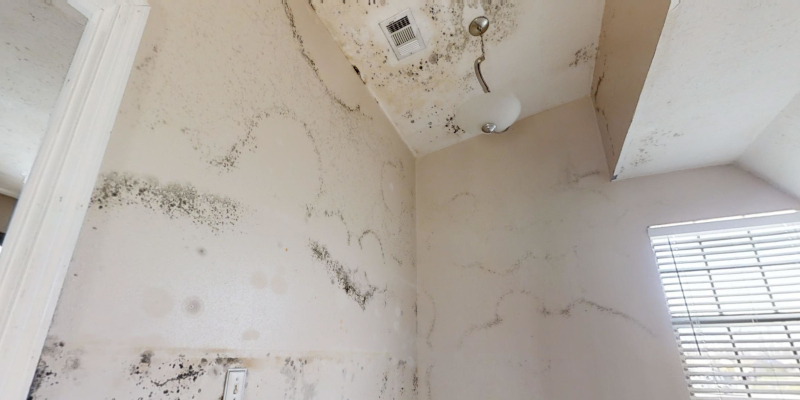
Mold is a naturally occurring problem that can affect different parts of your home that might be exposed to excessive moisture. It can cause various issues for both the occupants of the home and the home itself. It’s better to detect and resolve any mold damage early. Here are a few reasons why.
If you suspect mold damage in any area of your home, you can call us for a mold inspection. We can assess the mold-affected area, determine the most effective remedies, and get straight to work so you won’t have to suffer the impacts of mold any longer than necessary.
- Prevent continued mold growth: Mold damage can start as just a small spot of mold in a far corner of your home, but in the right conditions of warmth and moisture, it can continue growing, spreading to the rest of your home, and even affecting its structural integrity. Early detection and remediation of such mold damage can prevent continued growth of the mold and stop it from spreading to and damaging other surfaces.
- Prevent structural damage: Mold damage can affect more than just the outer surface of the walls, floors, or other surfaces that might have been affected by the mold. It can impact the structural integrity of your home and cause further damage that will require more extensive repairs than simple mold remediation. Structural damage from mold growth can be prevented or minimized with early detection and remediation instead.
- Prevent health issues: Mold damage can also affect your health. For those with mold allergies, they might suffer respiratory discomfort, including coughing, sneezing, and sore throats. Early detection of mold could help resolve these health issues and prevent any further irritation.
Mold is far more aggressive than most North Carolina homeowners realize. Under the warm, humid conditions typical of Wake County summers, a small colony hidden behind drywall or under flooring can expand from a few square inches to several square feet in a matter of weeks, silently consuming organic building materials and degrading indoor air quality long before any visible discoloration appears on a wall surface. Early detection is not simply a matter of aesthetic preservation. It is a quantifiable financial decision, a building integrity decision, and most importantly a public health decision affecting everyone who breathes the air inside the structure. The longer a mold colony grows undetected, the more expensive remediation becomes, the more extensive the structural damage, and the greater the cumulative health burden on occupants. This article explains why time is the single most important variable in mold management and why professional inspection at the first suspicion of moisture intrusion delivers measurable returns.
Why Early Mold Detection Determines Outcomes
Mold colonies behave according to predictable biological and physical principles that compound over time. Understanding these dynamics helps explain why a delayed response transforms a manageable problem into a major reconstruction project, and why the IICRC S520 Standard for Professional Mold Remediation emphasizes rapid intervention as a foundational principle.
Hyphae Expansion and Colony Spread Rates
Mold reproduces through both spore release and direct vegetative expansion of microscopic root-like structures called hyphae. Under optimal conditions of 70 to 90 degrees Fahrenheit and relative humidity above 60 percent, hyphae of common species like Stachybotrys chartarum, Aspergillus, and Penicillium can extend at rates documented in mycological literature of 0.5 to 3 millimeters per day. While that may sound slow, hyphae grow in three dimensions simultaneously, penetrating deep into porous substrates like drywall paper, wood framing, and carpet padding. A colony that appears to occupy 10 square inches on a visible surface may have hyphae extending several feet into wall cavities and structural members. This hidden growth is why surface cleaning with bleach almost never resolves a real mold problem and why early detection before significant subsurface penetration is so valuable.
Structural Damage Timeline From Active Colonies
Mold is fundamentally a decomposer organism that secretes digestive enzymes including cellulases, ligninases, and proteases to break down organic matter for nutrition. The very materials that comprise modern American homes, including paper-faced gypsum drywall, wood framing lumber, oriented strand board, and natural fiber insulation, are all preferred mold substrates. Within four to six weeks of established growth, drywall paper begins losing tensile strength. Within three to six months, wood framing members can lose measurable structural capacity as cellulose fibers degrade. Sustained colonies over a year or more can compromise floor joists, wall studs, and roof sheathing to the point where reframing becomes necessary. Early detection during the first weeks of growth typically allows for material replacement only, while delayed detection often requires structural reinforcement.
Health Risk Escalation With Spore Concentration
As mold colonies mature, they produce vastly more airborne spores. A small colony may release a few thousand spores per square foot per hour, while an established colony in active reproductive phase can release millions. Some species also produce mycotoxins, secondary metabolic compounds that have been linked in peer-reviewed research to a range of health effects. The Centers for Disease Control and Prevention and the Institute of Medicine have documented associations between indoor mold exposure and upper respiratory tract symptoms, asthma development in previously healthy children, asthma exacerbation, hypersensitivity pneumonitis, and allergic rhinitis. Vulnerable populations including infants, elderly residents, immunocompromised individuals, and those with pre-existing respiratory conditions face elevated risks. Each week a colony grows undetected, the cumulative spore burden increases and so does the probability of triggering health symptoms in occupants.
Cost Compounding Through Delayed Remediation
Remediation cost scales nonlinearly with colony size and structural penetration. An IICRC S520 Condition 2 contamination affecting less than 10 square feet typically falls under what the EPA classifies as small-scale remediation suitable for limited intervention, often costing a few hundred to a few thousand dollars. Once the affected area exceeds 100 square feet or penetrates structural materials, the project shifts to large-scale remediation requiring full containment with negative air pressure, HEPA filtration, professional protective equipment, demolition of affected materials, and post-remediation verification testing. Costs in this range commonly run from five thousand to twenty thousand dollars or more for North Carolina homes. Delayed detection that allows colony spread across multiple rooms or into HVAC systems can drive costs above thirty thousand dollars when ducts must be cleaned or replaced and reconstruction is required.
Indoor Air Quality Degradation Throughout the Home
Mold contamination is rarely confined to its visible source. Airborne spores migrate through HVAC return ducts, settle on surfaces throughout the home, and germinate wherever moisture conditions permit. Microbial volatile organic compounds, the gases produced by active mold metabolism, also disperse throughout the structure and contribute to that distinctive musty smell that often appears before any visible growth. By the time a homeowner notices visible mold or detects an odor, indoor air quality testing typically reveals elevated spore counts in rooms far from the original source location. Early detection allows targeted remediation of the source area before secondary contamination establishes elsewhere in the home. Late detection often requires whole-home air cleaning, duct decontamination, and content cleaning across multiple rooms, dramatically expanding both the scope and cost of restoration.
What Causes Hidden Mold Growth in North Carolina Homes
The Triangle region presents particularly favorable conditions for mold growth due to its humid subtropical climate, with summer dewpoints frequently exceeding 70 degrees Fahrenheit and prolonged periods where outdoor relative humidity remains above 80 percent. This climate combines with several common building science failure modes to create persistent indoor moisture problems. Crawl spaces beneath raised foundations are a chronic source, particularly when vapor barriers are damaged or absent and ground moisture evaporates upward into floor joists and subfloor sheathing. HVAC systems can be a major contributor when oversized air conditioners short-cycle without adequate dehumidification, leaving indoor humidity above the 50 percent threshold recommended by ASHRAE Standard 62.2. Plumbing leaks behind walls and under sinks, often slow drips accumulating over months, create perfect conditions for hidden colony establishment. Roof leaks tracking down rafters and into wall cavities, ice damming on north-facing slopes during occasional winter cold snaps, and condensation on uninsulated water lines all contribute. Bathrooms with inadequate exhaust ventilation accumulate moisture in wall and ceiling cavities. Newer homes built tight for energy efficiency without corresponding mechanical ventilation can trap moisture from cooking, bathing, and respiration. Each of these failure modes can produce mold growth that remains entirely hidden from casual observation, which is why professional moisture mapping using thermal imaging and pin-type moisture meters often reveals contamination that visual inspection misses entirely. The most reliable detection strategy combines professional inspection at the first sign of any unexplained odor, visible discoloration, occupant respiratory symptoms, or recent water intrusion event.
How to Detect Mold Damage Before It Becomes a Major Problem
Effective early detection combines ongoing homeowner vigilance with periodic professional assessment. Pay attention to subtle warning signs that often precede visible mold. A persistent musty odor, particularly one that intensifies when the HVAC runs, indicates active microbial growth somewhere in the building envelope. Unexplained allergy symptoms that improve when occupants leave the home suggest indoor air quality problems. Visible water staining on ceilings or walls, even if it appears old and dry, indicates a moisture event that may have produced concealed mold growth. Bubbling paint, warped baseboards, and tile grout deterioration are secondary indicators. Schedule professional inspection any time you experience a water intrusion event such as a roof leak, plumbing failure, or storm-related flooding, regardless of whether you see resulting mold. Inspection should also follow purchase of any older home, particularly if the property has been vacant or references past water damage. A qualified inspector will use moisture meters to map subsurface water content, thermal imaging cameras to identify temperature differentials indicating hidden moisture, and air sampling for comparative spore counts. While North Carolina does not require state licensing for mold inspectors, reputable professionals hold IICRC or ACAC credentials. Remtech Environmental has performed thousands of mold inspections across the Raleigh metropolitan area over more than three decades.
Continue Learning About Mold Hazards
Our Mold Remediation service page describes our complete IICRC S520-compliant containment, removal, and verification protocols. For homeowners researching specific symptoms, our Mold Inspection page explains the diagnostic process including air sampling and surface testing options. If you are concerned about mold caused by recent water intrusion, our Water Damage Restoration page covers the rapid drying protocols that prevent secondary mold contamination. Property owners considering preventive air quality improvements may find our Air Duct Cleaning information useful. Visit our Free Quote page to schedule a professional assessment, or browse our other Blog articles for additional homeowner education on environmental hazards in North Carolina properties.
Key Takeaways
- Mold hyphae expand at rates of 0.5 to 3 millimeters per day under favorable conditions, with three-dimensional growth that quickly penetrates beyond visible surfaces into structural materials.
- Drywall paper degrades within weeks of established colony growth, while wood framing can lose structural capacity within three to six months, making early detection essential for limiting reconstruction scope.
- Spore concentrations and mycotoxin production increase dramatically as colonies mature, meaning each week of delayed detection compounds the health risk to occupants, particularly children, elderly residents, and immunocompromised individuals.
- Remediation costs scale nonlinearly, with small early-stage projects often costing under five thousand dollars while delayed projects spreading across multiple rooms or HVAC systems can exceed thirty thousand dollars.
- The Triangle region's humid subtropical climate combines with common building failure modes including crawl space moisture, plumbing leaks, and HVAC undersizing to create chronic conditions that favor hidden mold growth requiring professional moisture mapping to detect.
Need Help with Environmental Services?
If you have concerns about mold, asbestos, or water damage in your property, contact Remtech Environmental today for a free consultation.
Get a Free Quote