
Why is Asbestos so Harmful?
Published by Remtech Environmental Team · Last updated April 2025
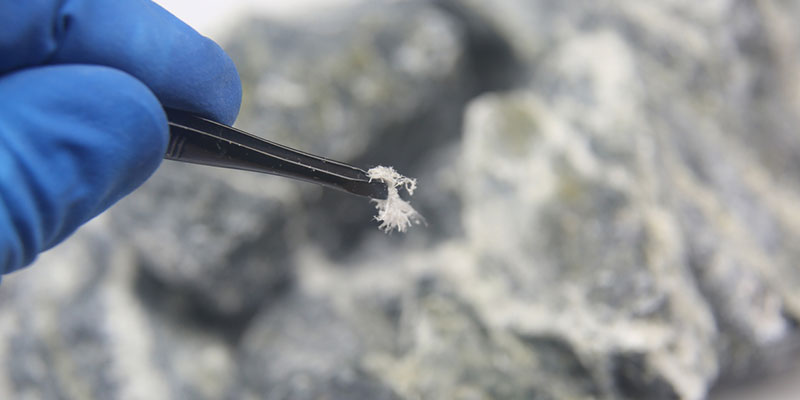
One of the services that we offer here at Remtech Environmental is asbestos abatement, which involves removing any asbestos from your home in order to keep you and your loved ones safe from this material’s damaging effects. While most people these days know that asbestos is incredibly harmful, not everyone knows the details of why this is so. Our team has put together this article to fill in that knowledge gap–read on if you want a better idea of what exactly makes asbestos so damaging.
What is Asbestos?
Asbestos is a naturally occurring mineral with a structure composed of millions of fine, fibers packed very closely together. This dense crystal structure makes asbestos resistant to heat, corrosion, and even electricity. Obviously these qualities are highly useful, which is why it was used so extensively, and why it is still included in many household products (though modern manufacturing standards require this material to make up less than 1% of the product’s total mass).
Why is Asbestos Dangerous?
What makes asbestos dangerous is its individual fibers, which can easily break off from the main sheet in the form of dust. When asbestos dust is inhaled, its crystal fibers, which are as sharp as needles, get stuck in the lungs and other body tissues, and they remain there permanently. The crystals are so sharp that they can rupture your cells’ nuclei and damage the DNA inside–which eventually leads to cancer, as the damaged cells reproduce and spread to other areas of the body.
Asbestos remains one of the most insidious environmental hazards facing North Carolina property owners, particularly in homes and commercial buildings constructed before 1980. What makes this naturally occurring mineral so dangerous is not visible to the naked eye, but rather a microscopic structural property that allows individual fibers to bypass the body's natural defenses and embed themselves permanently within human tissue. The Environmental Protection Agency, the World Health Organization, and the Occupational Safety and Health Administration have all classified asbestos as a known human carcinogen with no established safe exposure threshold. Understanding precisely how asbestos damages the body at a cellular level is essential for any Raleigh-area property owner considering renovation, demolition, or remediation work. At Remtech Environmental, we have spent more than three decades helping North Carolina families and businesses safely identify and remove asbestos-containing materials, and this article explains the medical and scientific reasons this work matters so deeply.
The Biological Mechanisms That Make Asbestos Fibers So Dangerous
Unlike most environmental contaminants that the body can metabolize, neutralize, or expel, asbestos fibers exploit a unique combination of size, shape, and chemical durability that allows them to cause progressive cellular damage for decades after a single exposure. The following sections break down the specific mechanisms documented in peer-reviewed medical literature.
Microscopic Fiber Geometry and Lung Penetration
Asbestos fibers are extraordinarily small. A single fiber can measure less than 3 microns in diameter, roughly 700 times thinner than a human hair, allowing it to bypass the upper respiratory tract entirely and travel deep into the alveolar regions of the lungs. The fibers are also needle-shaped, technically classified as having an aspect ratio of at least 3:1, with many chrysotile fibers exhibiting ratios of 100:1 or greater. This elongated geometry means that once inhaled, the fibers align with airflow and penetrate further than equivalently sized particulate matter. Macrophages, the immune cells responsible for clearing foreign particles, attempt to engulf these fibers but cannot fully envelop them due to their length, a phenomenon researchers call frustrated phagocytosis. The result is chronic cellular irritation that persists for the remainder of the exposed person's life.
Permanent Tissue Lodging and Biopersistence
Asbestos is chemically classified as a silicate mineral, which gives it remarkable resistance to acidic, alkaline, and enzymatic degradation. Once a fiber lodges in pulmonary tissue, the body has no biochemical mechanism capable of breaking it down. Studies tracking asbestos workers have found intact fibers in lung tissue more than 40 years after the last documented exposure. This biopersistence means the damage is cumulative and irreversible. Each individual fiber acts as a permanent source of inflammation, slowly migrating through tissue layers, sometimes reaching the pleural lining surrounding the lungs or even the peritoneum surrounding abdominal organs. North Carolina homeowners disturbing asbestos during DIY renovation may inhale fibers that will remain in their bodies for the rest of their lives, which is why containment protocols during professional abatement are so rigorous.
Latency Periods Spanning Decades
One of the cruelest characteristics of asbestos exposure is the extended latency between inhalation and disease onset. According to the National Cancer Institute, mesothelioma typically develops 20 to 50 years after initial exposure, with most diagnoses occurring in patients aged 65 and older. Asbestosis usually presents 10 to 40 years post-exposure, while asbestos-related lung cancers typically emerge 15 to 35 years later. This delay creates a dangerous false sense of security. A homeowner who disturbs asbestos insulation during a 2026 bathroom remodel may not experience symptoms until 2056, by which time the connection to that single exposure event is often forgotten. The latency also explains why asbestos-related deaths in the United States continue to rise even though widespread industrial use ended decades ago.
No Established Safe Exposure Threshold
Regulatory agencies including the EPA, OSHA, and the International Agency for Research on Cancer have all concluded that there is no known level of asbestos exposure below which health effects do not occur. This stands in contrast to many other toxic substances where dose-response curves identify a threshold of safety. Even brief, low-level exposures have been linked to mesothelioma in epidemiological studies of household members who lived with asbestos workers and contracted disease decades later from fibers carried home on clothing. OSHA's permissible exposure limit of 0.1 fibers per cubic centimeter is a regulatory action level, not a safety threshold. For Wake County and surrounding North Carolina property owners, this means any suspected asbestos-containing material should be tested and managed by certified professionals rather than disturbed.
The Six Regulated Asbestos Mineral Types
Asbestos is not a single substance but a commercial term encompassing six distinct fibrous silicate minerals regulated under federal law. Chrysotile, a serpentine mineral with curly fibers, accounted for roughly 95 percent of historical commercial use in North American building materials. The five amphibole varieties, which include amosite, crocidolite, tremolite, anthophyllite, and actinolite, have straighter and stiffer fibers and are generally considered more carcinogenic, particularly crocidolite, often called blue asbestos. All six are classified by IARC as Group 1 human carcinogens. Different mineral types appear in different building products, with chrysotile dominant in floor tiles, joint compound, and pipe insulation, while amosite was favored for thermal insulation and fireproofing. Proper laboratory analysis using polarized light microscopy or transmission electron microscopy is required to identify which type is present.
How Asbestos Causes Mesothelioma, Asbestosis, and Lung Cancer
The three primary diseases caused by asbestos exposure each result from distinct but related pathological processes. Asbestosis is a progressive interstitial lung disease characterized by extensive scarring of pulmonary tissue. As fibers accumulate in the alveoli, they trigger continuous release of inflammatory cytokines and reactive oxygen species from frustrated macrophages. Over years and decades, this chronic inflammation stimulates fibroblasts to deposit collagen, gradually replacing functional lung tissue with stiff scar tissue. Patients experience worsening shortness of breath, persistent dry cough, and reduced exercise tolerance. Lung cancer, primarily bronchogenic carcinoma, develops through a combination of direct DNA damage and chronic inflammation. Asbestos fibers physically pierce cell nuclei during cell division, breaking chromosomes and disrupting genetic material in ways that accumulate mutations over time. The carcinogenic effect is dramatically amplified by smoking, with combined exposure increasing lung cancer risk by 50 to 90 times compared to baseline. Mesothelioma is perhaps the most distinctly asbestos-driven disease, a rare and aggressive cancer of the mesothelium, the protective lining surrounding the lungs, heart, or abdominal organs. Fibers that migrate through pulmonary tissue and reach the pleural lining cause persistent irritation and DNA damage to mesothelial cells. Mesothelioma is almost exclusively associated with asbestos exposure, with more than 80 percent of cases linked to documented historical contact. The disease typically presents at an advanced stage with median survival measured in months, which is why prevention through proper abatement is the only effective strategy.
What North Carolina Property Owners Should Do About Suspected Asbestos
If your home, rental property, or commercial building was constructed before 1989 in the Raleigh, Durham, Cary, Apex, or Wake Forest areas, there is a meaningful probability that asbestos-containing materials are present somewhere on the premises. Common locations include vinyl floor tiles and mastic adhesive, popcorn ceiling textures, pipe wrap insulation, vermiculite attic insulation, joint compound in drywall, roofing felts, siding shingles, and HVAC duct insulation. The single most important rule is to never disturb suspected asbestos-containing materials yourself. Sanding, sawing, drilling, scraping, or aggressive cleaning can release millions of fibers within seconds. The North Carolina Department of Health and Human Services regulates asbestos abatement under 15A NCAC 18A.2600, which requires accredited inspectors to perform sampling and licensed contractors to perform removal exceeding regulatory thresholds. Begin with a professional inspection by a certified asbestos building inspector who will collect bulk samples and submit them to an accredited laboratory. If asbestos is confirmed, your inspector will recommend encapsulation, enclosure, operations and maintenance, or full removal depending on the material's condition and your renovation plans. Remtech Environmental holds the appropriate North Carolina licenses and follows EPA NESHAP work practice standards on every project, including negative air containment, HEPA filtration, wet methods to suppress fiber release, and certified disposal at approved landfills.
Related Resources From Remtech Environmental
If you are researching asbestos hazards in your home, we encourage you to explore our complete Asbestos Abatement service page for an overview of our containment, removal, and disposal protocols. Our Asbestos Inspection page details the testing process and what to expect from sample collection. For property owners managing renovation projects, our Asbestos Removal page explains regulatory compliance and post-abatement clearance testing. If your situation involves additional environmental concerns, our Mold Remediation and Water Damage Restoration pages cover the related services we provide across the Triangle region. You can also visit our Free Quote page to schedule an inspection or call our team directly to discuss your specific property concerns with an experienced consultant.
Key Takeaways
- Asbestos fibers are microscopically small, needle-shaped, and chemically indestructible, allowing them to lodge permanently in lung tissue and cause cumulative cellular damage that the body cannot reverse.
- Disease latency periods of 20 to 50 years mean asbestos exposure today may not produce symptoms until decades later, often after the original exposure event has been forgotten.
- There is no established safe exposure threshold for asbestos according to the EPA, OSHA, and IARC, meaning even brief contact with disturbed asbestos materials carries genuine risk.
- Six distinct mineral types are regulated as asbestos under federal law, including chrysotile and the more carcinogenic amphibole varieties such as crocidolite and amosite.
- Mesothelioma, asbestosis, and asbestos-related lung cancer each develop through distinct mechanisms involving chronic inflammation, DNA damage from fiber penetration of cell nuclei, and progressive tissue scarring.
Need Help with Environmental Services?
If you have concerns about mold, asbestos, or water damage in your property, contact Remtech Environmental today for a free consultation.
Get a Free Quote