
When to Schedule Professional Mold Remediation Services
Published by Remtech Environmental Team · Last updated April 2025
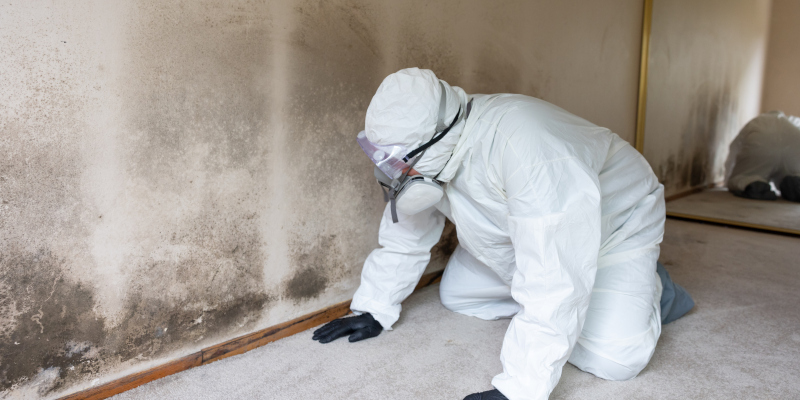
The presence of mold can cause various health concerns, especially for those who suffer from mold allergies. You also have the risk of mold spreading throughout the rest of the home and impacting the structural integrity of the building. No matter the amount of mold you have in your home, you will want to have it removed as soon as possible. Here are some tips on how to decide if you need professional mold remediation services.
Give us a call if you would like to learn more.
- Consider the expanse of the mold issue: If you have only a small spot of mold in your home, you might consider handling the mold-affected areas on your own. However, the EPA recommends scheduling professional mold remediation services for any mold issue that extends over ten square feet due to the risks involved for a larger mold removal project.
- Consider the type and location of mold: When deciding whether you need professional mold remediation services, you will also want to consider the type and location of mold in your home. Some mold-affected areas might require more extensive work to fully resolve the problem. Failing to fully remove the mold can result in continued growth and spreading of mold throughout the rest of your home, so you will want to rely on the professionals instead.
- It’s always safest to rely on the professionals: When it comes to mold remediation, there are more risks to your health and structural integrity along with the potential to make the problem worse to truly justify attempting the remediation on your own. It’s always best to rely on the professionals like us instead to remedy the situation for you with the necessary protective gear, precautions, equipment, and methods to effectively resolve any mold-affected areas.
Mold remediation differs from mold inspection in one critical respect: remediation is the active removal of confirmed contamination, while inspection is the assessment that determines whether remediation is needed. Knowing when to cross that threshold from inspection into remediation is a question of objective trigger conditions rather than subjective judgment, and the relevant standards from the EPA, the IICRC, and the American Industrial Hygiene Association define those triggers with considerable precision. Homeowners who interpret these thresholds informally frequently underestimate what they are seeing or escalate to expensive remediation when targeted intervention would have sufficed. Remtech Environmental works across central North Carolina performing projects that range from contained surgical removal of a single cavity to whole-home decontamination after Category 3 water losses. This article walks through those trigger thresholds in detail, including the EPA 10 square foot rule, the IICRC S500 24 to 48 hour water damage window, the role of laboratory analytical results, and the IICRC S520 conditions that distinguish projects requiring full containment.
The Objective Trigger Thresholds for Professional Remediation
Professional remediation is warranted when one or more specific trigger thresholds are crossed, and these thresholds come from documented industry standards rather than rules of thumb. The four triggers below cover the overwhelming majority of decision points where remediation becomes the appropriate response.
Visible Mold Growth Exceeding 10 Square Feet (EPA Threshold)
The EPA's Mold Remediation in Schools and Commercial Buildings guidance establishes a 10 square foot threshold above which professional remediation is recommended over homeowner cleanup. This threshold reflects the practical reality that contamination at that scale typically requires containment, engineering controls, proper personal protective equipment, and disposal protocols that exceed what a property owner can execute safely. Below 10 square feet, the EPA permits homeowner cleanup using detergent and water on non-porous surfaces, provided the moisture source is addressed. Above 10 square feet, the calculation shifts decisively toward professional intervention. Experienced remediators recognize that visible growth often represents a fraction of the actual contamination, with hidden colonies behind drywall, under flooring, or inside HVAC systems extending the effective scope considerably.
Water Damage Within the IICRC S500 24 to 48 Hour Window
The IICRC S500 Standard for Professional Water Damage Restoration documents a 24 to 48 hour window during which Category 1 clean water losses can be dried successfully without significant risk of microbial amplification. Beyond 48 hours, Category 1 water transitions to Category 2 by definition, with elevated risk of bacterial and fungal growth. Beyond 72 hours, the assumption shifts to Category 3 conditions requiring aggressive remediation. This window determines whether a water loss can be handled as drying alone or must be approached as combined water damage and mold remediation. The clock starts the moment water begins infiltrating materials, not when the leak is repaired. Calling a qualified restoration company within 24 hours dramatically expands options for preserving materials. Sewage backup and ground surface water demand remediation regardless of timing.
Positive Laboratory Sampling Results From Air or Surface Tests
When laboratory analysis from an AIHA-LAP accredited facility returns spore counts substantially above outdoor control samples, surface tape lift results showing active fungal structures, or culturable counts indicating elevated indoor concentrations, those results constitute objective evidence that remediation is warranted. Homeowners sometimes commission testing without understanding what the results mean, then interpret elevated numbers as confirmation that DIY cleaning will solve the problem. Laboratory-confirmed elevation in indoor spore concentrations usually indicates active amplification somewhere in the building envelope, and the source must be located and remediated before air quality returns to baseline. Reputable remediators work with industrial hygienists who interpret results in context, comparing indoor concentrations to outdoor controls, evaluating species composition for indicators of indoor amplification (Aspergillus, Penicillium, and Stachybotrys among others), and translating findings into a defensible remediation scope.
Conditions That Meet IICRC S520 Category 2 or Category 3 Definitions
The IICRC S520 Standard for Professional Mold Remediation defines three condition categories that determine the scope of work required. Condition 1 is a normal fungal ecology where remediation is not warranted. Condition 2 involves settled spores or fragments without active growth, typically requiring HEPA cleaning and source control. Condition 3 involves actual fungal growth, requiring full containment, engineering controls, removal of affected porous materials, HEPA cleaning, and post-remediation verification. When the conditions in a building meet Condition 2 or Condition 3 definitions, professional remediation following S520 protocols is the appropriate response, not homeowner cleaning. The standard emphasizes containment as the most important physical control because without it, remediation activity disperses spores throughout the building and cross-contaminates clean areas. This is why we begin every Condition 2 and Condition 3 project with critical barriers, negative air pressure containment, and HEPA-filtered air scrubbers before any disturbance of contaminated materials begins.
How Standards-Based Trigger Thresholds Protect Homeowners
The reason these threshold definitions exist is that mold remediation, done badly, makes problems worse. Industry research and field experience demonstrate that uncontained disturbance of contaminated materials releases massive quantities of spores into the air, where building HVAC systems redistribute them throughout the structure. Cross-contamination from amateur work routinely turns localized problems into whole-home contamination events that cost ten or more times what the original remediation would have cost if performed correctly. The standards-based thresholds prevent this dynamic by establishing objective criteria for when professional containment-based work is required. A homeowner who cleans 8 square feet of bathroom mildew with detergent and addresses the underlying ventilation issue is operating within the safe envelope the EPA describes. A homeowner who attempts to remove 30 square feet of contaminated drywall without containment, negative air pressure, or HEPA filtration is virtually guaranteed to spread contamination beyond the affected area. The IICRC S500 timing thresholds protect homeowners from the false economy of attempting to dry materials that have already crossed into amplification territory, which produces apparent success followed by delayed mold growth and a second-stage project. Laboratory sampling thresholds protect against both overreaction and underreaction by providing objective measurements. The Condition 2 and Condition 3 distinctions in S520 ensure that containment scope matches contamination scope. Working with a qualified remediator who applies these standards is the most reliable way to ensure remediation actually solves the problem rather than relocating it.
What to Do When You Have Crossed One of These Thresholds
If one of the trigger conditions applies to your home, the most important next step is to stop disturbing the affected materials. Do not wipe, brush, vacuum with a non-HEPA vacuum, or apply bleach to confirmed growth, particularly in areas larger than 10 square feet or in Category 2 or Category 3 water loss conditions. Each of these activities releases spores without the engineering controls necessary to contain them. Instead, isolate the affected area by closing doors, shutting down the HVAC system if contamination may have entered ductwork, and avoiding traffic through the contaminated zone. Document conditions with photographs and notes about how long the moisture problem has been present and what triggered it. Then contact a qualified remediation company. Expect questions about the scale and location of visible growth, the timing and source of any water event, laboratory testing results if conducted, and whether occupants are experiencing health symptoms. Remtech Environmental holds the IICRC certifications relevant to this work, including AMRT for mold remediation and WRT for water damage, and we coordinate with AIHA-LAP accredited laboratories and independent industrial hygienists for testing and verification.
Move From Threshold Recognition to Action
Learn more about the structured IICRC S520-aligned process we follow on every project at our [mold remediation services](/mold-remediation/) page, including containment design, engineering controls, removal protocols, and post-remediation verification by independent industrial hygienists. If your trigger involves a recent water event, our [water damage restoration](/water-damage-restoration/) team addresses the moisture source as part of an integrated response that prevents amplification from progressing further. For crawlspace contamination specifically, which often drives whole-house mold issues across the Triangle region, see our [crawlspace remediation](/crawlspace-remediation/) capabilities. Continue reading on our [blog](/blog/) for related homeowner education, or [request a free quote](/free-quote/) for an honest assessment of your specific situation.
Key Takeaways
- The EPA's 10 square foot threshold is the recognized boundary between homeowner cleanup and professional remediation requiring containment and engineering controls.
- The IICRC S500 standard establishes a 24 to 48 hour drying window beyond which Category 1 water losses transition to elevated microbial risk requiring remediation protocols.
- Positive laboratory results from AIHA-LAP accredited facilities should be interpreted by industrial hygienists who can translate analytical findings into defensible remediation scope.
- IICRC S520 Condition 2 and Condition 3 classifications determine whether full containment, negative air pressure, and HEPA filtration are required for the project.
- Uncontained amateur remediation cross-contaminates entire buildings and routinely converts localized problems into whole-home contamination events at ten times the cost.
- Stopping disturbance of affected materials, isolating the area, documenting conditions, and contacting a qualified IICRC-certified remediator is the appropriate first response.
Need Help with Environmental Services?
If you have concerns about mold, asbestos, or water damage in your property, contact Remtech Environmental today for a free consultation.
Get a Free Quote