
What You Need to Know About Water Damage Restoration
Published by Remtech Environmental Team · Last updated April 2025
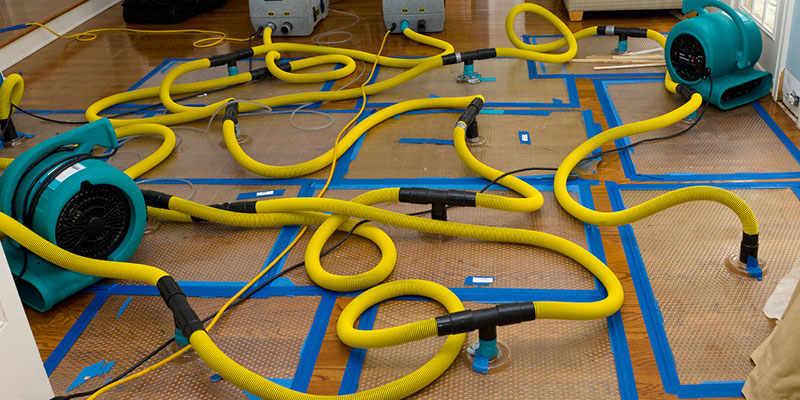
Our team at Remtech Environmental wants to help you take the best possible care of your home, and we offer a number of services to help you do that. For instance, if your home has been damaged in a flood or has suffered a burst pipe, etc., we can provide the top-notch water damage restoration services you need. In this article, we’ll go over a few things you need to know about the water damage restoration process and how it works so that you can make the best decisions for your home.
- Assessment- When you call our team for water damage restoration, the first thing we will do is thoroughly inspect your home to assess the extent of the damage. Once we know what we’re dealing with, we will make a plan for how best to deal with your particular situation.
- Extraction- The next step in water damage restoration is to remove or extract any remaining liquid water from the premises–in other words, if your basement is flooded, our immediate priority will be to get the water out as soon as possible. To do this, we use a system of vacuums and pumps to move the water out of your home.
- Dehumidification- The third step in water damage restoration is to dry out any wet or waterlogged materials and remove excess moisture from the air as well. This step involves using a system of fans and dehumidifiers to thoroughly dry out the area and ensure that no lingering moisture remains.
Water damage restoration is one of those services most homeowners hope to never need and, when they do need it, want to understand quickly. The decisions you make in the first 24 hours after a water event significantly determine the total cost of recovery, the scope of structural damage, the likelihood of mold growth, and the success of your insurance claim. This comprehensive guide walks through the full restoration process from the perspective of a North Carolina homeowner. It explains how IICRC S500 governs the work, what a properly equipped restoration crew brings to a job site, how categories and classes of water dictate the response, what the typical timeline looks like, and how insurance claims actually unfold in our state. Whether you are reading this because water is actively flowing somewhere it should not be, or because you want to be prepared before something happens, the information below should give you a working understanding of what professional water damage restoration involves and why it matters.
The Five Phases of Professional Water Damage Restoration
Every legitimate restoration project follows a defined sequence of phases established by the IICRC S500 Standard for Professional Water Damage Restoration. Understanding these phases helps homeowners evaluate whether the work being done on their property meets industry standards.
Phase One: Emergency Response and Assessment
The first call to a restoration company should generate a same-day site visit, typically within two to four hours during normal business conditions and within one hour during true emergencies. On arrival, the technician performs a complete moisture mapping survey using thermal imaging cameras, pin and pinless moisture meters, and hygrometers. The output is a documented inventory of every wet material in the affected area, the moisture content readings at each point, the category and class of water involved under S500 definitions, and a scope of work that establishes which materials will be dried in place and which must be removed. This documentation is what insurance adjusters expect to see when evaluating the claim. Restoration vendors that skip the assessment phase or perform it superficially frequently produce claims that get denied or reduced because the carrier cannot reconcile the work performed against documented conditions.
Phase Two: Water Extraction and Source Control
Once the source has been identified and stopped, extraction removes standing and absorbed water as quickly as possible. Truck-mounted extractors operate at significantly higher CFM and water lift than portable units and can remove thousands of gallons per hour from carpets, padding, and hard surfaces. For flooded basements, submersible pumps move bulk water before extractors finish the job. The general rule from S500 is that every gallon of water removed in extraction is a gallon that does not have to be evaporated by dehumidification, and extraction is dramatically more energy-efficient than evaporation. A crew that arrives without truck-mounted extraction capability, particularly for category 2 or 3 events or events involving significant standing water, is operationally undersized for the work and should not be the lead vendor on the project.
Phase Three: Structural Drying and Dehumidification
After extraction, the affected area must be dried to equilibrium moisture content, which for most building materials in North Carolina sits between 8 and 16 percent depending on material and climate. This is accomplished through a coordinated deployment of axial air movers, low-grain refrigerant or desiccant dehumidifiers, and supplemental heat where appropriate. Air movers create laminar airflow across wet surfaces to accelerate evaporation. Dehumidifiers pull the resulting water vapor out of the air. Without dehumidification, air movers simply redistribute moisture from one location to another. Daily monitoring documents progress through psychrometric readings of temperature, relative humidity, and grains per pound at multiple points in the structure. Drying typically completes in three to five days for category 1 events but may extend to seven to ten days for category 2 events involving cabinetry, hardwood flooring, or substantial wall cavity saturation.
Phase Four: Cleaning, Antimicrobial Application, and Decontamination
Cleaning protocols escalate with water category. Category 1 events often require only minor cleaning and antimicrobial application as a preventive measure. Category 2 events require more aggressive cleaning of all affected surfaces with EPA-registered disinfectants and removal of unsalvageable porous materials. Category 3 events involving sewage or floodwater require full demolition of all affected porous materials, including drywall, insulation, baseboards, and carpet, followed by structural cleaning, antimicrobial application, and post-remediation verification. North Carolina's heat and humidity accelerate microbial growth, so the time between water event and decontamination is critical. Crews should also clean and decontaminate HVAC components when systems have been operating during the water event, since contaminated materials in plenums and ducts can otherwise spread biological contamination throughout the structure long after the initial event is resolved.
Phase Five: Reconstruction and Final Verification
Once the structure is dry and clean, reconstruction restores the building to pre-loss condition. This phase includes drywall installation, painting, flooring replacement, cabinetry, trim, and any other finish work removed during mitigation. Reputable restoration firms either perform reconstruction in-house or partner with licensed general contractors who do. Before reconstruction begins, post-mitigation moisture verification confirms that all framing and remaining substrates have reached target moisture content. Skipping verification is one of the most common ways water damage projects produce mold problems six months later. The final phase concludes with a written certificate of completion, photo documentation of the final condition, and turnover to the homeowner with all warranty documentation. Total project duration for a typical residential category 2 event including reconstruction is generally three to six weeks depending on scope.
Why Speed and Equipment Determine Project Outcomes
The single most important variable in water damage restoration is time. Mold colonization on wet cellulose materials begins within 24 to 48 hours, and North Carolina spends most of the year at temperatures that accelerate microbial activity. A homeowner who waits three days hoping the water will dry on its own typically converts a 4,000-dollar mitigation project into a 14,000-dollar mitigation plus mold remediation project. Beyond timing, equipment matters in ways that consumers rarely appreciate. A residential dehumidifier removes roughly 30 to 70 pints of water per day under ideal conditions. A commercial low-grain refrigerant dehumidifier used by restoration crews removes 130 to 240 pints per day, and a desiccant unit can exceed 400 pints per day at low humidity levels where refrigerant units lose efficiency. Truck-mounted extractors achieve water lift values that consumer wet vacs cannot approach. Thermal imaging reveals saturated cavities behind finished surfaces that are invisible to the eye. Without these tools, a homeowner is operating at perhaps 10 percent of the capacity required to dry a structure within the IICRC four-day window. The math simply does not work.
Costs, Insurance, and Timeline Expectations
Water damage restoration costs in the Raleigh-Durham area span a wide range driven by category, square footage, and reconstruction scope. Category 1 events from supply line failures, captured promptly with single-room impact, typically cost 1,200 to 3,500 dollars for mitigation only. Category 2 events from dishwasher overflows or washing machine failures generally fall between 3,500 and 8,000 dollars. Category 3 events from sewage backups or basement flooding routinely run 8,000 to 25,000 dollars. Reconstruction adds 50 to 100 percent to mitigation costs depending on finish levels. Most North Carolina homeowner policies cover sudden and accidental water discharge, which is the typical category 1 and 2 scenario, but exclude flood, gradual seepage, sewer backup unless specifically endorsed, and damage attributable to deferred maintenance. Document everything immediately with photos and video before any cleanup begins, file the claim within 24 hours, and select a restoration vendor that produces Xactimate-compatible scope documentation. The vendor cannot negotiate the claim on your behalf, but they can produce documentation that aligns with what your adjuster needs to authorize coverage.
Triangle Water Damage Response When You Need It
Remtech Environmental provides 24-hour emergency water damage restoration response across the Triangle and surrounding counties. Our IICRC-certified crews arrive with truck-mounted extraction, commercial dehumidification, thermal imaging, and the documentation systems that insurance carriers expect. Visit our Raleigh water damage restoration page for Wake County emergency response, our Durham water damage restoration page for Durham and Orange County coverage, our Cary water damage restoration page for western Wake response, or our Chapel Hill water damage restoration page for service to homes near UNC. We work directly with major insurance carriers and can begin mitigation work the same day you call.
Key Takeaways
- IICRC S500 defines five phases of restoration: assessment, extraction, structural drying, decontamination, and reconstruction.
- Category 1 clean water, Category 2 gray water, and Category 3 black water trigger progressively more aggressive demolition and cleaning protocols.
- Commercial dehumidifiers remove 130 to 400 pints per day versus 30 to 70 pints for consumer units, which determines whether a structure dries within the four-day mold prevention window.
- Triangle water damage projects typically span three to six weeks from initial response through final reconstruction.
- North Carolina policies cover sudden discharge but exclude flood, sewer backup without endorsement, and damage attributable to deferred maintenance.
Need Help with Environmental Services?
If you have concerns about mold, asbestos, or water damage in your property, contact Remtech Environmental today for a free consultation.
Get a Free Quote