
What to Do if You Have Crawlspace Mold
Published by Remtech Environmental Team · Last updated April 2025
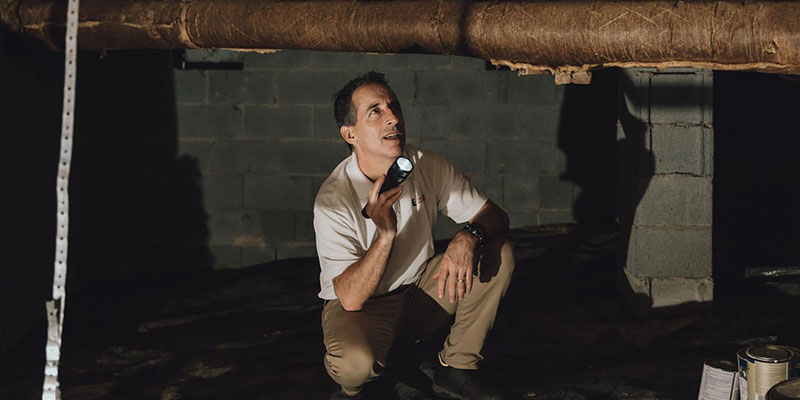
Your crawlspace is one of the most common areas of your home for mold growth. If you discover that you have crawlspace mold, it’s important to make sure you get it removed to help prevent the mold growth from spreading and getting you and your family sick. Here are a few things to make sure you do if you have crawlspace mold.
We here at Remtech Environmental want you and your family to be safe from the harmful effects of mold growth, which is why we offer effective mold removal services that you can rely on. If you have mold in your crawlspace or any other area around your home, don’t hesitate to reach out to us today.
- Learn the causes. Knowing what causes crawlspace mold can help you avoid it in the future. Crawlspace mold is typically caused by dampness after a plumbing leak or natural humidity from the ground. Using a dehumidifier and talking to your plumber about potential leaking can help you avoid crawlspace mold.
- Don’t touch it. Mold can be hazardous to your health, so if you discover any mold, don’t linger around it or touch it. Doing so can make you very sick, so it’s best to make a note of it and then keep yourself and your loved ones away from it while you reach out to professionals.
- Call mold removal experts. Mold should be removed as soon as possible, so don’t hesitate to reach out to local mold removal experts to take care of the mold in your crawlspace. Their services can’t be replaced with over-the-counter mold removal products, so think twice before you try to remove the mold on your own.
Discovering mold in your crawlspace is unsettling, and in central North Carolina it is also extremely common. The combination of long humid summers, clay-rich soils that hold moisture, traditional vented crawlspace construction, and homeowner neglect of a space few people ever enter creates near-ideal conditions for microbial growth across thousands of homes in Raleigh, Cary, Wake Forest, Apex, Holly Springs, and surrounding communities. The good news is that crawlspace mold is solvable, and the long-term outcome depends almost entirely on the decisions made in the first few days after discovery. A panicked attempt at DIY cleanup with bleach and a shop vacuum will almost always make the problem worse. A careful response that prioritizes safety, professional assessment, proper remediation, and a long-term moisture solution will eliminate the contamination and prevent it from returning. This guide walks through what we recommend our Triangle-area customers do in the immediate aftermath of finding crawlspace mold, what professional remediation actually looks like, why encapsulation is the durable long-term answer for North Carolina homes, and what costs to expect at each stage so you can budget realistically for a complete solution.
The Five Steps to Take Immediately After Discovering Crawlspace Mold
The actions you take in the first 48 hours influence the cost, complexity, and ultimate success of the remediation. The five-step framework below reflects the IICRC S520 guidance for occupant response to suspected microbial contamination and the practical lessons we have learned from decades of crawlspace work in the Triangle region.
Stop Disturbing the Affected Area
The single most important immediate action is to stop interacting with the contaminated space. Do not enter the crawlspace beyond the access point. Do not attempt to clean, treat, scrape, or vacuum the affected materials. Do not run a household vacuum or shop vac in the space, household equipment lacks HEPA filtration and will exhaust spores throughout your home. Each of these actions disturbs the contamination and aerosolizes spores that then migrate upward into the living space through the stack effect, where they spread via the HVAC system. Close the access door, secure it, and treat the space as off-limits until a qualified professional has assessed it. If children, elderly occupants, or anyone with respiratory or immune sensitivities live in the home, this step is especially critical.
Document What You See Without Disturbing It
Take clear photographs from the access door of the visible contamination, any standing water or wet soil, the condition of insulation and vapor barrier, and any obvious moisture sources such as plumbing leaks or pooled groundwater. If you have a flashlight bright enough to see further into the space, photograph what you can without entering. Note the date you noticed the issue, any recent weather events or plumbing activity, any musty odors detected in the home above, and any health symptoms occupants have experienced. This documentation supports both the professional assessment that follows and any insurance claim that may apply to the underlying moisture event. Good photographs from the start also help establish the baseline condition of the space before remediation work begins.
Schedule a Professional Assessment
Crawlspace mold should be evaluated by a qualified environmental remediation provider, not a general handyman or pest control company. Look for an IICRC-certified company with technicians holding AMRT and WRT credentials at minimum, experience with North Carolina crawlspaces specifically, and the equipment to perform thermal imaging, moisture mapping, and (when warranted) air and surface sampling. The assessment should identify the moisture source driving the growth, evaluate the scope of contamination, document the condition of structural framing and any HVAC components in the space, and produce a written remediation scope built against the IICRC S520 standard. If the company you call cannot describe their assessment process clearly or skips moisture-source identification, that is a signal to call someone else.
Address the Moisture Source First in the Scope of Work
Mold cannot grow without moisture, and any remediation that does not address the underlying water source is destined to fail. In Triangle-area crawlspaces, the most common sources are plumbing leaks (active or historical), groundwater intrusion through foundation walls or footing drains, condensation on cold pipes and ductwork during humid months, vapor drive from soil through inadequate or absent vapor barriers, and outside air infiltration through open or damaged foundation vents. Your remediation scope should include the identification and resolution of these sources, whether through plumbing repair, drainage improvement, vapor barrier installation, sealing foundation vents, or a combination. Do not allow a contractor to talk you into a cleanup-only scope that defers the moisture problem to some future date.
Plan for a Long-Term Encapsulation Solution
Cleanup alone returns the crawlspace to the same conditions that caused the contamination in the first place. For North Carolina homes specifically, the durable long-term answer is full crawlspace encapsulation: a heavy-duty reinforced polyethylene vapor barrier across the floor and up the foundation walls with sealed seams and penetrations, foundation vents permanently closed, the rim joist insulated, and the space conditioned through either supply air from the HVAC system or a dedicated dehumidifier sized for the cubic footage. Encapsulation transforms the crawlspace from a moisture reservoir into a stable, conditioned envelope. This is the same principle modern building science research and updated North Carolina building code provisions both support, and it is the reason we recommend it as the standard solution following remediation rather than a separate optional upgrade.
Why North Carolina's Climate Makes Encapsulation the Definitive Solution
North Carolina sits squarely in what building scientists classify as a mixed-humid climate, specifically Department of Energy Climate Zones 3A and 4A. This zone produces both significant cooling loads and heating loads, with relative humidity routinely exceeding 70 percent from May through September. For a traditional vented crawlspace, those conditions are physically incompatible with a dry, mold-free space. The original assumption behind foundation vents was that outside air would dry the crawlspace through ventilation. Field research conducted by Advanced Energy, the Building America program, and other building science organizations has decisively overturned that assumption in humid climates. Warm summer air at 80 degrees and 75 percent relative humidity, when introduced into a cool crawlspace sitting at 65 to 70 degrees, condenses almost immediately on every available surface. Floor joists, subflooring, ductwork, plumbing, and insulation become coated with condensation, and within a single humid season visible mold growth can establish on wood framing. Compounding the problem, the stack effect pulls roughly half of the air on the first floor of a typical home upward from the crawlspace, meaning whatever lives in the crawlspace also lives in the air your family breathes. Encapsulation eliminates these mechanisms by removing the variables that allow them. Closed vents stop the introduction of humid outside air. A continuous vapor barrier blocks moisture migration through the soil. A dehumidifier or HVAC supply maintains relative humidity below the 60 percent threshold where mold growth becomes possible. Once these conditions are established, the crawlspace becomes a thermodynamic buffer aligned with the rest of the conditioned envelope of the house, the structural framing dries to a stable equilibrium moisture content, the HVAC system runs more efficiently, and the indoor air quality on the first floor of the home improves measurably. Modern North Carolina building code recognizes this physics and now permits closed, conditioned crawlspaces as code-compliant alternatives to traditional venting. For homes already experiencing mold contamination, encapsulation is not an upgrade, it is the only durable solution.
What to Expect From the Project, Including Realistic Cost Ranges
A complete crawlspace mold project in central North Carolina typically follows a sequence: assessment, remediation, moisture-source repair, and encapsulation. The assessment phase costs vary by complexity and sampling requirements, with most residential crawlspace inspections falling in the few-hundred-dollar range when standalone and often included or credited toward project cost when remediation follows. Remediation cost depends primarily on the size of the crawlspace, the extent of contamination, and the materials requiring removal. A limited contamination scope on a smaller home can fall in the low four-figure range, while extensive contamination involving subfloor sheathing, insulation, and large areas of framing can run into the mid five figures. Encapsulation costs are similarly variable, with full encapsulation including vapor barrier, sealed vents, dehumidification, and rim-joist insulation typically running from the high four figures into the low five figures for an average North Carolina home, with larger or more complex spaces costing more. Total project costs combining remediation and encapsulation often fall in the ten to twenty thousand dollar range, with outliers in either direction depending on conditions. Insurance coverage for crawlspace mold depends entirely on the underlying water event. Sudden and accidental losses such as plumbing bursts are typically covered up to policy mold sublimits. Long-term seepage, deferred maintenance, and groundwater issues are typically excluded. We document every project thoroughly and coordinate with carriers when applicable, but we are also direct with homeowners about which parts of a project will likely be paid out of pocket. To get a transparent assessment of your specific situation, contact our team for a no-pressure evaluation.
Related Resources
Our [crawlspace remediation](/crawlspace-remediation/) page covers our full integrated approach to mold and moisture issues beneath North Carolina homes. For the cleanup phase specifically, see our [mold remediation services](/mold-remediation/). If your crawlspace contamination originated with flooding or a plumbing failure, our [water damage restoration](/water-damage-restoration/) team handles the underlying water event. Additional homeowner reading is available on our [blog](/blog/), or [request a free quote](/free-quote/) to schedule a crawlspace evaluation today.
Key Takeaways
- Stop disturbing the affected area immediately, do not clean, vacuum, or treat crawlspace mold on your own as it will aerosolize spores into your living space.
- Document the contamination with photographs from the access door and note the date, recent moisture events, and any symptoms before professional assessment.
- Schedule an IICRC-certified provider for assessment with thermal imaging, moisture mapping, and a written S520-compliant remediation scope.
- The remediation scope must include identification and repair of the moisture source, cleanup-only work without source repair will fail within months.
- Crawlspace encapsulation is the definitive long-term solution for North Carolina's humid climate, transforming the space into a conditioned envelope that prevents recurrence.
- Total project costs combining remediation and encapsulation typically run from ten to twenty thousand dollars depending on scope, with insurance coverage dependent on the underlying water event.
Need Help with Environmental Services?
If you have concerns about mold, asbestos, or water damage in your property, contact Remtech Environmental today for a free consultation.
Get a Free Quote