
What Sets Us Apart from Other Mold Removal Companies?
Published by Remtech Environmental Team · Last updated April 2025
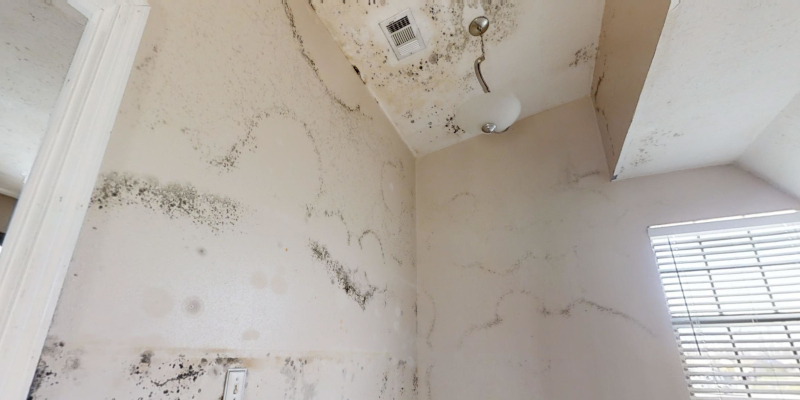
If you have mold in your home, you might have noticed musty odors, visible mold spots, water stains, or other wall discoloration. If this is the case, you will want to schedule a professional mold removal right away to reduce the risk of health concerns or continued mold growth throughout your home. You will want to call a company you can trust to handle the situation with great care and the necessary safety precautions. You can call on us at Remtech Environmental for our reliable mold removal services. Here are a few main aspects that set us apart from other mold removal companies.
Give us a call if you would like to learn more.
- Prompt services: When it comes to mold removal, timeliness is key. When you call some mold removal companies, they might have you wait to have the mold removed, but we will always answer the phone promptly and schedule the necessary mold removal services at your earliest convenience. That way, we can have the mold removed as soon as possible before it can continue affecting your home or health.
- We use the most effective tools and techniques: Another thing that sets us apart from other mold removal companies is that we have the most effective tools and techniques to manage your mold removal. We can carefully assess the moldy area to determine the most effective approach to remove the mold, isolate the area, and wear protective gear, and use the most effective tools to effectively remove the mold.
- A positive experience every time: We always do our best to ensure you have the best possible experience with our services any time you need them. We will take great care of your home and protect it as well as we can from mold and any damage it could cause. We can also answer any questions you may have at any point.
When a North Carolina homeowner discovers mold in their attic, behind a baseboard, or rolling out from a crawlspace access door, the next decision they make tends to set the trajectory for the rest of the project. Choose a qualified remediation provider, and the contamination is contained, removed, verified, and documented within a defensible scope of work that satisfies indoor air quality standards and any insurance carrier reviewing the claim. Choose poorly, and the problem often gets worse, spores migrate through the home, the moisture source goes unaddressed, post-remediation testing fails, and the homeowner pays twice. The remediation industry in the Triangle has expanded considerably over the last decade, and not every company holding itself out as a remediator operates to the same standard. At Remtech Environmental, we serve Raleigh, Cary, Apex, Wake Forest, Durham, and surrounding North Carolina communities, and we have built our practice around a small set of operating principles that genuinely separate us from much of the field. This article walks through those differences honestly, not as marketing claims, but as practical considerations every homeowner should weigh before signing a remediation contract.
Six Operational Differences That Define Remtech Environmental
Selecting a remediation provider is ultimately about evaluating capability, not absorbing sales pitches. The categories below are the ones we have found to matter most across hundreds of projects in central North Carolina, and they are the ones we encourage homeowners to use as a checklist when comparing any two companies, including ours.
In-House IICRC-Certified Technicians, Not Subcontracted Crews
A surprising share of mold remediation work in our region is performed by subcontracted day labor managed by sales-driven companies. Those crews rotate, training is inconsistent, and accountability evaporates the moment a project is completed. Remtech Environmental performs every project with our own employed technicians, each carrying IICRC certifications appropriate to the scope of work, including the AMRT (Applied Microbial Remediation Technician), WRT (Water Damage Restoration Technician), and ASD (Applied Structural Drying) credentials. Our technicians know our procedures, our equipment, and our quality standards because they work under our supervision every day. When a homeowner asks us a question about containment, drying targets, or verification testing, the person on site can answer it because they were trained to do so.
Strict Adherence to the IICRC S520 Standard
The IICRC S520 Standard for Professional Mold Remediation is the published industry consensus document that defines what proper mold remediation actually involves: assessment, containment design, engineering controls, removal protocols, cleaning standards, drying targets, and verification. Many companies reference S520 in their marketing materials. Far fewer actually follow it phase by phase on every project. We do. Every job receives a written scope built against S520 categories, full critical-barrier containment with HEPA-filtered negative air pressure on Category 2 and Category 3 contamination, documented PPE protocols, and a clear verification plan. We do not skip steps, even on small jobs, because the mistakes that lead to recurrence almost always trace back to a shortcut in containment or moisture management.
Comprehensive Moisture-Source Repair Built Into Every Project
Mold is a symptom. The cause is always moisture. A remediation that removes contaminated drywall but leaves the underlying leak, vapor drive, condensation issue, or grading problem unaddressed will fail within months. Yet many companies write scopes that stop at the visible mold and treat the moisture source as someone else's responsibility. We do not. Our assessment process includes thermal imaging, moisture mapping, and infiltration tracing to identify where water is entering, condensing, or accumulating. Our scope of work includes the repair or coordination of that source, whether it is a plumbing leak, a roof flashing failure, an HVAC condensate issue, a crawlspace vapor problem, or a building envelope deficiency. Without that integrated approach, remediation is just expensive cleaning.
Independent Third-Party Clearance Testing
Post-remediation verification is the moment of truth for any mold project, and it is also the moment most often skipped by lower-tier providers. We coordinate independent third-party clearance testing through accredited industrial hygienists and AIHA-LAP certified laboratories that have no financial stake in the outcome of our work. The hygienist inspects the area, evaluates moisture content and visual cleanliness, and collects air samples processed through Air-O-Cell cassettes for spore identification and enumeration. Results are compared against indoor and outdoor controls. If the area passes, we hand the documentation directly to the homeowner. If it fails, we go back in at our cost. That accountability is what verification means, and it is the practice that protects homeowners from the most common failure mode in this industry.
Decades of Experience Specific to North Carolina Buildings
Building science is regional. The construction details, climate loads, and contamination patterns in central North Carolina differ meaningfully from those in arid Western markets or cold Northeastern climates. We have spent decades working specifically on Carolina homes, from older Raleigh ranches with vented crawlspaces and original ductwork, to mid-century brick homes in Cary with finished basements, to newer sealed-envelope construction in Wake Forest, Holly Springs, and Apex. We know how a humid Piedmont summer drives moisture through clay-bearing soils into crawlspaces, how attic ventilation interacts with roof deck condensation in shoulder seasons, and how older HVAC systems become contamination vectors over time. That regional fluency translates into faster, more accurate assessments and remediation scopes that actually solve the problem the first time.
Direct Insurance Carrier Coordination From First Call to Closeout
Mold remediation projects often intersect with homeowner insurance claims, particularly when the underlying water event is sudden and accidental. The difference between a smooth claim and a frustrating one is almost entirely a matter of documentation and communication. We photograph every phase of every project, maintain chain of custody for any samples collected, prepare estimates in Xactimate format aligned with industry-standard pricing, and communicate directly with assigned adjusters from first notice of loss through final closeout. We have worked with virtually every major carrier operating in North Carolina, and we know which scope items get reviewed, which get denied without proper documentation, and how to advocate for the full coverage your policy supports. Homeowners who try to navigate this alone routinely leave covered scope on the table.
Why These Differences Compound Over the Life of a Project
Each of the six items above improves outcomes individually, but the value of choosing a provider that delivers all of them is multiplicative rather than additive. Consider a representative project: a homeowner in north Raleigh notices a musty smell in a finished basement. A subcontractor-based competitor responds, identifies surface mold on the bottom plate of an exterior wall, removes the drywall to four feet, applies a biocide spray, and closes out the job in two days. The homeowner pays. Six months later, the smell returns, mold has reappeared on the studs, and a new inspection reveals the actual source was a vapor drive issue from the slab combined with insufficient drainage at the foundation. None of that was diagnosed because nobody on the original crew was trained to look. There was no thermal imaging, no moisture mapping, no clearance testing, and no documentation supporting the claim. The remediation has to be redone, this time at greater scope and cost, and any insurance benefit on the original event is exhausted. Now consider the same starting condition handled by an integrated provider: thermal imaging identifies the cooler vapor drive zone, moisture meters confirm elevated readings, the scope addresses both the contamination and the underlying drainage and vapor source, containment prevents cross-contamination of the adjacent finished space, IICRC-trained technicians execute the work to S520 standards, an independent hygienist verifies clearance, and the carrier receives a thoroughly documented file that supports full coverage. The job is finished once. It stays finished. And the homeowner has documentation that protects them in any future real estate transaction or follow-up claim. That is the compounded difference, and it is the reason building each capability into our standard process matters more than promising any one of them in isolation.
How to Vet a Mold Remediation Company Before You Sign Anything
If you are evaluating mold remediation providers right now, whether or not you ultimately choose us, the same diligence applies. Start by asking which IICRC certifications the technicians performing your work actually hold, and ask to see them. Reputable providers have nothing to hide and will produce credentials on request. Ask whether the company employs its own technicians or relies on rotating subcontracted crews. Ask whether the scope of work will include identification and repair of the moisture source, or whether the proposal stops at visible contamination. Ask whether containment will use critical barriers and HEPA-filtered negative air pressure, and ask to review the containment plan before work begins. Ask whether post-remediation verification will be performed, by whom, and using which laboratory accreditation. AIHA-LAP accredited labs are the relevant standard for environmental microbiology samples in residential and commercial work. Ask how the company documents projects for insurance purposes, and whether they have direct experience with your carrier. Finally, ask for references from completed projects in your area, and consider checking those references. Companies operating at professional standard will welcome these questions because the answers reinforce the value of doing the work properly. Companies that bristle, deflect, or pressure you to sign before answering them are telling you something important. At Remtech Environmental, we welcome the questions, we provide the documentation, and we let our process speak for itself. Contact us today to schedule a no-pressure assessment.
Continue Your Research
Learn more about our complete [mold remediation services](/mold-remediation/) and the IICRC-aligned process we follow on every project. If your mold problem stems from a recent water event, our [water damage restoration](/water-damage-restoration/) team addresses the underlying moisture before remediation begins. For crawlspace contamination specifically, our [crawlspace remediation](/crawlspace-remediation/) page covers our integrated approach. Additional homeowner education is available on our [blog](/blog/), or [request a free quote](/free-quote/) to schedule an evaluation today.
Key Takeaways
- Remtech Environmental performs every project with employed, IICRC-certified technicians rather than rotating subcontracted crews.
- We follow the IICRC S520 Standard phase by phase, including written scopes, full containment, engineering controls, and documented verification.
- Our scopes include identification and repair of the moisture source, not just removal of visible contamination, because mold is a symptom and water is the cause.
- Independent third-party clearance testing through AIHA-LAP accredited laboratories provides defensible verification that the work succeeded.
- Decades of North Carolina-specific experience translate into faster diagnosis and more accurate scopes for the construction and climate conditions in the Triangle region.
- Direct insurance carrier coordination with full photo documentation and Xactimate-compatible estimates significantly improves coverage outcomes for homeowners.
Need Help with Environmental Services?
If you have concerns about mold, asbestos, or water damage in your property, contact Remtech Environmental today for a free consultation.
Get a Free Quote