
Understanding the Basics of Asbestos Flooring
Published by Remtech Environmental Team · Last updated April 2025
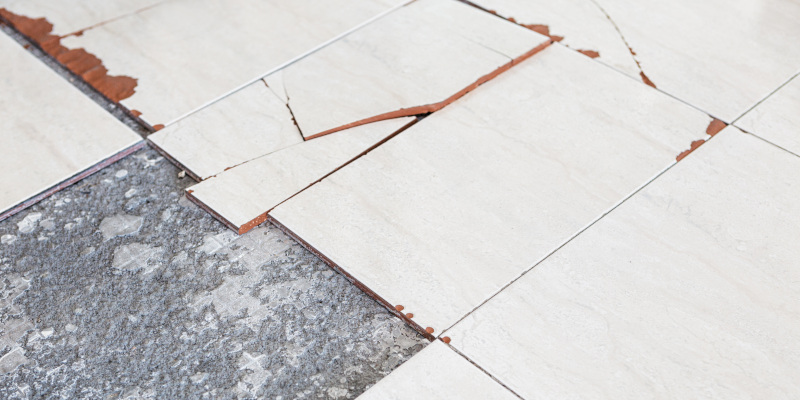
When most people hear the word “asbestos,” they immediately think about the danger it poses to people. It’s true that asbestos has been linked to several different types of cancer and breathing it in can have serious side effects on your health. However, there’s still much that people don’t know about asbestos and why it was used in flooring installation in decades past.
Asbestos flooring was frequently used in home construction prior to 1979. If your home was constructed after 1985, the chance of there being asbestos in your flooring significantly drops. For older homes, asbestos flooring was often used for its durability and fire resistance. The asbestos fibers are typically covered up by tile work or vinyl flooring, and when your flooring is undisturbed and in good condition, the asbestos doesn’t pose the same threat that it does if it were exposed.
Unfortunately, because several decades have passed since the asbestos flooring in older homes was installed, it’s quite likely that if your home has asbestos flooring, it has been disturbed. Home remodeling and restoration work, water damage, and even natural wear and tear that come with time can expose the asbestos underneath your floors. This should be addressed as soon as possible by accredited asbestos removal technicians.
If you suspect that your older home has asbestos flooring that has released asbestos fibers into your home, call us here at Remtech Environmental. Because of the severe health concerns associated with breathing in asbestos, you don’t want to wait to have this material removed from your home. We’ll safely remove the asbestos so you can rest easily knowing that your home is free of this dangerous substance.
Walk into any North Carolina home built before 1985 and pull up a corner of the kitchen tile or the basement vinyl, and there is a real possibility you will find a flooring product that contains asbestos. For decades, vinyl-asbestos tile, sheet vinyl with asbestos paper backing, and asbestos linoleum were the workhorses of American residential construction because they were cheap, durable, fire resistant, and dimensionally stable. Today, those same qualities that made the material so popular in mid-century construction also make it extraordinarily difficult and dangerous to remove safely. Homeowners in Raleigh, Durham, Cary, and surrounding Wake and Durham county neighborhoods regularly call Remtech Environmental after a remodel, a flood, or a flip reveals layers of older flooring hidden underneath modern laminate or carpet. Understanding what asbestos flooring looks like, how it was installed, and why professional removal is so technical is the first step toward making a safe, code-compliant decision about what to do next.
The Three Most Common Asbestos Flooring Products in NC Homes
Not every old floor contains asbestos, but several specific product categories were so widely installed across the Triangle and the Triad that any pre-1985 home should be treated as suspect until laboratory testing proves otherwise. The four big categories below cover the vast majority of what our crews encounter on residential abatement projects.
Vinyl-Asbestos Tile (VAT) - The 9x9 Tell
If you pull back carpet in a 1950s, 1960s, or early 1970s ranch and find rigid square tiles measuring exactly nine inches by nine inches, you are almost certainly looking at vinyl-asbestos tile. The 9x9 dimension is the single best visual identifier in the field because the metric was a manufacturing standard before the industry transitioned to the larger 12x12 vinyl composition tile (VCT) format. Common color palettes include muted greens, beige with dark streaking, brick red, charcoal, and cream with darker spatter patterns designed to hide dirt. VAT tiles are typically brittle, snap with a clean crisp edge, and are bedded in a thick black asphaltic mastic that itself often contains asbestos and PAHs. Manufacturers including Armstrong, Kentile, and Flintkote produced the dominant brands, and remnants of their original installation labels occasionally survive on attic-stored leftover tiles.
Sheet Vinyl With Asbestos Paper Backing
Sheet vinyl flooring manufactured before the late 1980s frequently used a felt-like paper backing reinforced with chrysotile asbestos fibers to add tear resistance and dimensional stability. The wear layer on top is usually safe vinyl, but the moment a contractor cuts, scrapes, or rips the sheet up, that paper backing fragments and releases respirable fibers into the air. This product is especially common in kitchens, bathrooms, laundry rooms, and mudrooms in Raleigh-area homes built between roughly 1955 and 1985. Visually, the backing appears tan, gray, or off-white and resembles a thick craft paper. Because the asbestos lives on the underside, surface inspection alone cannot rule it out. Sheet vinyl is also frequently layered, with a newer non-asbestos product floated directly over the older one, which means a single sample taken at one end of a kitchen may not represent the whole floor.
Asbestos Linoleum and Asphalt Tile
True linoleum made from linseed oil and cork dust does not contain asbestos, but many products sold as linoleum during the mid-twentieth century were actually asphalt-asbestos tiles or vinyl-asbestos hybrids. Asphalt tile preceded VAT and was popular from the 1920s through the early 1960s, particularly in basements and on slabs because of its moisture resistance. These tiles are darker, often black, dark green, or oxblood, and become soft and tacky when warm. Mid-century commercial buildings, schools, and many older homes around downtown Raleigh, Cameron Park, and Five Points still have asphalt-asbestos tile beneath later flooring layers, sometimes stacked three or four products deep. Each layer must be sampled separately, because a non-asbestos surface tile can sit directly on top of an asbestos asphalt tile bedded in asbestos mastic.
Black Mastic and Cutback Adhesive
Even when the visible flooring itself is asbestos free, the adhesive underneath frequently is not. Black mastic, also called cutback adhesive, was the standard bedding compound for vinyl tile, sheet vinyl, and parquet wood flooring well into the 1980s. It contains both asbestos fibers and polycyclic aromatic hydrocarbons. Mastic clings stubbornly to concrete subfloors and wood underlayment, and aggressive scraping or grinding to remove it is one of the most common ways homeowners and unlicensed contractors create catastrophic fiber releases. North Carolina Department of Health and Human Services (NC DHHS) and the EPA both treat mastic as a regulated asbestos-containing material when friable or made friable during removal. The safer professional approach uses solvent-based mastic removers and absorbent mineral pads to dissolve and capture the adhesive without mechanical agitation.
Identification Requires Lab Testing, Not Guesswork
Visual cues such as the 9x9 dimension, paper backing, or black asphaltic adhesive raise suspicion, but no inspector can confirm asbestos content by sight alone. Bulk samples must be analyzed under polarized light microscopy (PLM) by a National Voluntary Laboratory Accreditation Program (NVLAP) accredited lab. In North Carolina, sampling for any project that will disturb suspect materials must be performed by an accredited inspector following the NC Health Hazards Control Unit (HHCU) protocols. Remtech collects samples in sealed bags, decontaminates the sampling area, and turns lab results around in two to five business days for most residential projects. When PLM produces inconclusive results, transmission electron microscopy (TEM) confirmation is available and is sometimes required for floor tile because chrysotile content can fall below the PLM detection threshold.
Why Removing Asbestos Flooring Is a Specialized Process
Removing intact asbestos flooring sounds straightforward, but the practical reality is that every common DIY technique converts a stable, low-risk material into a high-risk friable hazard. Standard floor scrapers, oscillating multi-tools, hammer drills with chisel bits, and rotary sanders all pulverize the tile and the underlying mastic, sending millions of fibers airborne in seconds. Once those fibers are loose in a finished home, they settle on HVAC components, attic insulation, drywall, fabric, and any porous surface, and they remain a re-suspension hazard for years. Professional abatement uses three core techniques to keep fibers bound. First, scoring and lifting whole tiles intact with long-handled flat scrapers, often after a brief application of dry ice or low-temperature chilling to embrittle the mastic bond. Second, infrared softening, where a low-radiant-heat device warms the tile and adhesive just enough that whole pieces lift in one motion without fracture. Third, encapsulating residual mastic with solvent-based removers and absorbent agents instead of grinding, then HEPA vacuuming the entire work area through multiple cycles. Every step happens inside a negative-pressure containment with HEPA-filtered air handlers exhausting outdoors, workers in Tyvek and full-face P100 respirators, and air monitoring throughout. North Carolina requires a final clearance air sample and a written third-party clearance letter before re-occupancy.
What Raleigh Homeowners Should Do If They Suspect Asbestos Flooring
The single most important rule is do not disturb suspect flooring until you know what it is. If your home was built before 1985 and you are planning a kitchen renovation, a basement finish, a flip, or even a simple flooring replacement, schedule a pre-renovation asbestos inspection before any demolition starts. EPA AHERA guidelines and OSHA 29 CFR 1926.1101 both require employers to assume materials are asbestos-containing until proven otherwise on pre-1981 construction, and many North Carolina counties tie permit issuance to documentation of an inspection. Remtech Environmental is licensed by the NC HHCU as both an asbestos inspection and abatement contractor, which means the same firm can sample, design the abatement plan, perform the removal, and coordinate independent third-party clearance. If you have already started demolition and discovered something suspicious, stop immediately, leave the area, shut down HVAC to prevent cross-contamination, and call a licensed abatement contractor for an emergency assessment. Continuing to work or attempting to clean up with a household vacuum will spread fibers throughout the home and dramatically increase remediation costs. Document everything with photographs, keep all receipts, and save them for any future real estate disclosure or insurance claim.
Related Reading From Remtech Environmental
Asbestos flooring is only one of several legacy hazards that haunt older Triangle homes. If you found this guide useful, our blog covers parallel topics in depth. Read our overview of what makes asbestos bad for you to understand the underlying health science, our story-driven post about a Raleigh homeowner who unknowingly remodeled an asbestos-laden house, and our practical guides to popcorn ceiling testing, attic vermiculite, and pipe insulation. For a complete service overview visit our asbestos abatement page, and if you suspect water intrusion has compounded the problem, our water damage restoration team works hand in hand with abatement crews.
Key Takeaways
- Vinyl-asbestos tile is most reliably identified by its 9x9 inch dimension and brittle, mastic-bedded installation in pre-1985 homes.
- Sheet vinyl can hide asbestos in its paper backing even when the wear layer is safe, so visual inspection alone is never sufficient.
- Black mastic and cutback adhesives frequently contain asbestos and are often the highest-risk component of any flooring removal.
- Professional removal relies on intact lifting, infrared softening, and chemical encapsulation rather than grinding or sanding.
- North Carolina requires NC HHCU-accredited inspection, abatement, and third-party clearance before re-occupancy of any abated space.
Need Help with Environmental Services?
If you have concerns about mold, asbestos, or water damage in your property, contact Remtech Environmental today for a free consultation.
Get a Free Quote