
Three Reasons Not to Handle Asbestos Removal on Your Own
Published by Remtech Environmental Team · Last updated April 2025
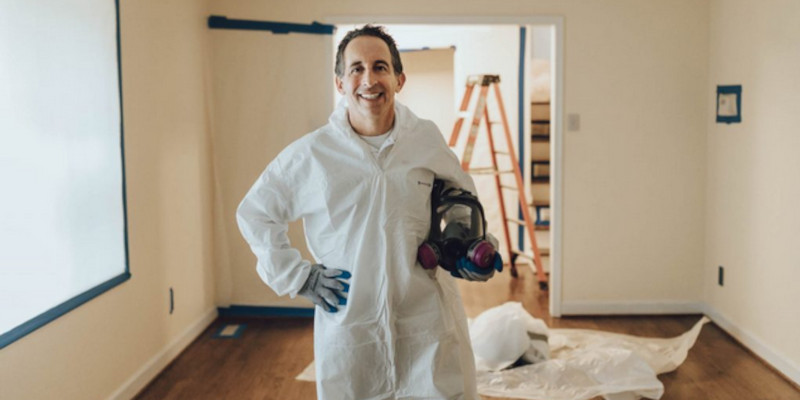
Many homes built before 1979 utilized asbestos in the floors and ceilings. While it’s significantly less likely to encounter asbestos in homes built after 1985, older homes may have exposed asbestos that should be removed as soon as possible. If you believe your home has asbestos, be sure to contact an accredited asbestos removal technician. Here are three of the top reasons why you shouldn’t try to remove the asbestos on your own.
Are you worried about asbestos in your older home’s flooring or ceiling? Call us here at Remtech Environmental today.
- Inadequate containment. Proper asbestos removal requires proper containment, meaning the area where the asbestos is being removed from will need to be blocked off to make sure the asbestos fibers don’t spread across the rest of the home. Inadequate containment only makes an asbestos problem worse, and you may not even realize you’ve released asbestos into the rest of your home if you try to remove this substance on your own.
- Incomplete removal. You don’t want to leave any asbestos behind when ridding your home of these fibers. With DIY asbestos removal, however, you’re much more likely to accidentally miss an area of asbestos simply because you don’t know what to look for or how to identify asbestos. Professional asbestos removal technicians will make sure all asbestos is safely removed.
- Insufficient safety precautions. Asbestos is a major health hazard. You need to take every precaution to prevent yourself from accidentally inhaling it, and chances are you don’t have all of the necessary personal protective equipment to keep yourself safe. For your own safety, you should let the asbestos removal experts handle the exposed asbestos in your home.
Asbestos is the only environmental hazard in the average North Carolina home that is regulated as a federal toxic substance, governed by state worker-protection law, and known to cause a fatal cancer with a latency period of twenty to fifty years. Despite this, we still field calls every month from homeowners who have already pulled up suspicious vinyl floor tile or scraped popcorn ceiling without testing it first. Most assume asbestos is a problem confined to industrial buildings or that the federal ban somehow eliminated it from residences. Neither is true. EPA's 1989 ban was largely overturned in 1991, and asbestos-containing materials, ACMs, were installed in millions of US homes through the late 1980s in floor tile, ceiling texture, pipe insulation, siding, roofing, and HVAC duct wrap. North Carolina law specifically prohibits unaccredited individuals from disturbing more than three square feet or three linear feet of regulated ACM. Here are three reasons, each more serious than the last, that you should never attempt asbestos removal yourself.
Three Reasons to Hire a Licensed Asbestos Contractor
These are not abstract concerns. Each reason maps to a specific NC regulation, a documented health outcome, or a piece of equipment a homeowner cannot reasonably own.
North Carolina Law Prohibits It
Under North Carolina General Statute 130A-444 through 130A-452 and the NC Asbestos Hazard Management Program rules (15A NCAC 19C), any person who removes more than three square feet or three linear feet of regulated asbestos-containing material in a regulated facility must be accredited by NC DHHS. While owner-occupied single-family residences are exempt from accreditation requirements for the homeowner's own work, the disposal rules still apply, and any contractor a homeowner hires must be accredited. More importantly, if you sell the home and a buyer's inspection later identifies improperly disposed asbestos, you can be held civilly liable for cleanup costs that frequently run into six figures. Federal regulations under 40 CFR Part 61 (NESHAP) impose strict notification, wetting, and disposal requirements on demolition or renovation involving regulated ACM. NC also requires asbestos waste be disposed of at a permitted Type 4 landfill in sealed, labeled containers, not in your residential trash. Remtech Environmental holds full NC accreditation for asbestos inspection, project design, and abatement, so every project we touch is documented and defensible.
Mesothelioma Has a Twenty to Fifty Year Latency Period
Asbestos fibers are needle-like crystalline structures that, when inhaled, embed permanently in the pleural lining of the lungs. The body cannot expel them. Decades later, those embedded fibers can trigger malignant pleural mesothelioma, a cancer with a median survival of twelve to twenty-one months from diagnosis and no curative treatment. The Helsinki Criteria recognize occupational asbestos exposure as the primary cause, but the same disease has been documented in homeowners who performed a single weekend renovation thirty years prior. There is no known safe exposure threshold. OSHA's permissible exposure limit is 0.1 fibers per cubic centimeter averaged over eight hours, but that limit was set for occupational risk reduction, not for non-workers. A homeowner sanding asbestos floor tile or scraping popcorn ceiling without containment can generate fiber concentrations hundreds of times above the OSHA limit within minutes. Worse, those fibers settle on furniture, in carpet, and in HVAC ducts, exposing every household member, including children, for years afterward. This is not a theoretical risk. It is the documented mechanism behind thousands of household-secondary mesothelioma cases.
Containment and Equipment Requirements Are Beyond DIY
Compliant asbestos removal requires a regulated work area with critical barriers, decontamination chambers, negative air pressure machines fitted with HEPA filtration, glove bags for pipe insulation, amended water sprayers to keep ACM saturated during removal, full-face powered air-purifying respirators (PAPRs) with P100 cartridges, and Tyvek suits that are disposed of as contaminated waste at the end of each shift. Air monitoring during the project must be performed by a third-party Industrial Hygienist using NIOSH 7400 phase contrast microscopy or, for clearance, NIOSH 7402 transmission electron microscopy. Final clearance air samples must be below 0.01 fibers per cubic centimeter inside the work area before containment is removed. None of this equipment is available at a hardware store, and rental companies will not rent the specialized gear without proof of accreditation. A homeowner attempting DIY asbestos removal is essentially guaranteed to violate federal NESHAP wetting and containment requirements, expose themselves and their family to fiber concentrations far above safe limits, and create a contamination event that requires far more expensive professional remediation.
What to Do If You Suspect Asbestos
Where Asbestos Hides in North Carolina Homes
If your home was built before 1989, assume asbestos is present until tested. We routinely identify ACM in nine common locations across NC residences. Vinyl floor tile and the black mastic adhesive beneath it, particularly nine-by-nine inch tiles installed in kitchens, bathrooms, and basements between 1950 and 1980. Popcorn ceiling texture, which contained chrysotile asbestos in many products manufactured before 1978. Pipe and boiler insulation, especially the corrugated paper wrap and white plaster lagging on hot water lines and steam pipes. Transite siding and shingles, a cement-asbestos board common on mid-century homes throughout the Piedmont and Sandhills. Vermiculite attic insulation, much of which originated from the contaminated Libby, Montana mine and contained tremolite asbestos. HVAC duct wrap and tape, particularly the white woven material on metal trunk lines. Roofing felt and built-up roofing systems on flat or low-slope additions. Window glazing and caulking around aluminum frames installed in the 1960s and 1970s. And electrical wiring insulation, where some pre-1972 wire used asbestos-fabric insulation. North Carolina's hurricane history compounds the risk because storm damage frequently exposes these materials. We tested over 2,400 homes across NC last year and found regulated ACM in roughly 40 percent of pre-1985 properties. Testing is the only way to know. A two-square-inch bulk sample analyzed by polarized light microscopy at an accredited lab costs under fifty dollars and takes three to five business days. There is no scenario in which testing is more expensive than the consequences of guessing wrong.
Get Professional Help in NC
If you suspect asbestos in your home or are planning a renovation on a pre-1989 property, Remtech Environmental provides full NC DHHS-accredited inspection, sampling, and abatement services. We respond throughout central and eastern North Carolina, including Raleigh, Durham, Cary, Greensboro, Winston-Salem, Fayetteville, and Wilmington. We file the required NESHAP and NC DHHS notifications, manifest waste to permitted Type 4 landfills, and coordinate third-party clearance testing on every project. Do not let a renovation become a mesothelioma risk. Call us first.
Key Takeaways
- NC General Statute 130A and federal NESHAP rules tightly regulate asbestos removal; non-accredited disturbance of more than three square feet creates legal liability.
- Mesothelioma has a 20-to-50-year latency period and no known safe exposure threshold, making even a single weekend of DIY removal a potential lifetime risk.
- Compliant removal requires HEPA negative air, glove bags, amended water, PAPR respirators, and third-party clearance testing, none of which is available to homeowners.
- Roughly 40 percent of NC homes built before 1985 contain regulated asbestos in floor tile, popcorn ceiling, pipe insulation, transite siding, or vermiculite attic insulation.
- A pre-renovation bulk sample analyzed by an accredited lab costs under $50 and is the only reliable way to determine whether ACM is present before disturbing materials.
Need Help with Environmental Services?
If you have concerns about mold, asbestos, or water damage in your property, contact Remtech Environmental today for a free consultation.
Get a Free Quote