
How Asbestos Abatement Works
Published by Remtech Environmental Team · Last updated April 2025
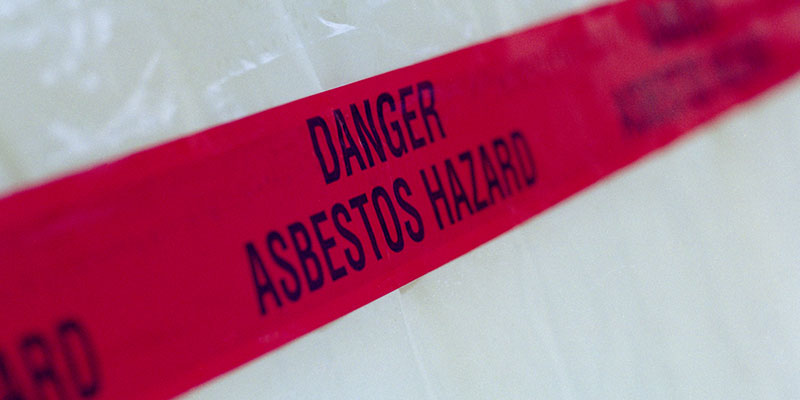
In the past, asbestos was used for a staggering number of applications, as the material was incredibly versatile. It could be used to provide fire protection, insulation, sound-dampening, and even more. Unfortunately, we now know that asbestos is an incredibly hazardous material that has been proven to cause at least one form of cancer.
If your home was built prior to 1985, there’s a good chance that there is asbestos in it somewhere, in which case you will need asbestos abatement services in order to remove this severe health hazard. Our team at Remtech Environmental is here to provide those services for you, and we have also put together this article on how the process works, so you can know what to expect.
- Seal- The first step in asbestos abatement is to seal off the area from which asbestos is being removed. This prevents the asbestos fibers from escaping into unaffected areas, and thus protects people from breathing them in inadvertently. To create the seal, our team will use polyethylene film, duct tape, and even negative air pressure machines and HEPA filters to prevent any fibers from escaping.
- Remove- Once the area is sealed, our team of trained and accredited technicians will get to work on removing the asbestos according to all state and federal laws. We wear specialized protective gear as we do this in order to prevent ourselves from inhaling the dangerous fibers.
- Clean Up- The final step in asbestos abatement is to clean up the area and HEPA vacuum any stray fibers that may have fallen. We use a specialized vacuum to do this, as standard vacuum cleaners are not equipped to deal with such fine fibers.
Asbestos abatement is one of the most heavily regulated environmental remediation processes in the United States, and for good reason. The Environmental Protection Agency (EPA), the Occupational Safety and Health Administration (OSHA), and the North Carolina Department of Health and Human Services (NC DHHS) each play a role in dictating exactly how asbestos-containing materials must be identified, contained, removed, and disposed of. For homeowners, landlords, and commercial property owners across Raleigh, Durham, Chapel Hill, and the broader Triangle region, understanding how the abatement process actually works is the difference between a safe, code-compliant remediation and an expensive, dangerous mistake. At Remtech Environmental, we have spent decades navigating this regulatory maze on behalf of North Carolina property owners, and the process is far more methodical than most people realize. This guide walks through the full five-step asbestos abatement workflow, the agencies that govern it, and the clearance testing that determines whether a job is truly finished.
Key Takeaways
- Asbestos abatement in North Carolina is governed by EPA NESHAP, OSHA 29 CFR 1926.1101, and NC DHHS rule 15A NCAC 19C, with a mandatory ten-working-day pre-job notification.
- The five-step process is: containment with negative air and HEPA filtration, three-chamber decon airlock, wet removal in PPE, HEPA vacuum and wet wipe, and encapsulation lockdown.
- Only NVLAP-accredited labs can analyze samples, and only NC-licensed contractors with accredited workers can perform regulated abatement.
- Clearance testing must be conducted by an independent third-party hygienist using aggressive air sampling and PCM or TEM analysis before containment can be removed.
- Homes built before 1985 are most at risk, with asbestos commonly found in floor tile, popcorn ceilings, pipe wrap, joint compound, and vermiculite insulation.
- Documentation, including waste manifests and post-abatement clearance reports, becomes part of the building's permanent record for insurance, resale, and legal purposes.
Need Help with Environmental Services?
If you have concerns about mold, asbestos, or water damage in your property, contact Remtech Environmental today for a free consultation.
Get a Free Quote