
Common Household Problems That Can Lead to Mold Damage
Published by Remtech Environmental Team · Last updated April 2025
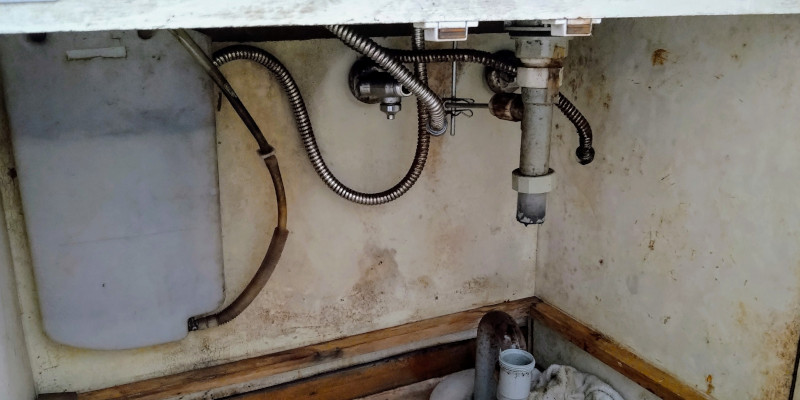
Mold requires damp conditions to grow. There are many areas around your home where these conditions may be present, typically as the result of a plumbing issue or similar problem. Knowing what issues can lead to mold damage will help you know what problems to make special note of around your home. Here are a few common household problems that can lead to mold growth.
If you have mold damage in your home, don’t panic. Give us a call here at Remtech Environmental and ask us about our mold removal service.
- Leaky pipes. The area under your sink or other pipes is the perfect spot for mold to grow when there’s a leak. The constant moisture coming from the leak is exactly what mold thrives on. Unfortunately, leaky pipes can often go unnoticed, which is why it’s important to regularly take a look under your sink to see if you have a minor leak, especially if your water bill has recently gone up without any known reason.
- Roof leak. Rainwater falling into your living room isn’t the only problem that comes with a roof leak. Mold damage is likely to occur anywhere water seeps into your home from the outdoors, so if your roof is leaking, your walls and home’s structure may encounter a mold issue.
- Poor ventilation. In rooms that naturally get more humid, such as the bathroom and kitchen, you’ll want to prioritize good ventilation. This ensures that clean air gets circulated throughout the area. Proper air circulation deters mold growth, but when the ventilation in your home is bad, mold is more likely to grow.
Mold is one of the most persistent and underestimated threats facing North Carolina homeowners, and the conditions inside the average house make it remarkably easy for a colony to take hold. Mold spores are present in virtually every indoor environment, drifting harmlessly until they encounter the moisture, organic material, and stagnant air they need to germinate. From Charlotte to Raleigh to the Outer Banks, our humid subtropical climate gives spores a generous head start, which means small household problems can escalate into significant contamination within 24 to 48 hours. Understanding which everyday issues most often invite mold growth is the first step toward preventing the structural damage, indoor air quality decline, and health complications that follow. This guide walks through the five most common household problems that lead to mold damage, the warning signs to watch for, and how the certified team at Remtech Environmental approaches assessment and remediation under IICRC S520 standards.
Five Household Issues That Most Often Trigger Mold Growth
Mold growth in residential properties almost always traces back to a moisture source. Identifying that source is the foundation of every legitimate remediation project, and the EPA specifically warns that surface cleaning alone will fail if the underlying water issue is not corrected. The following five categories account for the overwhelming majority of mold calls we respond to throughout North Carolina, and each one tends to produce a recognizable pattern of damage.
Plumbing Leaks Behind Walls and Under Fixtures
Slow plumbing leaks are arguably the single most common driver of hidden mold growth in North Carolina homes. A pinhole leak at a copper joint, a sweating drain line, or a slowly weeping supply valve under a vanity can release enough moisture to saturate drywall, framing, and subfloor without ever producing visible water. By the time a homeowner notices a soft spot in the floor, a musty odor, or a stain bleeding through the paint, mold colonies are typically well established inside the wall cavity. The EPA recommends investigating any unexplained increase in your water bill, any cabinet that smells damp, and any persistent dark staining around supply lines. At Remtech, we use moisture meters and thermal imaging during every assessment so leaks can be located before demolition begins.
Persistent Indoor Humidity Above 60 Percent
The North Carolina Department of Health and Human Services and the EPA both recommend keeping indoor relative humidity between 30 and 50 percent, with 60 percent identified as the threshold where mold risk rises sharply. North Carolina summers routinely push outdoor dew points into the 70s, and homes that lack adequate dehumidification or run oversized air conditioning systems often hold humidity above the safe range for weeks at a time. The result is a slow, surface-level mold bloom on closet walls, behind furniture pushed tight against exterior walls, and on the underside of upholstered items. A simple hygrometer placed on the main living level provides early warning, and a properly sized whole-house dehumidifier is one of the most effective long-term preventive investments a homeowner can make.
Poor Ventilation in Bathrooms, Kitchens, and Laundry Rooms
Ventilation is the unsung hero of mold prevention. Every shower, every pot of boiling water, and every load of laundry releases gallons of water vapor into the air, and that vapor must be exhausted to the exterior or it will condense onto the nearest cool surface. We routinely encounter bathrooms in older NC homes where the exhaust fan was either never installed, vents into the attic instead of through the roof, or has lost so much airflow to dust buildup that it can no longer move the rated cubic feet per minute. The visible result is mildew creeping along the ceiling above the shower, peeling paint near the tub surround, and black staining at the corners of the window frame. Upgrading to a properly sized fan with a humidity-sensing switch typically resolves the underlying problem.
Condensation on Cold Surfaces and Single-Pane Windows
Condensation forms whenever warm, humid air contacts a surface cooler than the dew point, and it is one of the most overlooked moisture sources in the Carolinas. Single-pane windows, uninsulated supply ducts running through unconditioned crawl spaces, cold-water pipes in wall cavities, and exterior walls in poorly insulated rooms are all classic condensation points. The water that beads on these surfaces wicks into adjacent drywall, window sills, and floor framing, where it provides a steady, low-volume food source for mold. The fix typically involves a combination of insulation upgrades, vapor barriers in crawl spaces, and humidity control rather than simply wiping the moisture away each morning. If you see persistent condensation on a recurring basis, treat it as a structural warning sign.
Vegetation, Landscaping, and Improper Site Drainage
Many homeowners are surprised to learn that the landscaping around the foundation directly influences indoor mold risk. Shrubs planted tight against the siding restrict airflow and trap moisture against the cladding, irrigation systems aimed at the foundation force water into crawl spaces and basements, and negative grading channels rainwater toward the house instead of away from it. In North Carolinas red-clay soils, even a small grading defect can deliver thousands of gallons of stormwater to a foundation over the course of a single hurricane season. The downstream consequences include efflorescence on basement walls, saturated insulation in crawl spaces, and chronic mold growth on floor joists. Trimming vegetation back at least 18 inches, redirecting downspouts, and re-grading the first 10 feet around the home are foundational preventive steps.
How Small Moisture Events Become Structural Mold Damage
The progression from a minor moisture event to structural mold contamination is faster than most homeowners realize. The EPA documents that mold can begin colonizing wet building materials within 24 to 48 hours, and the IICRC S520 standard for professional mold remediation treats any visible growth larger than 10 square feet as a project requiring containment, engineering controls, and post-remediation verification. The challenge in North Carolina is that our humid subtropical climate compresses that timeline considerably. Warm temperatures, abundant cellulose-based building materials such as paper-faced drywall and OSB sheathing, and prolonged periods of elevated humidity create near-ideal conditions for fungal amplification across most of the year. Once a colony becomes established, it produces additional moisture as a metabolic byproduct, which can accelerate damage to surrounding materials even after the original leak is repaired. This is why surface cleaning with bleach or store-bought sprays so often fails in practice: the visible growth is only the tip of a much larger biological footprint that has already penetrated porous substrates beneath the finished surface. A proper professional assessment includes moisture mapping, identification of the water source, third-party sampling where appropriate, and a written scope of work that addresses both the contamination itself and the underlying conditions that produced it. Skipping any one of those steps tends to produce recurring problems within months.
What North Carolina Homeowners Should Do When Mold Is Suspected
If you suspect a mold problem, the most important action is to resist the urge to disturb the affected area until a qualified professional can evaluate it. Wiping, scrubbing, or attempting to dry the materials with a household fan can aerosolize spores and spread contamination to previously clean parts of the home, dramatically increasing the eventual cost of remediation. Instead, document what you see with photographs, note the date you first observed the issue, and check for related warning signs such as elevated humidity readings, visible water staining, peeling paint, warped trim, or a musty odor that intensifies when the HVAC system runs. Shut off any active water source if a leak is the obvious cause, but leave drying and demolition decisions to a certified remediator. Remtech Environmental performs comprehensive mold assessments throughout North Carolina, including moisture intrusion investigation, third-party laboratory sampling when warranted, and detailed remediation planning that aligns with the IICRC S520 standard. Our technicians follow strict containment protocols, use HEPA-filtered negative air machines, and complete every project with post-remediation verification so you have written documentation that the contamination has been properly addressed before you reoccupy the space.
Related Resources From Remtech Environmental
If this article has raised concerns about your home, our team has prepared additional guidance that may help. Our overview of mold remediation services explains exactly what a professional project looks like from initial inspection through clearance testing. We also publish detailed guides on the dangers of DIY mold removal, the health effects of prolonged mold exposure, and the connection between water damage and fungal growth. For homeowners dealing with an active leak or recent flooding, our water damage restoration page outlines the structural drying process that prevents mold from taking hold in the first place. You can also request a free quote directly through our website.
Key Takeaways
- Plumbing leaks, indoor humidity above 60 percent, poor ventilation, condensation on cold surfaces, and improper site drainage are the five most common drivers of household mold damage.
- The EPA documents that mold can begin colonizing wet building materials within 24 to 48 hours, which is why early identification of moisture sources is critical.
- North Carolinas humid subtropical climate makes whole-house humidity control, properly sized exhaust fans, and effective foundation drainage especially important preventive measures.
- Surface cleaning with bleach or retail sprays does not eliminate mold colonies that have penetrated porous building materials and almost always allows regrowth.
- A proper response to suspected mold includes documentation, source control, and a professional assessment that follows IICRC S520 standards rather than DIY disturbance.
Need Help with Environmental Services?
If you have concerns about mold, asbestos, or water damage in your property, contact Remtech Environmental today for a free consultation.
Get a Free Quote