
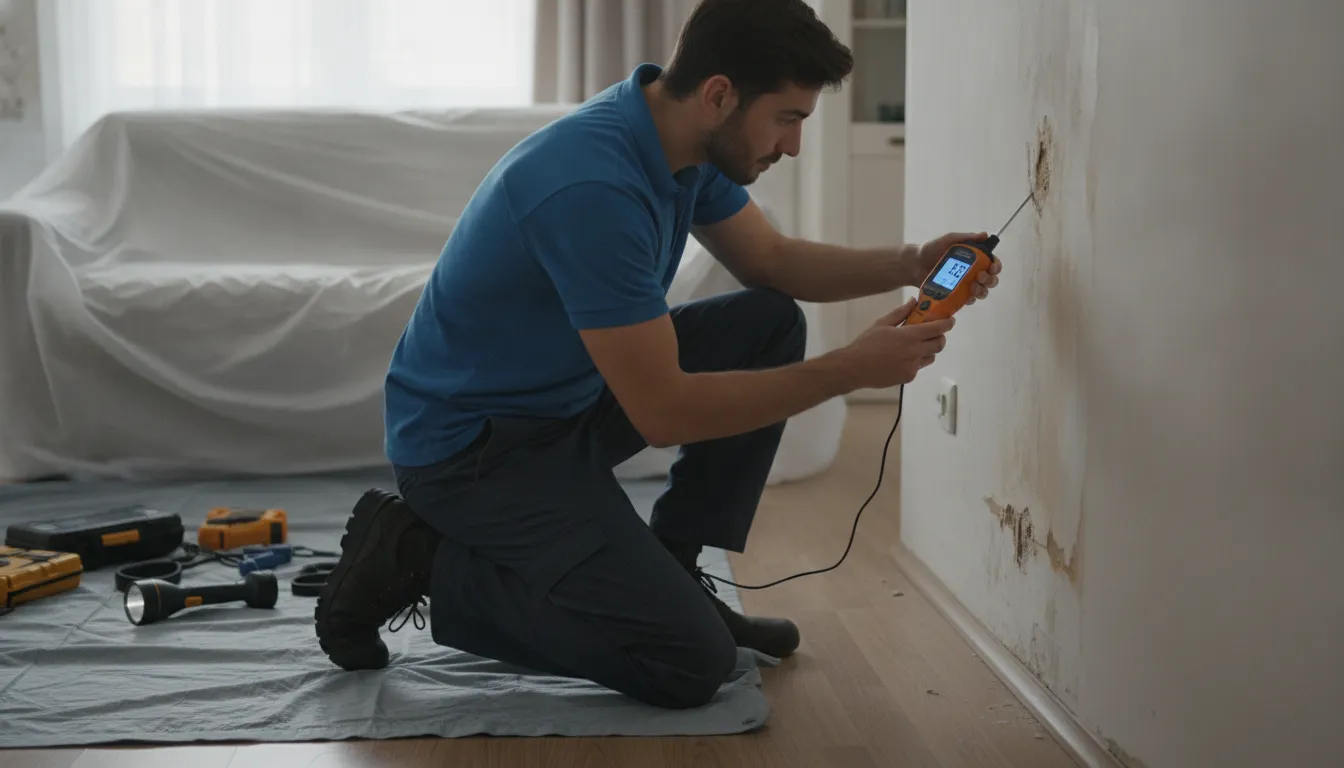
Water damage restoration can feel urgent and confusing, especially when a leak has reached walls, floors, or ceilings. The process usually involves stopping the source, removing standing water, drying the structure, cleaning affected areas, and repairing damaged materials. It may also uncover environmental hazards that require specialized help.
Remtech Environmental does not provide standalone water extraction, flood response, or 24/7 emergency water cleanup. Remtech helps North Carolina property owners when water damage reveals or creates concerns involving mold, asbestos, or lead-based paint. Our education-first approach explains the issue, the appropriate scope, and the next step without scare tactics.
If you suspect an environmental hazard after a leak, get a free quote from Remtech Environmental.
What does water damage restoration include?
Water damage restoration is a coordinated process for controlling water, drying affected materials, cleaning the area, and repairing the property. A restoration contractor documents moisture, removes water, monitors drying, and determines which materials can be saved. Environmental remediation is a separate specialty when mold, asbestos, or lead hazards are present.
The exact scope depends on where the water came from, how far it traveled, how long materials remained wet, and whether the building contains suspect materials. A small supply-line leak may require limited drying. A sewage backup or water intrusion that affects older flooring and walls may require additional safety controls and specialist input.
Core restoration activities
- Stop the source: Shut off or repair the leak so additional water cannot enter.
- Inspect and document: Map visible damage and use moisture meters to find hidden damp areas.
- Extract water: Remove standing water using appropriate pumps or extraction equipment.
- Dry and dehumidify: Move air and reduce humidity while monitoring affected materials.
- Clean and repair: Clean salvageable surfaces and replace materials that cannot be safely restored.
A qualified contractor should explain what is being dried, what will be removed, and how the team will confirm that moisture goals have been reached. Property owners should keep photographs, readings, invoices, and insurance communications together throughout the project.
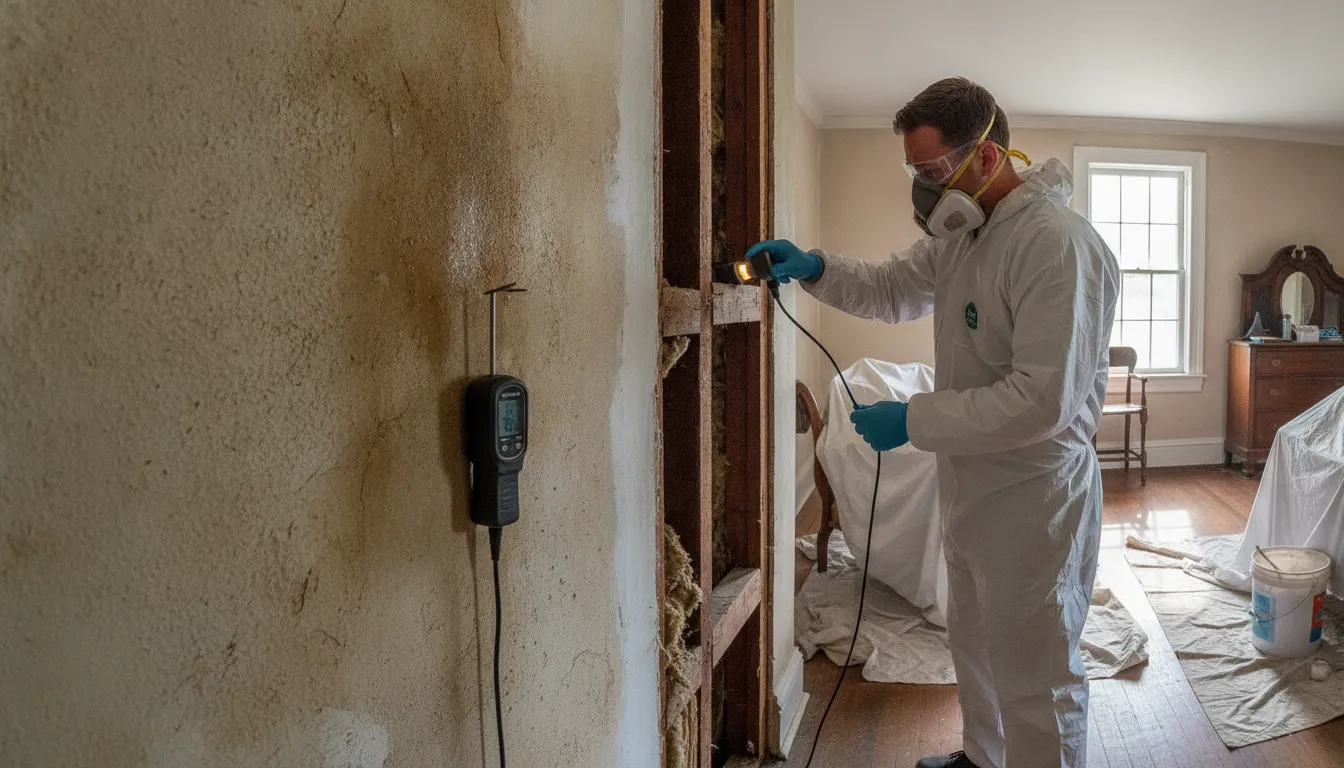
Moisture readings help identify affected materials that may look dry at the surface.
What should you do first after finding water damage?
After discovering water damage, protect people before protecting property. Stop the source only if you can do so safely, avoid rooms with electrical or structural hazards, and document the loss. Then contact the appropriate water restoration or plumbing professional. Do not disturb suspect older building materials during cleanup.
- Keep people away from hazards. Do not enter standing water near electrical sources, sagging ceilings, or visibly unstable materials.
- Stop the flow if it is safe. Turn off a fixture valve or the main water supply when the source is a plumbing leak.
- Identify the likely water source. Clean supply water and sewage-contaminated water require very different responses.
- Take photographs and notes. Record affected rooms, damaged items, and when the loss was discovered.
- Call the right professional. A plumber may stop the leak, while a water restoration contractor handles extraction and drying.
- Pause before demolition. Ask about environmental assessment before cutting, sanding, or removing suspect materials.
The Environmental Protection Agency recommends drying wet materials within 24 to 48 hours when possible to help prevent mold growth. That does not mean every wet wall should be opened immediately. In older properties, demolition can disturb asbestos-containing materials or lead-based paint.
Why does the water source change the response?
The water source helps determine the level of contamination, protective equipment, cleaning method, and whether materials may be saved. Water from a clean supply line begins with fewer contaminants than water from an appliance drain, sewage backup, or outdoor flood. Conditions can worsen as water sits and contacts dirty materials.
| General category | Common examples | Primary concern |
|---|---|---|
| Clean water | Supply-line or faucet leak | Fast extraction and complete structural drying |
| Gray water | Appliance discharge or some drain water | Contamination plus moisture removal |
| Black water | Sewage backup or outdoor floodwater | Serious contamination requiring professional controls |
These categories are practical guides, not a reason to take risks. Even water that begins clean can pick up contaminants after passing through insulation, flooring, wall cavities, or stored materials. Outdoor floodwater may contain sewage, chemicals, and other hazards. The EPA provides specific flood cleanup and indoor air guidance.
Tell contractors where the water came from and how long it may have been present. If the source is unknown or potentially contaminated, keep people away until a qualified professional evaluates the area.
How is hidden moisture found and dried?
Hidden moisture is found by combining a visual inspection with moisture measurements and knowledge of how water travels through a building. Restoration teams may inspect wall bases, flooring transitions, cabinets, insulation, and rooms below the loss. Drying equipment is then positioned and adjusted based on repeat measurements, not guesswork.
Water can move farther than the visible stain. It may wick into drywall, travel below finished flooring, collect inside cabinets, or soak insulation. A surface may feel dry while deeper layers remain damp. That is why a professional assessment often includes moisture meters and a documented drying plan.
Signs that moisture may remain
- Musty odors that persist after surface cleanup
- Peeling paint, swollen trim, warped flooring, or soft drywall
- Condensation or unusually high indoor humidity
- Recurring staining or discoloration
- Visible fungal growth or spots that return after cleaning
Drying may involve air movers, dehumidifiers, controlled heat, or selective removal of materials that cannot be saved. Equipment should not simply run for a preset number of days. The contractor should monitor conditions and explain how the final drying decision was made.
When does water damage become an environmental concern?
Water damage becomes an environmental concern when moisture supports mold growth or cleanup may disturb hazardous building materials. Mold, asbestos-containing materials, and lead-based paint require different assessment and control methods. Standard extraction and drying do not replace specialized remediation when one of these hazards is present or reasonably suspected.
Mold after prolonged moisture
Mold can grow when damp building materials remain wet. The response should address both the growth and the moisture source. Painting over staining or cleaning only the visible surface will not solve a hidden moisture problem. Remtech provides professional mold removal support for appropriate projects.
Asbestos concerns during removal
Older flooring, adhesives, pipe insulation, textured coatings, joint compound, and other materials may contain asbestos. Water damage often creates pressure to remove these materials quickly, but disturbing them without an assessment may release fibers. Learn how Remtech approaches asbestos abatement in North Carolina.
Lead-based paint concerns
Repair work can disturb painted surfaces, creating dust and chips. Lead-based paint is a particular concern in older buildings. Appropriate controls help limit dust spread during removal and repair. Remtech also provides lead-based paint removal services for qualifying projects.
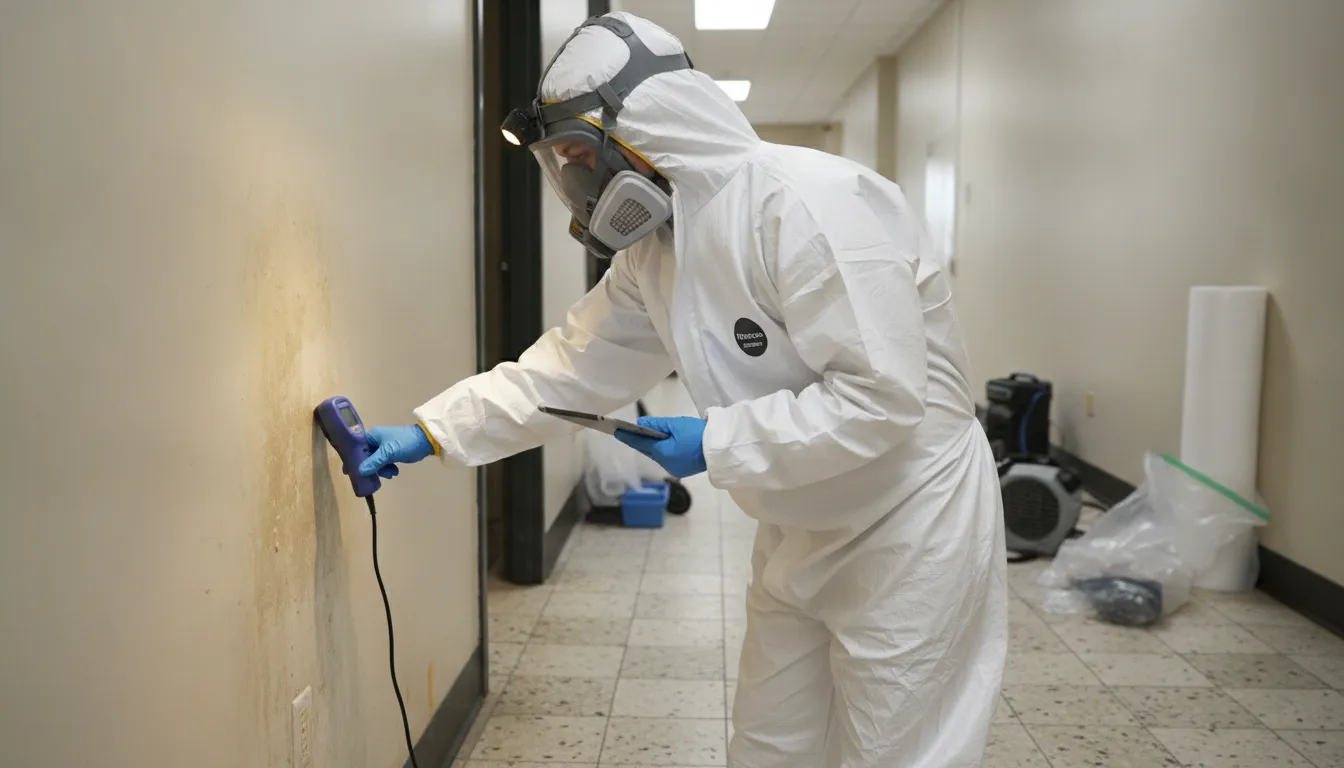
Suspect older materials should be assessed before demolition or repair work begins.
How environmental remediation fits into the project
Environmental remediation fits into a water damage project when specialist assessment or removal is needed before repairs can proceed safely. The water restoration contractor manages extraction and structural drying. Remtech Environmental addresses qualifying mold, asbestos, and lead-based paint concerns through a project-specific scope and transparent recommendations.
Coordination matters because the order of work can affect safety and cost. A restoration contractor may need access behind a wall, but an environmental professional may first need to assess the wall material. Likewise, rebuilding should wait until the moisture source is corrected, affected areas are dry, and any required remediation is complete.
A practical coordination sequence
- Stop the source and make the area safe.
- Document the affected area and likely water path.
- Identify suspect materials before destructive work.
- Complete any appropriate environmental assessment or remediation.
- Confirm drying goals and proceed with repairs.
Remtech focuses on doing the right work the right way. That means explaining what the team found, why a particular scope is appropriate, and which concerns fall outside Remtech's services. Pricing is project-specific because building materials, affected areas, and required controls vary.
Property owners also benefit from assigning clear responsibilities before work begins. Ask which contractor will document moisture, remove damaged materials, manage environmental controls, and complete repairs. Clear handoffs reduce delays and help prevent one team from assuming another has addressed an important condition. If the scope changes after materials are opened, request an updated explanation before authorizing additional work.
What affects the cost and timeline?
The cost and timeline of water damage restoration depend on the source, affected area, materials, contamination, drying time, and repairs. Environmental concerns can add assessment, containment, or specialized removal steps. A reliable estimate should be based on the actual property and scope rather than a standard price that ignores project conditions.
- Extent of water travel: A leak limited to one hard-surface room differs from water spread across multiple levels.
- Type of materials: Some materials dry in place, while others require removal and replacement.
- Contamination: Sewage or floodwater calls for more protective controls and cleaning.
- Environmental hazards: Mold, asbestos, or lead concerns may require specialist work before repairs.
- Access and coordination: Tight spaces, occupied buildings, and insurance documentation can affect scheduling.
Ask for a written scope that separates water restoration, environmental remediation, and rebuilding. This makes responsibilities clearer and helps you compare proposals fairly. For environmental concerns, Remtech offers a consultation-based quote after learning about the property and the suspected hazard.
Frequently asked questions
What does water damage restoration include?
It generally includes stopping the source, assessing the affected area, extracting standing water, drying materials, cleaning affected surfaces, monitoring moisture, and repairing damaged components. The precise scope depends on the water source and materials involved.
How quickly should wet materials be dried?
The EPA recommends drying wet or damp materials within 24 to 48 hours when possible to help prevent mold growth. Safety comes first, so do not disturb suspect materials or enter hazardous areas simply to meet that timeframe.
Does Remtech Environmental provide emergency water extraction?
No. Remtech Environmental does not provide standalone water extraction, flood response, or 24/7 emergency water cleanup. Remtech helps when a water loss reveals or creates mold, asbestos, or lead-based paint concerns.
When should suspect building materials be tested?
Ask a qualified environmental professional before demolition when wet materials may contain asbestos or lead-based paint, especially in older buildings. An assessment can help prevent unnecessary disturbance and define the right next step.
Can water damage lead to mold?
Yes. Mold can grow when moisture remains in building materials. Prompt drying and moisture control reduce the risk, while professional assessment can help when growth is visible, odors persist, or materials stayed wet.
Get clear guidance on environmental hazards
Water damage restoration addresses the immediate water loss, but some projects also need specialized environmental remediation. If your North Carolina property has suspected mold, asbestos, or lead-based paint after a leak, Remtech Environmental can explain the concern and recommend an appropriate, project-specific path.
Get a free quote today and talk with Remtech Environmental about the environmental hazards affecting your property.