
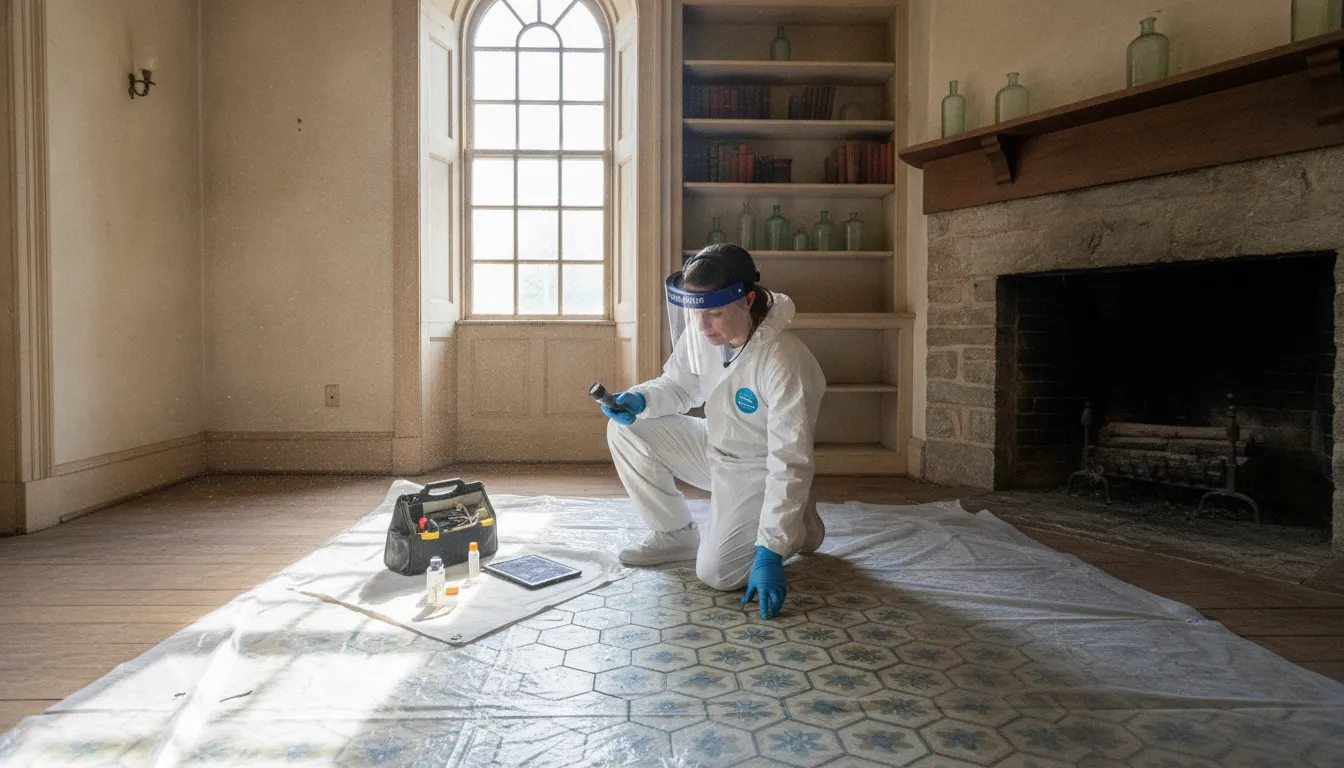
Learning how to test for asbestos safely matters when crumbling insulation, cracked floor tiles, or other older building materials may be disturbed. You cannot confirm asbestos by sight, and taking a sample without proper controls can release invisible fibers. The safest first step is to leave suspect material alone and arrange professional sampling and laboratory analysis.
Get a free quote from Remtech Environmental before disturbing suspect material.
How to test for asbestos safely is a vital skill for anyone living in an older home with suspected building hazards. This process starts with identifying materials like old insulation or floor tiles and leaving them alone to prevent the spread of dangerous dust. While some owners think about using mail-in kits, the safest way is hiring a certified pro who will collect samples using strict safety rules. These experts use Polarized Light Microscopy in a certified lab to find asbestos as EPA rules suggest for your home. This definitive testing process helps you plan for safe removal and keeps your entire family safe during any future home repairs.
Finding a health risk is the first step toward a safe home. Many owners want to know if they can do the check themselves or if they need an expert. We will show you how to test for asbestos without creating unnecessary risk.
How to test for asbestos without creating unnecessary risk
Finding asbestos in your home or business requires more than a simple visual check. Since these fibers are tiny, they are too small for the human eye to see. You cannot tell if a material is safe just by looking at it. Instead, you must rely on professional tools and laboratory tests to find the truth.
When to test your building
You should consider testing if your building was made before 1985. Many older materials like floor tiles and pipe wrap often hide these fibers. Testing is vital if you plan to start a renovation or if you see damaged materials. You can learn more about how to stay safe in our guide to professional asbestos abatement.
The danger of DIY sampling
Taking your own samples is not a good idea because it can release dust into the air. When you cut or scrape a material, you might set loose thousands of tiny fibers that you can then breathe in. The Environmental Protection Agency warns that even small amounts of dust can create a health risk for your family or staff. It is best to leave the area alone until a pro can check it.
If you suspect a problem, keep the area sealed and avoid any work that creates dust. A professional team knows how to follow strict rules to keep the air clean. You can reach out for a free consultation to discuss your specific needs and get an expert opinion on the next steps.
Steps for safe professional testing
The safest way to handle this process is to hire an expert. They have the right gear and training to take samples without putting anyone at risk. Here is how the professional testing path works:
- Initial site visit. An inspector walks through the area to find suspect materials. They look for damage or wear that could release fibers.
- Safe sample collection. The pro uses wet methods and plastic sheets to stop dust from spreading. They take a small piece of the material and place it in a sealed bag.
- Laboratory analysis. The lab uses a special tool called Polarized Light Microscopy to find fibers. This is the only way to be sure if asbestos is present.
- Results and report. You get a full report that tells you what was found. This helps you decide if you need to plan for removal or if the area is safe.
Which materials should be evaluated before renovation?
Many old homes have hidden dangers. Before you tear down a wall or pull up old tile, you must know what is inside. Asbestos was a common choice for builders for many years. It was used because it is strong and resists heat. But these fibers are very small. You cannot see them with your eyes. That is why an expert check is key before you start any work.
Common materials with hidden risks
Asbestos can be in many parts of a home. It is often found in attic or wall insulation. You might also find it in floor tiles or the glue used to hold them down. Roofing and siding are other common spots. Even the plaster on your walls or the tape on your air ducts could have it. It was also used to wrap hot water pipes and to make popcorn ceilings. Because these fibers are tiny, you cannot tell if a material has them just by looking.
The EPA notes that asbestos was used in many items, including roofing and insulation. If you find these items in your home, do not touch them. Breaking or cutting them can release dust into the air. This dust is harmful to breathe. Keeping these items whole and sealed is the best way to stay safe until a pro can look at them.
Why building age matters
The age of your home is a big clue. If your house was built before 1985, the risk is much higher. Many builders used items with asbestos during that time. Older homes often have layers of parts from different years. A new floor might be sitting on top of an old one that has hidden risks. Even if a room looks new, the older items could still be hidden behind the walls.
You should always assume that older materials have asbestos until you get a check. If you are planning a project, look for certified asbestos removal services to help. They can tell you which areas need the most care. They know what to look for in homes of all ages. Knowing the history of your home helps you make a plan that keeps everyone safe. It is better to know the facts before you start your work.
When to check your materials
You do not always need to test every item in your home. If a material is in good shape and you do not plan to touch it, it is usually safe to leave it alone. The danger comes when you disturb it. This happens most often during a project. If you plan to sand, saw, or drill into a wall, you need to know what is inside. You should also check materials that are in poor shape. Look for floor tiles that are cracking or pipe wrap that is peeling. These damaged items can leak fibers into your living space.
Learning how to test for asbestos involves more than just a quick look. A pro will take small bits of the material and send them to a lab. They use a special microscope to find the tiny fibers. This is the only sure way to know if your home is safe. If the lab finds asbestos, you can then plan for professional asbestos abatement. This keeps the air in your home clean and safe for your family.
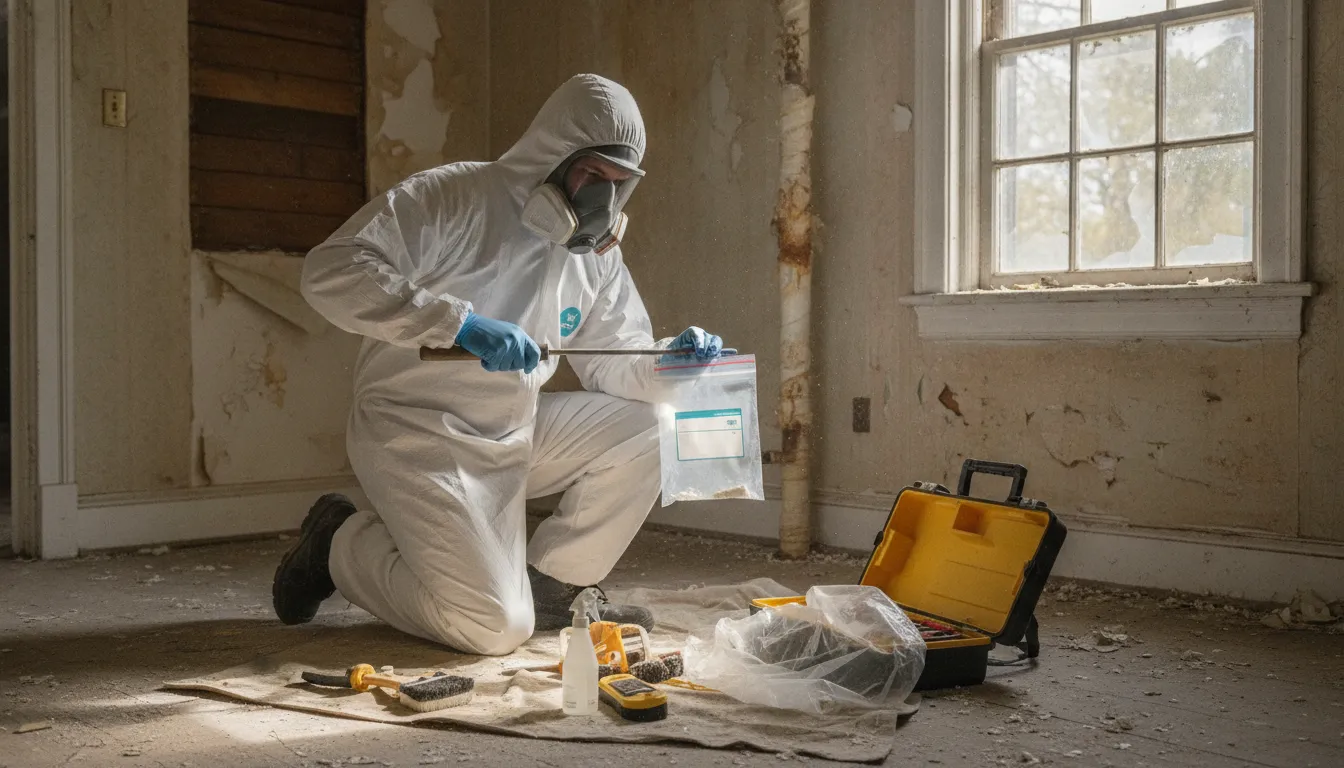
Professional sampling uses controlled methods to limit the chance of releasing asbestos fibers.
DIY asbestos test kits vs. professional testing
Homeowners often wonder how to test for asbestos before they start a home project. You might see low-cost test kits in local shops or online. These kits tell you to take a small piece of tile or wall and mail it to a lab. While this seems fast and cheap, it can lead to big health issues if you do not have the right gear. It is vital to know the risks before you touch any old material in your home.
Hazards of sampling at home
Taking your own samples carries a high risk of letting loose bad fibers. Asbestos fibers are so small that you cannot see them with your eyes alone. If you cut or scrape a dry material, you might create dust that stays in the air for a long time. This dust is hard to clean and very easy to breathe in. The EPA says that asbestos fibers do not dissolve in water or go away on their own. Once fibers are in the air, they can settle on carpets, beds, and furniture. This makes your whole house a danger zone for a long time.
Most home kits do not give you the tools to keep your air safe. If you make a mistake, you could spread the risk to every room in your house. The EPA warns that moving these materials can cause fibers to fly into the air (safety guide). But most people do not have the special vacuums or masks to stay safe. It is often much better to keep the area shut and wait for help from a pro. Expert help is the only way to keep hazardous dust from moving through your vents.
Why expert testing works better
An expert inspector knows how to find hidden risks without making a mess. They look for things like old pipe wrap, floor tiles, and attic insulation that might hide the risk. They also check the state of the material to see if it is likely to break apart. They follow strict rules to keep you and your family safe. When they take a sample, they use wet tools to trap any dust that might try to escape. This careful work is the first step in professional asbestos abatement and keeps the rest of the home clean.
Experts also use labs that have the right tools to find these tiny fibers. They use a method called Polarized Light Microscopy to look at the material under a high-power lens. This check is the only way to be sure if a material is safe or not. After the test, they give you a full report. This plan tells you exactly what steps to take next to fix the problem and stay safe during your home project. Having a pro report can also help if you need to show proof of safety to a buyer or an agent.
Choosing the right path
The main draw of a DIY kit is the low price. You can get a kit for a small fee, and the lab work is often included. But you must think about the true cost of a mistake. If you spread dust in your home, the cleanup will cost much more than an expert test. You might also face legal issues if you try to sell a home with a history of poor DIY work. A pro test is an investment in the safety of your home and your health.
Professional testing is priced according to the property, suspect materials, and number of samples needed. A qualified provider can explain the scope and laboratory fees before work begins. If you have an older building or plan a renovation, starting with an expert check is the safest move. You can Get a Free Quote Today to see what a professional check would cost for your home.
| Feature | DIY Test Kit | Professional Testing |
|---|---|---|
| Safety Risk | High (dust release) | Low (full containment) |
| Accuracy | Varies by sample | High (expert method) |
| Pricing | Kit and laboratory fees vary | Project-specific quote |
| Documentation | Varies by provider | Formal report from the testing provider |
What should you do before an asbestos test?
Finding a material that might have asbestos can be stressful for any homeowner. You may want to fix the problem right away, but you must move slowly. Learning how to test for asbestos starts with the steps you take before a pro arrives. Your main goal is to ensure that no one in your home breathes in harmful dust or fibers.
Stop all renovation work
The most important step is to stop any work in the area. If you were planning to fix or repair a room, put those plans on hold. You should not drill, sand, or scrape the material. If you disturb it, you could release tiny fibers into the air. These fibers are too small to see, but they are very dangerous to your lungs.
According to the Environmental Protection Agency, moving or cutting the material creates a high risk of fiber release. These minerals are very tough and do not break down. Once they are in the air, they can stay there for a long time. This is why you must leave the material exactly as you found it.
Seal and restrict the area
You should close off the room to keep family and pets away. Tell everyone in the house to stay out of the zone until an expert arrives. If there is a draft, close any windows or vents near the spot. This helps prevent the fibers from moving to other parts of your home through the air. Making sure the air stays still is a key part of staying safe.
Do not sweep or vacuum any dust near the spot. Using a standard vacuum can spread fibers through its exhaust. If there is debris on the floor, leave it alone. A professional asbestos abatement team will know how to clean the area safely. Keeping the area sealed is the best way to prevent the spread of unsafe dust.
Find a certified professional
Once the area is safe, you need to find a pro to handle the testing. While you might see home test kits in stores, taking your own samples is a big risk. An expert has the right training and gear to take samples without spreading dust. They use specific tools to keep the material wet. This stops fibers from flying away during the test and keeps your air clean.
A pro will send the material to a lab. These labs use special tools to find the hidden fibers. This is the only way to know for sure if the material has asbestos. When you talk to the pro, tell them when your home was built. This helps them know the risk and plan the right test. By calling a pro, you ensure the job is done the right way.
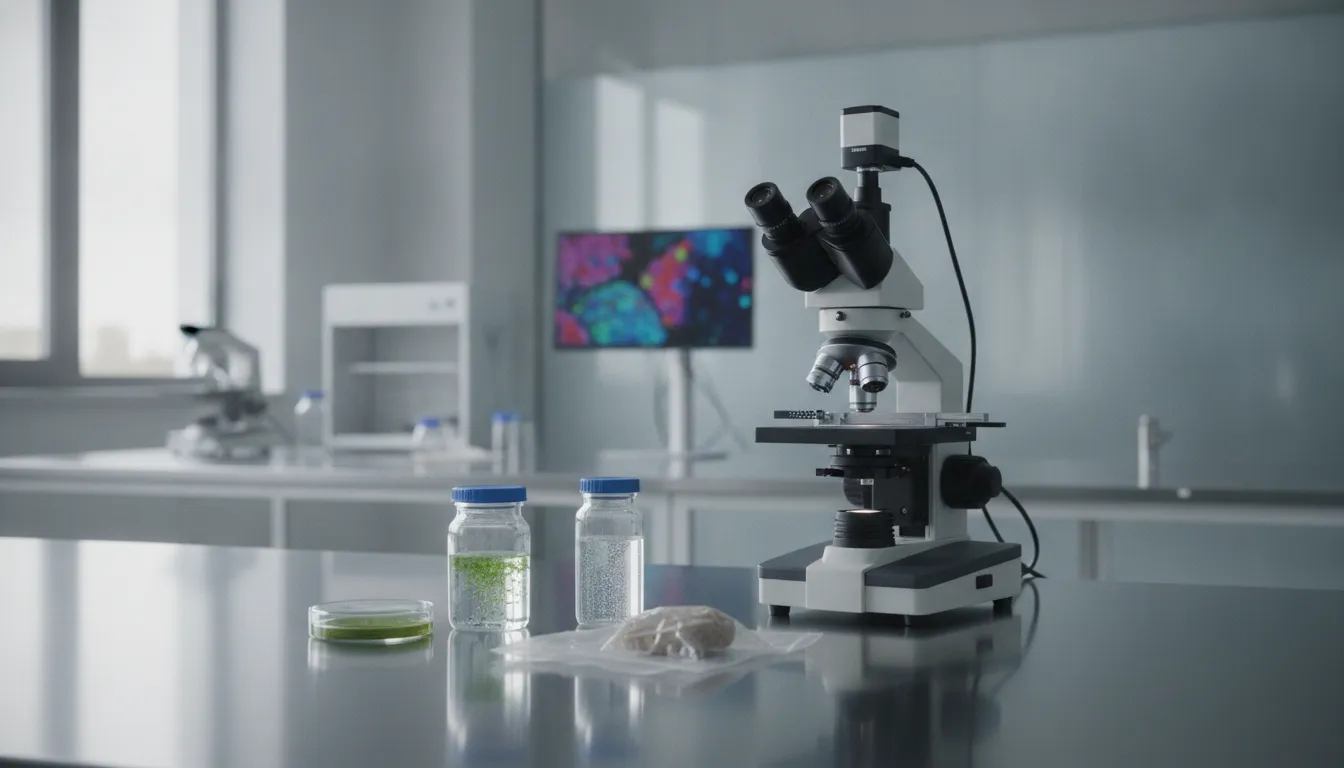
A qualified laboratory analyzes properly sealed samples to confirm whether asbestos is present.
How laboratory asbestos testing works
You cannot find asbestos by just looking at it. Since the fibers are small, experts must use special tools to see them. Lab testing is the only way to be sure if a material has asbestos. These tests help experts find the best path for your project. Knowing how to test for asbestos starts with a pro lab test.
The role of polarized light microscopy
Most labs use a method called Polarized Light Microscopy (PLM) to check for asbestos. This tool lets a trained person look at the shape and color of the tiny fibers. It is the common way to find and measure asbestos in bulk building materials. The EPA bulk testing guide shows how this standard method keeps people safe.
During the PLM test, the lab finds the type of asbestos in the sample. This includes common types like chrysotile or less common ones like amphibole fibers. The lab also finds the amount of asbestos in the sample. This data is key for planning a professional asbestos abatement project. It tells you exactly what kind of risk you face before you start any work.
How to read your test results
When you get your lab report, it will show if the sample is positive or negative. A positive result means the material has more than 1% asbestos. If the result is negative, it means no asbestos was found or the level is below the legal limit. Keep in mind that a negative result for one item does not mean the whole room is safe. You may need more tests for different layers or materials.
Sometimes a report shows mixed results. This happens when some parts of a material have asbestos and others do not. For example, the tile might be safe, but the glue under it could be positive. A pro inspector helps you make sense of these details. They ensure you follow certified asbestos removal services rules to protect your health and your property.
Deciding on the next steps
A lab report gives you the facts, but it does not tell you what to do next. If the results are positive, you need to think about the state of the material. Materials in good shape that you will not touch may be fine to leave alone. But if you plan to change the room or if the item is damaged, you must act. A pro team will use the lab data to build a safe plan for your home.
Positive results are not a reason to panic. Instead, they give you the info you need to stay safe. Remtech Environmental helps people understand these results without using scare tactics. We focus on teaching so you can make the best choice for your family. You can get a free consultation to talk about your lab report and next steps.
What happens after a positive asbestos result?
Getting a positive test result for asbestos can feel scary at first. But you should not panic if you see a positive sign on your test report. Stay calm and keep the area safe while you think about your next steps. A positive result does not always mean you are in any danger. Many items with asbestos are safe if they are in good shape today. You only face a risk if tiny fibers get into the air you breathe.
First steps to stay safe
If you just learned how to test for asbestos and got a positive result, stop all work in that room. Do not touch or vacuum any dust near the spot where you found it. Keep the area sealed off from the rest of your home to stay safe. The EPA suggests you avoid any task that might stir up dust there.
Tell anyone who lives with you about the find so they can stay back. Make sure your kids and pets stay far away from the area at all times. If you were planning a home project, put it on hold for now. Even small tasks like drilling or sanding can release many hazardous fibers. Keeping the space quiet is the best way to prevent harm while you plan your next move.
Checking the state of the material
Not all asbestos needs to come out right away to keep you safe. Talk to a pro first to see what the best path is for your home. Look at the state of the material to see if it is still strong and whole. If it is "friable," it can crumble with just a bit of hand pressure. This type is a high risk because it breaks apart and enters the air easily. Hard material in good shape may be best left alone for a while.
A pro can help you decide if the risk to your health is low. They use tools to check how likely the material is to break or crumble. You might use a process called "encapsulation" to keep the fibers in place. This seals the asbestos with a thick coating so that it stays safe and out of the air. It is often much cheaper than taking all of the material out of your house. Learn about professional asbestos abatement and how it works to keep you safe.
Making a plan to fix the problem
If the material is damaged, you will need removal by a pro team. Work with a team that has the right training and tools for this hard job. They follow strict rules and safety steps to keep your air clean and healthy. They set up plastic walls and use fans to trap dust as they work. This keeps your home safe and clean while the team is at work in the area. They also use wet methods to stop fibers from flying through your home.
You might worry about the price of these tests for your own home. Professional testing costs vary based on the property, materials, and number of samples needed. A good team will do "clearance testing" when they finish the work. This shows that the air is safe for you and your family to breathe again. Look for certified asbestos removal services that have a strong track record. Pros use Polarized Light Microscopy to find and track these tiny minerals.
Remtech is here to help you through each step of this process. We focus on teaching you the facts so you can make the best choice for your home. We do not use scare tactics or high pressure to sell you more work. Instead, we give you the data you need to stay safe and healthy. If you have questions, get a free quote today to start your path to a safer home.
Request a free quote before renovation work disturbs materials that may contain asbestos.
Frequently Asked Questions
Can I test for asbestos myself?
While you can buy home test kits, doing it yourself is often not safe. Taking samples can release tiny fibers into the air that are too small to see. The EPA warns that these fibers are a health risk if you breathe them in. Most experts say you should hire a pro to do the work. This keeps your home safe and ensures the results are right.
How do professionals test for asbestos?
Certified experts follow a strict plan to keep you safe. They collect small pieces of the material while wearing special gear. These samples go to a lab for a deep look. Labs use tools like Polarized Light Microscopy to find the fibers. This test is the only way to be sure if asbestos is present in your home.
When is testing for asbestos necessary?
You do not always need to test for asbestos just because it might be there. It is usually best to test if the material looks damaged or frayed. You should also test before you start any home repairs or upgrades. Moving or cutting the material can release dust into your house. Testing first helps you know how to handle the project without risk.
Can I identify asbestos just by looking at it?
You cannot tell if a material has asbestos just by looking at it. These minerals are made of tiny fibers that are far too small for the human eye to see. Many common items like floor tiles and pipe wrap look the same whether they have it or not. The only way to find out for sure is through a lab test.
How much does professional asbestos testing cost?
The cost for professional asbestos testing varies by property, suspect material, and the number of samples needed. A provider can explain the proposed scope and laboratory fees before sampling begins. Ask for a project-specific quote rather than relying on a standard rate.
Ready to spot asbestos and protect your family?
Leaving parts that look like asbestos alone is very risky. It can lead to high costs if you stir up dust during a repair. Booking an expert check today keeps your home safe. It ensures your work stays on track without any sudden stops or costly legal fines. You will get a fast answer and a clear plan. This helps you finish your work with total trust and a healthy home.
Ready to get a free quote? Leave suspect material undisturbed and contact our local team to discuss a careful, project-specific next step.