

A single burst pipe can dump hundreds of gallons of water into your home in minutes. Homeowners insurance often covers these sudden disasters if you act fast. Understanding your policy limits is the best way to avoid high costs.
Need immediate help? Request your free quote or call Remtech Environmental today.
<div class="answer-capsule"> **Does homeowners insurance cover water damage**? Yes, standard policies cover sudden and accidental water damage like burst pipes or a water heater rupture. Standard policies do not cover gradual damage such as slow leaks, or flooding from storms and rising groundwater. To verify coverage, NC property owners must check if the source was sudden or gradual. </div>Understanding Homeowners Insurance and Water Damage: What's Covered?
When a pipe breaks, water can quickly ruin your drywall, floors, and personal items. Homeowners insurance helps pay to fix this damage. But it does not cover every kind of water issue. Knowing how policies work is vital for every North Carolina property owner.
Standard plans cover sudden and accidental water leaks. This means the leak must happen without warning. If you could not foresee or prevent the leak, your insurer will likely pay for the repairs. Common covered events include:
- Burst plumbing pipes or sudden freezing
- Water heater ruptures or tank failures
- Overflowing washing machines or dishwashers
- Sudden toilet or tub overflows
Accidental Discharge Explained
Insurance companies call these events "accidental discharge." When a system breaks suddenly, your dwelling coverage pays to repair the house structure. This includes fixing wet drywall, wood framing, and subfloors. It also helps pay to dry out the home to prevent mold.
But there is a catch. Dwelling coverage pays to repair the damage caused by the water. It rarely pays to fix the appliance or pipe that broke. For example, if your water heater bursts, insurance pays to dry the basement and replace ruined walls. But you will have to buy a new water heater yourself.
Personal Property Coverage
Your plan also has personal property coverage. This part of the policy pays to fix or replace your personal belongings. It covers items like furniture, electronics, clothing, and rugs ruined by covered water leaks. Be sure to list all damaged items for your adjuster.
Sudden and Accidental vs. Gradual Damage: The Insurance Difference
The biggest conflict with water claims is sudden vs. gradual damage. Insurance companies are very strict about this difference. If they think the water damage happened slowly, they will likely deny your claim.
Sudden and Accidental Damage
As we noted, sudden damage happens all at once. A pipe that bursts on a Tuesday morning is sudden. You could not stop it, and you took quick action to clean it up. Insurance is designed to protect you from these unexpected accidents.
Gradual Water Damage
Gradual damage happens over weeks, months, or years. It is usually caused by a slow leak or a maintenance issue you ignored. Standard plans do not cover gradual damage. Insurers expect owners to maintain their homes and fix small leaks before they cause major harm.
Common examples of gradual damage that are not covered include:
- Slow leaks in plumbing behind walls or under sinks
- Water seeping through foundation cracks during rains
- Mold growing due to high indoor humidity or poor air flow
- Rotting wood caused by a roof leak that was not fixed
When an owner finds mold or rot, adjusters look for clues. They check for water stains, rusted pipes, and soft wood. If they find these signs, they may say you should have known about the leak. They will deny the claim, leaving you with high cleanup costs.
When Water Damage Leads to Mold: What Does Insurance Cover?
Water damage and mold go hand in hand. If you do not dry your home within 24 to 48 hours, mold will grow. But will your insurance pay for mold cleanup?
The Link Between Water and Mold
In North Carolina, the warm and humid weather makes mold a constant threat. When a water leak occurs, mold spores find the perfect home. They grow on wood, drywall, carpet, and ceiling tiles.
Whether insurance covers mold depends on what caused the water leak. If the mold grew because of a covered sudden pipe burst, your insurer might cover the mold cleanup. But if the mold grew from a slow, gradual leak, they will not pay.
Mold Coverage Limits
Even if your insurer covers mold, standard policies have strict limits. Many plans cap mold cleanup costs at $5,000 to $10,000. Mold remediation can easily cost more than this limit if the mold has spread throughout your crawlspace or walls.
To protect yourself, you can buy a special mold endorsement. This add-on increases your mold coverage limits. It gives you extra peace of mind, especially in humid NC climates.
The Importance of Fast Drying
The best way to avoid mold disputes is to prevent mold from growing in the first place. You must dry the structure completely within 48 hours. This is why calling a certified professional drying team immediately is so vital. They have the tools to dry your home before mold can take root.
Flood Damage vs. Water Damage: Why You Need Separate Coverage
Many North Carolina homeowners think their standard policy covers flood damage. This is a common and costly mistake. Standard homeowners insurance does not cover flood damage from natural storms or rising water.
Standard Homeowners Insurance
Standard plans cover water that comes from the top down or from inside the house. This includes rain coming through a wind-damaged roof or water from a burst pipe. It does not cover water that comes from the ground up.
Flood Insurance
Flood insurance is a separate policy. It covers damage from rising groundwater, overflowing rivers, storm surges, and heavy rains that pool on the ground. If a storm causes a creek to overflow into your living room, only flood insurance will pay for the repairs.
| Water Event | Covered by Standard Policy? | Covered by Flood Insurance? |
|---|---|---|
| Pipe bursts in the wall | Yes, sudden and accidental | No |
| Rain enters through wind-torn roof | Yes, storm-related roof damage | No |
| Groundwater rises into basement | No, ground water exclusion | Yes, rising water |
| River overflows into home | No, flood exclusion | Yes |
| Washing machine hose ruptures | Yes, sudden system failure | No |
Coastal and Low-Lying Risks
If you live in coastal NC or low-lying areas, flood insurance is essential. Even inland areas like Raleigh can flood during hurricanes. We suggest checking flood maps to see your risk. Buying a flood policy through the National Flood Insurance Program (NFIP) is the best way to protect your home.
Step-by-Step Guide: What to Do Immediately After a Water Leak
If you find a water leak in your home, you must act fast. Taking the right steps in the first few hours can save your home and secure your insurance claim.
- Stop the Water Flow: Find your main water valve and shut it off. This stops the flooding and limits the damage.
- Turn Off Electricity: If water is near outlets or wiring, turn off the power at the main breaker box. Never walk through wet areas with the power on.
- Call Professional Restorers: Contact a certified water damage mitigation team immediately. They have the heavy-duty pumps, fans, and dehumidifiers needed to dry your home fast.
- Take Photos and Videos: Document all the damage before any cleanup begins. Take clear photos of the standing water, the broken pipe or appliance, and ruined belongings.
- Call Your Insurance Company: Report the leak and start your claim. Give them your photos and a clear list of what happened.
Securing Your Belated Items
Move dry personal belongings to a safe, dry room. If possible, lift furniture legs off wet carpets using plastic blocks or foil. This prevents wood stains from ruining your rugs and stops moisture from wicking up into the furniture.
Keep All Records
Save every receipt, invoice, and document from your cleanup. Keep records of professional drying services, equipment rentals, and cleaning supplies. Your insurance company will need these records to pay your claim.
Professional Water Damage Mitigation: Why DIY Drying Isn't Enough
Some homeowners try to dry their homes using household fans and towels. While this might work for a small spill, it is not enough for major leaks. Professional mitigation is essential to protect your home's structure and prevent toxic mold.
The Risk of Hidden Moisture
Water does not just sit on top of floors. It sinks deep into wood subfloors, runs behind baseboards, and climbs up drywall. Household fans only dry the surface. They leave deep structural wood wet.
When wood stays wet, it rots. This ruins the strength of your home's framing and floors. Wet drywall also loses its strength and becomes a perfect home for black mold.
High-Velocity Air Movers
Professional teams use high-velocity air movers. These powerful fans circulate air at high speeds across wet surfaces. This speed accelerates evaporation, turning liquid water into vapor.
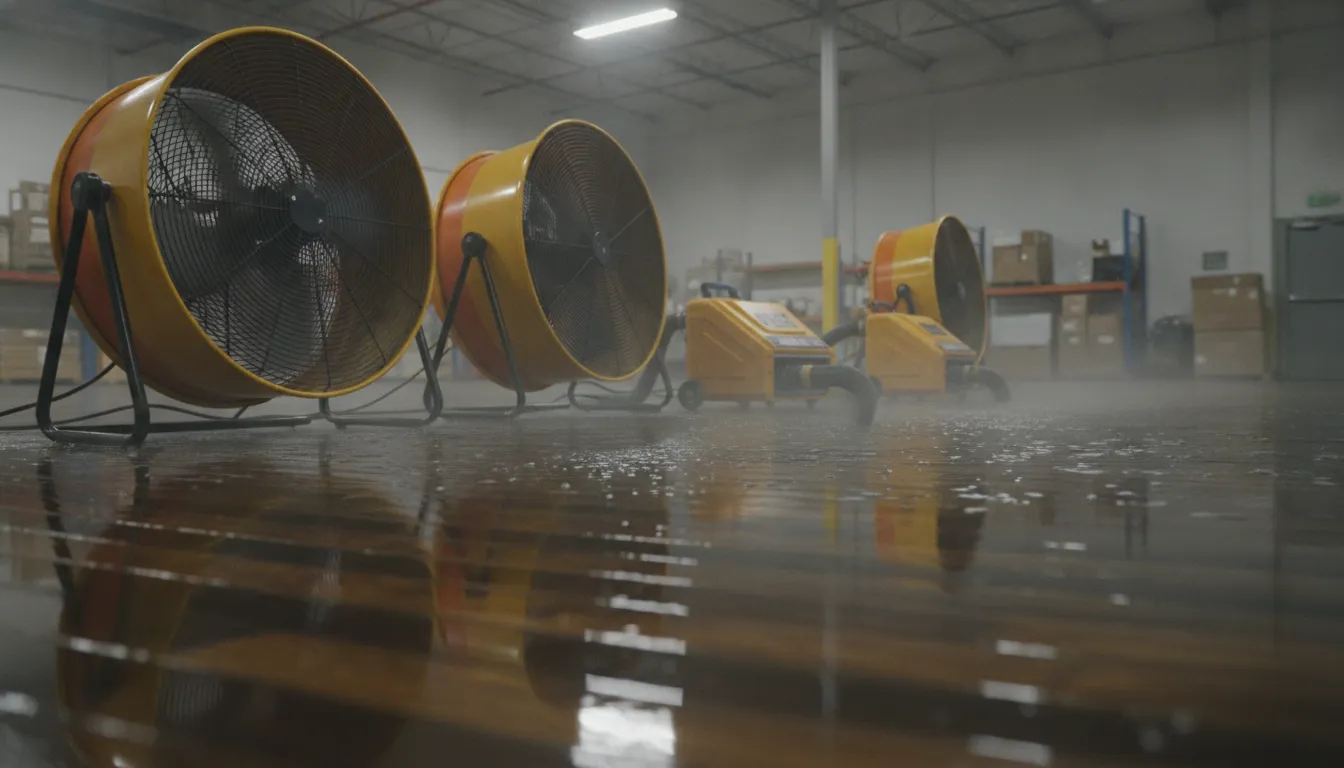
Industrial fans are placed by certified restorers to create a continuous vortex of air. This targeted airflow reaches behind drywall and into tight corners where stagnant, wet air would otherwise linger. By constantly replacing humid boundary-layer air with dry air, these machines ensure that every surface dries evenly and rapidly, preventing localized mold colonies from taking root.
Commercial Dehumidifiers
Evaporating the water is only half the job. Once the water is in the air, you must remove it. If you do not, the indoor humidity will skyrocket, and mold will grow on dry walls and furniture.
Professionals run commercial-grade refrigerant dehumidifiers. These machines pull gallons of water out of the air every day. They keep relative humidity below 50%, which halts mold growth and speeds up structural drying.
Non-Invasive Moisture Tools
How do professionals know when your home is dry? They do not guess. They use digital moisture meters and infrared thermal cameras. These tools locate hidden pockets of water behind walls and under floors without tearing up your home.
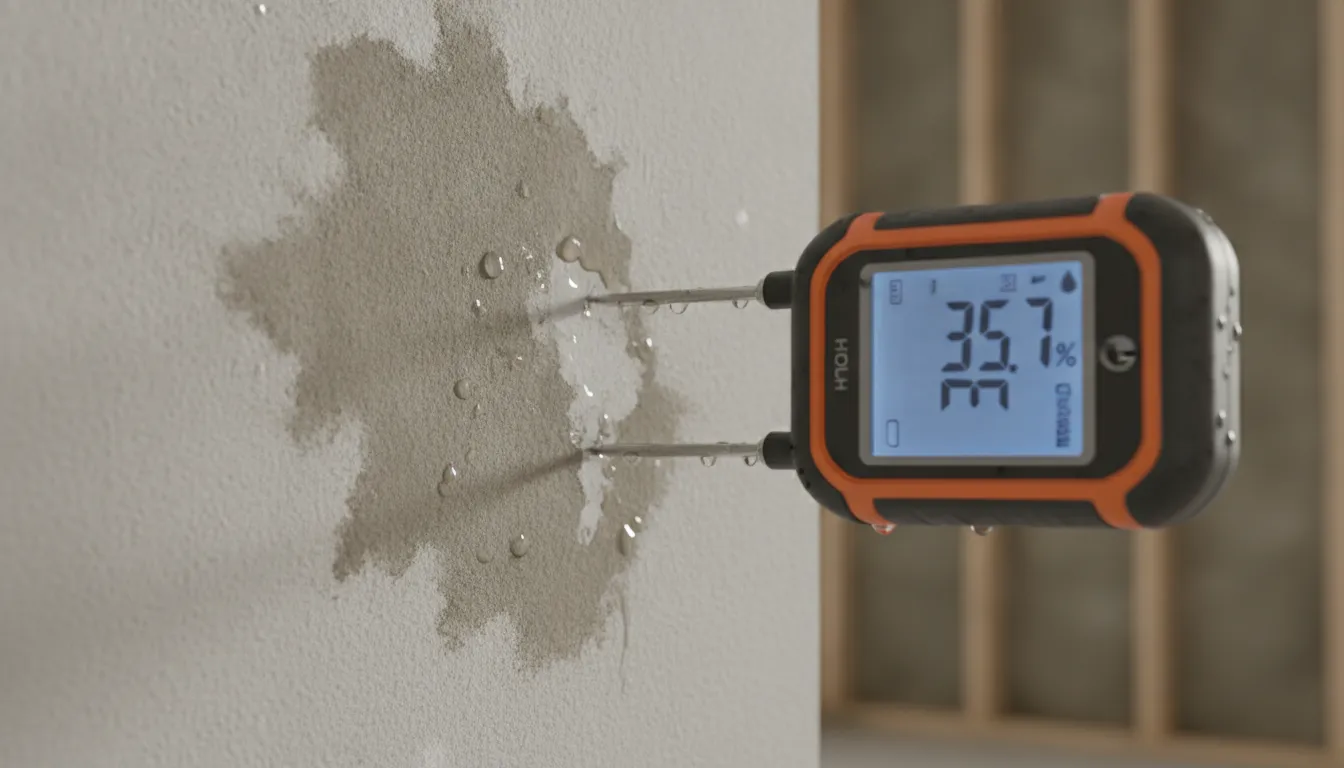
Technicians use digital moisture meters to detect hidden pockets of water behind walls. This non-invasive inspection ensures that the entire structure is completely dry before cleanup is declared complete, giving you verified protection against mold.
Need help drying your NC property? Request your free quote from Remtech Environmental today.
Common Misconceptions About Homeowners Insurance and Water Damage
There are several common myths about water claims. Believing these myths can lead to denied claims and unexpected bills.
Myth 1: Insurance Covers the Source of the Leak
As we noted, dwelling coverage pays to fix the water damage, not the appliance that broke. If your dishwasher leaks, insurance pays to fix the ruined kitchen floor. But it will not pay to fix or replace the dishwasher.
Myth 2: All Leaks Are Covered if You Didn't See Them
Some owners think that if a leak is hidden behind a wall, it is covered because they could not see it. This is false. Adjusters look at the age of the damage. If a slow leak has been rotting wood for months, it is a maintenance issue. The claim will likely be denied, even if you did not know the leak existed.
Myth 3: Mold Is Always Excluded from Policies
While some policies have strict mold limits, mold is not always excluded. If the mold is a direct result of a covered sudden water leak, cleanup is often covered up to your policy's sublimit. Check your policy or talk to your agent to find your exact mold limits.
Myth 4: You Must Use the Insurance Company's Preferred Contractor
Your insurer may suggest a specific restoration company. But you have the legal right to choose any certified contractor you trust. We suggest hiring a local, licensed, and IICRC-certified team that understands North Carolina building codes and climate risks.
Protecting Your Health and Safety During Water Damage Cleanup
Water damage is not just a threat to your property; it is a threat to your health. Living or working in a damp, water-damaged building can expose you to dangerous mold and bacteria.
Health Risks of Mold Exposure
In North Carolina, indoor mold is a major cause of health issues. Exposure to mold can cause a wide range of symptoms:
- Sneezing, runny nose, and nasal congestion
- Red, watery, and itchy eyes
- Skin rashes and irritation
- Coughing, wheezing, and chest tightness
- Severe asthma attacks in sensitive individuals
Those with asthma, allergies, weakened immune systems, or chronic lung diseases face the highest risks. Keeping your home dry is the best way to protect your family's health.
Personal Protective Equipment (PPE)
If you must enter a water-damaged area, protect yourself. Wear safety gear:
- An N95 respirator mask to avoid breathing in mold spores
- Safety goggles to protect your eyes from dust and mold
- Heavy-duty rubber gloves to protect your hands from contaminated water
- Protective boots or closed-toe shoes
Chemical Safety Warnings
If you use cleaning products to sanitize wet areas, follow all safety instructions. Never mix bleach and ammonia. Combining these two chemicals creates toxic chloramine gas. Inhaling this gas can cause severe respiratory damage and throat irritation. Always work in well-ventilated areas.
Choosing a Certified Environmental Restoration Expert in North Carolina
When water invades your home, you need a team you can trust. Hiring a local, certified environmental expert ensures your home is dried safely and completely.
The Value of IICRC Certification
The Institute of Inspection, Cleaning and Restoration Certification (IICRC) is the gold standard for water damage restoration. Certified teams follow strict scientific guidelines to dry your home. They understand the science of psychrometry and use advanced drying equipment to guarantee results.
Education-First Remediation
At Remtech Environmental, we believe in educating our customers. We do not use scare tactics or high-pressure sales. We explain the science behind the drying process and show you the moisture readings so you understand the path forward.
We serve communities across North Carolina, including Raleigh, Cary, Asheville, and Morehead City. Our EPA-accredited and IICRC-certified teams are fully insured and ready to protect your community.
Protect your home and family today. Request a free consultation or contact our local team to discuss your property needs.
Frequently Asked Questions About Water Damage and Insurance
We have compiled some of the most common questions North Carolina property owners ask about water damage and insurance coverage.
Is mold damage covered if it is caused by a roof leak?
If your roof is damaged suddenly by a storm or falling tree limb, the resulting water and mold damage is typically covered. However, if the roof leak is due to wear and tear, lack of maintenance, or old shingles, the claim will likely be denied. Regular roof inspections are the best way to prevent these issues.
What is the average cost of water damage restoration?
The cost of restoration depends on the size of the leak, the Category of water, and how long the materials stayed wet. A minor clean water extraction and drying might cost $1,000 to $3,000. However, major structural drying involving Category 3 black water, drywall removal, and reconstruction can easily exceed $10,000. Acting quickly is the best way to keep costs low.
Does insurance cover water damage from a sewer backup?
Standard homeowners policies do not cover sewer backups. However, you can add a "sewer backup endorsement" to your plan. This add-on is very affordable and covers water damage from backed-up drains, sewers, and sump pumps. We highly suggest adding this coverage, especially if you have a finished basement.
How do adjusters determine the age of water damage?
Adjusters look for physical clues to determine when a leak started. They check for rusted drywall screws, deep wood rot, peeling paint, rusted plumbing fittings, and thick mold growth. These signs indicate a gradual leak that has been active for weeks or months, which can lead to a denied claim under standard maintenance exclusions.