
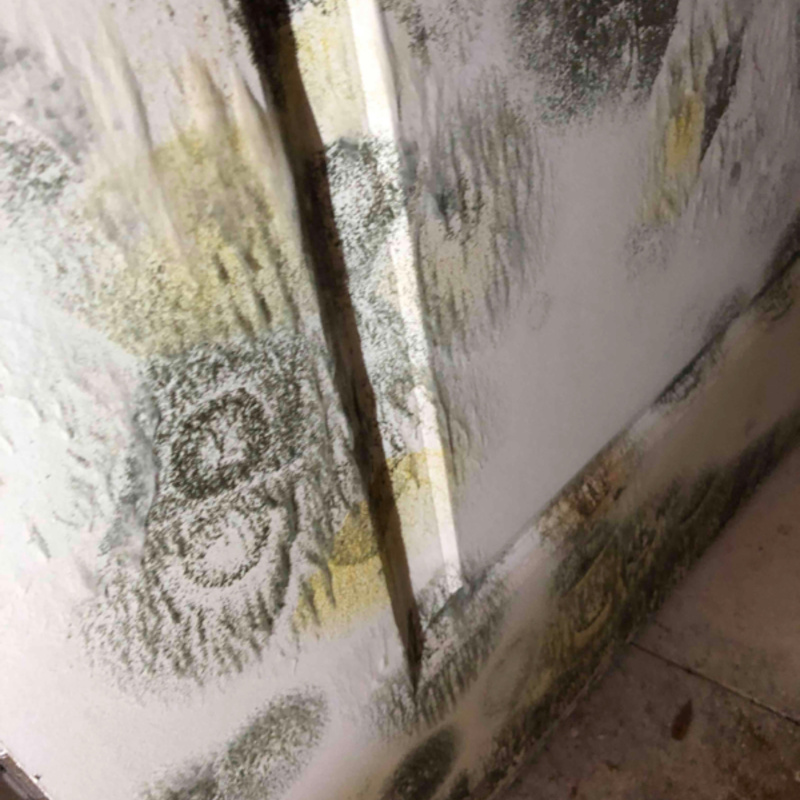
North Carolina's warm-humid climate makes the crawlspace one of the most moisture-vulnerable parts of any home. Across the Triangle, Triad, and coastal plain, summer dew points routinely climb above seventy degrees Fahrenheit, and that humid outdoor air is the single largest source of crawlspace moisture. When it drifts through open foundation vents and meets cooler surfaces underneath your home, it condenses — feeding mold, rotting framing, and degrading indoor air quality on the floors above.
This guide explains why Carolina crawlspaces stay damp, the humidity targets that actually stop mold growth, and the proven control strategies our IICRC-certified team relies on.
Why North Carolina Crawlspaces Stay Damp
For decades, building codes required crawlspace foundation vents on the assumption that outdoor airflow would dry the space out. In a hot, humid climate that assumption is backwards. During summer, outdoor air carries far more moisture than the cool crawlspace can hold, so ventilation actively pumps humidity into the space rather than removing it.
The most common moisture sources we document during inspections are:
- Humid outdoor air entering through open foundation vents
- Ground moisture evaporating up through bare or poorly covered soil
- Plumbing leaks and HVAC condensate lines draining into the crawlspace
- Poor site drainage that channels rainwater toward the foundation
The Humidity Targets That Stop Mold
Mold spores need sustained surface moisture to germinate. Most species activate when relative humidity stays above sixty percent for extended periods.
| Relative humidity | Mold risk |
|---|---|
| Below 50% | Very low — the goal |
| 50–60% | Moderate — monitor closely |
| Above 60% | High — active growth likely |
The practical target for a North Carolina crawlspace is below fifty percent relative humidity, year-round. A simple digital hygrometer placed in the crawlspace tells you whether you are meeting it.
Proven Control Strategies
1. Encapsulate the Crawlspace
Encapsulation seals the space from ground and outdoor moisture: foundation vents are closed, walls and floor are lined with a heavy-duty vapor barrier, and seams are sealed. The NC Building Code Council has explicitly permitted unvented, conditioned crawlspaces since 2018 for exactly this reason.
2. Add Dedicated Dehumidification
Encapsulation keeps moisture out; a crawlspace-rated dehumidifier removes what remains and holds the space at the target humidity through the wet season.
3. Fix Drainage and Leaks First
No vapor barrier can outrun a plumbing leak or water pouring in at the foundation. Repair leaks, extend downspouts at least six feet from the house, and correct any negative grading before encapsulating.
When to Call a Professional
If you already see standing water, visible mold growth larger than about ten square feet, sagging insulation, or a persistent musty smell on your main floor, the crawlspace likely needs professional remediation before any encapsulation work. Remtech Environmental's IICRC-certified team serves homeowners across Raleigh, Durham, Cary, Greensboro, Winston-Salem, and the surrounding region.
If you suspect a crawlspace moisture problem, contact us or request a free quote — catching it early often turns a major remediation into a simple repair.