
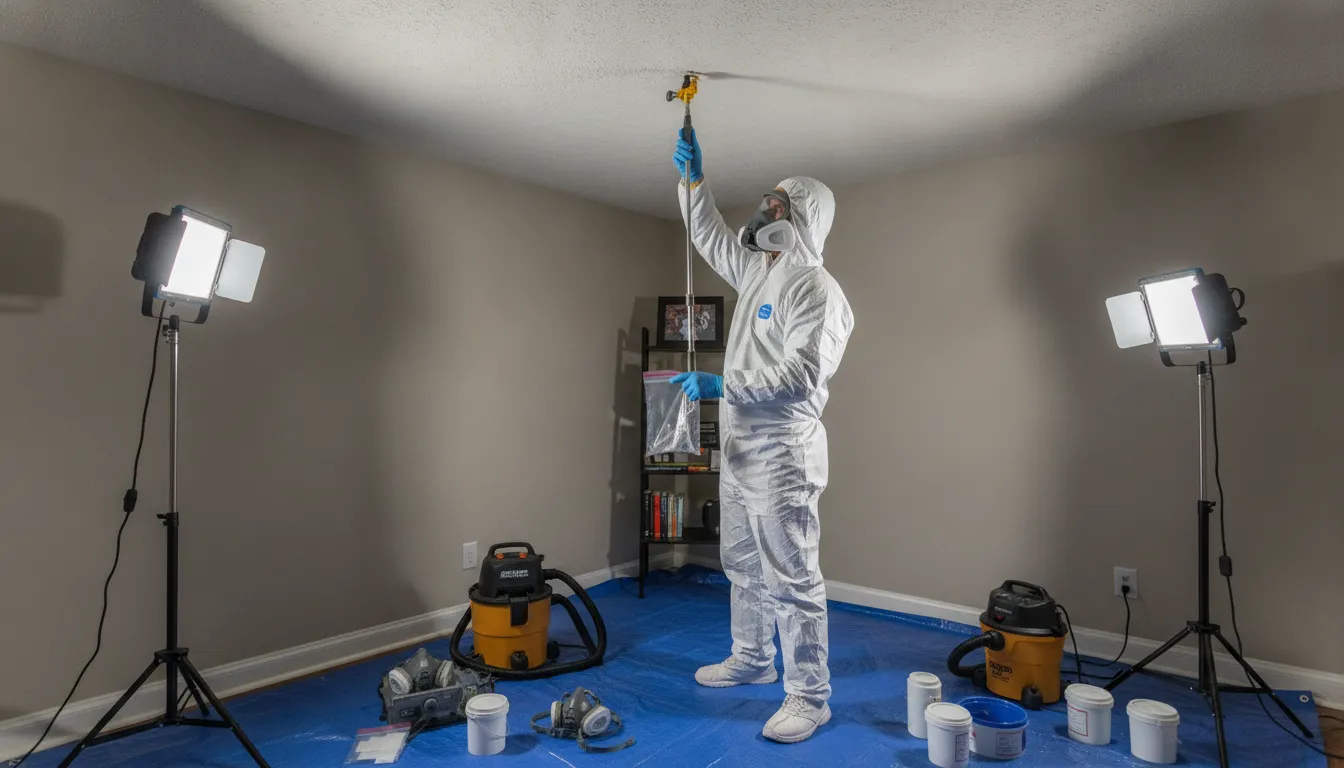
That textured finish may look different from room to room, but appearance alone cannot tell you whether it contains asbestos. In Raleigh homes, especially older properties, both popcorn ceilings and textured wall finishes deserve the same careful approach before sanding, scraping, painting, or remodeling begins.
For asbestos popcorn ceiling removal raleigh nc, the safest first step is professional sampling and laboratory analysis, not a visual guess or DIY scraping. Textured walls should be evaluated the same way because finishes applied before the late 1970s may contain asbestos, according to the EPA.
Call Remtech Environmental at (919) 554-2800 to schedule a free consultation and asbestos inspection for your Raleigh property. Our EPA-accredited specialists can evaluate your popcorn ceilings and textured walls and recommend the safest next step.
A positive result does not automatically mean every surface must be removed. The right response depends on the material's condition, planned work, and whether it can remain stable and sealed. Understanding why ceilings and walls can carry similar risks makes it easier to choose a practical next step for your Raleigh home.
Why Do Popcorn Ceilings and Textured Walls Both Pose an Asbestos Risk?
Asbestos was widely used in spray-on residential textures because the fibers added heat resistance and durability to building materials. That history matters in older Raleigh-area homes, especially those built before the late 1970s, when asbestos-containing materials were common. The use of asbestos in spray-on textures was later banned or restricted, but the original material can remain in place decades afterward. The EPA explains that textured finishes on walls and ceilings applied before the late 1970s may contain asbestos.
Wall texture can be just as important as ceiling texture
Textured wall finishes were made in several styles, including knockdown, orange peel, and slap brush. The appearance alone cannot tell you whether a finish contains asbestos. A textured wall installed during the same era as an older popcorn ceiling may carry the same asbestos concern, even if the pattern looks thinner, smoother, or less heavily coated. Asbestos risk is connected to the material and its age, not simply to the name or appearance of the texture.
This is why a renovation plan that includes scraping walls, sanding a finish, removing wallpaper, or repairing damaged texture should address walls and ceilings together. Removing textured walls can have the same risk profile as popcorn ceiling removal if asbestos is present. Disturbance may turn a stable material into friable debris or dust, allowing fibers to become airborne. The EPA notes that visual inspection is not enough to identify asbestos, so a qualified sample analysis is needed before disturbing a suspect surface.
What this means for Raleigh homeowners
If an older home has both popcorn ceilings and textured walls, do not assume that testing one surface clears the other. Materials can differ from room to room, and a renovation can disturb more than the area originally planned. Leave intact finishes undisturbed until their status is understood, and consider asbestos ceiling removal options alongside the evaluation of textured walls. Testing and project recommendations should be based on the specific surfaces involved, not on appearance alone.
Get a free consultation for Raleigh asbestos testing and removal — our team will evaluate your popcorn ceilings and textured walls together.
Popcorn Ceilings vs. Textured Walls: How Do the Asbestos Risks Compare?
The surface pattern does not determine whether a finish contains asbestos. The EPA notes that textured finishes on walls and ceilings applied before the late 1970s may contain asbestos, while many modern finishes generally do not. Age and testing matter more than whether the material is overhead or vertical. Visual inspection cannot confirm asbestos; laboratory analysis is the only reliable way to identify it.
Vertical surfaces are not automatically safer than ceilings. If asbestos is present, textured wall removal carries a similar risk profile to popcorn ceiling removal. Asbestos-containing material is considered friable when it can be crushed by hand pressure or is not adequately sealed. The EPA states that no known safe level of asbestos exposure exists, so avoid disturbing a suspect finish simply because it looks thin, painted, or firmly attached.
| Surface Type | Common Application | Asbestos Likelihood | Disturbance Risk | Remediation Cost Factor |
|---|---|---|---|---|
| Popcorn ceiling | Sprayed ceiling texture, especially common in homes from the 1950s through the 1970s | Potentially significant in older homes; test before scraping, sanding, or renovating | Often high when scraped because the material can become friable and release fibers | Ceiling area, condition, access, containment, and removal or encapsulation requirements |
| Knockdown texture | Flattened wall or ceiling texture used to soften a rough finish | Possible in older structures; the pattern alone cannot rule asbestos in or out | Disturbance can create the same asbestos concern as a popcorn ceiling if the finish contains asbestos | Surface area, depth of texture, preparation needs, and containment complexity |
| Orange peel texture | Fine sprayed wall finish common in residential interiors | Possible in older applications; newer finishes generally have a lower likelihood | Sanding, cutting, or removal may release fibers when asbestos is present | Wall coverage, number of rooms, access, and the selected remediation method |
| Slap brush texture | Patterned wall or ceiling finish created with a brush or similar tool | Cannot be determined from appearance; older material should be treated cautiously until tested | Scraping, drilling, or renovation can disturb the finish and potentially make it friable | Condition, layers beneath the texture, work area size, and required controls |
For a Raleigh-area property, testing is the practical next step before renovation. If results confirm asbestos, an environmental professional can evaluate whether the material should remain undisturbed, be encapsulated, or be removed under controlled conditions. The project cost is consultation-based and depends on the material, area, condition, and containment needs. Asbestos ceiling removal options can vary substantially from one property to another. EPA asbestos guidance supports testing older textured finishes before disturbance.
How Should You Test for Asbestos in Ceilings and Walls?
Neither a popcorn ceiling nor a textured wall can be cleared by appearance alone. Visual inspection is unreliable, and laboratory analysis is the only definitive way to confirm whether a suspect material contains asbestos. The fibers are microscopic; an average human hair is approximately 1,200 times thicker than an asbestos fiber. Until reliable testing proves otherwise, treat the material as though it contains asbestos.
-
Do not disturb the material
Do not scrape, sand, drill, cut, brush, or remove a piece for testing. Avoid activities that could release dust, including attaching fixtures or beginning a renovation in the area. If the surface is damaged or deteriorating, limit access and keep furnishings and equipment from contacting it. The EPA advises treating potentially asbestos-containing material as asbestos until reliable analysis proves otherwise: EPA asbestos guidance.
-
Hire a certified asbestos inspector
Choose a qualified asbestos inspector who can assess the ceiling, walls, surrounding conditions, and the scope of planned work. An inspector can determine where samples are needed and how to collect them while limiting disturbance. This is especially important in older Raleigh-area properties, where textured finishes may warrant testing before renovation.
-
Have samples collected by a professional
Sample collection should be performed by the inspector using appropriate protective measures and containment practices. DIY sampling creates avoidable exposure and can spread contaminated dust through the room or building. A small sample is still a disturbance, so do not rely on a mail-in kit that asks you to scrape the ceiling or wall yourself.
-
Send the sample for laboratory analysis
The laboratory examines the material using an appropriate method, such as polarized light microscopy (PLM). Transmission electron microscopy (TEM) may be used when additional sensitivity or confirmation is needed. A visual match, a construction date, or a contractor's opinion cannot replace laboratory analysis.
-
Review the results and determine next steps
If asbestos is identified, the result does not automatically mean the material must be removed. A qualified professional can explain whether the material should remain undisturbed, be encapsulated, or undergo regulated abatement based on its condition and the planned work. For a property in the Triangle, contact a team experienced in Raleigh asbestos inspection and removal before disturbing the ceiling or walls.
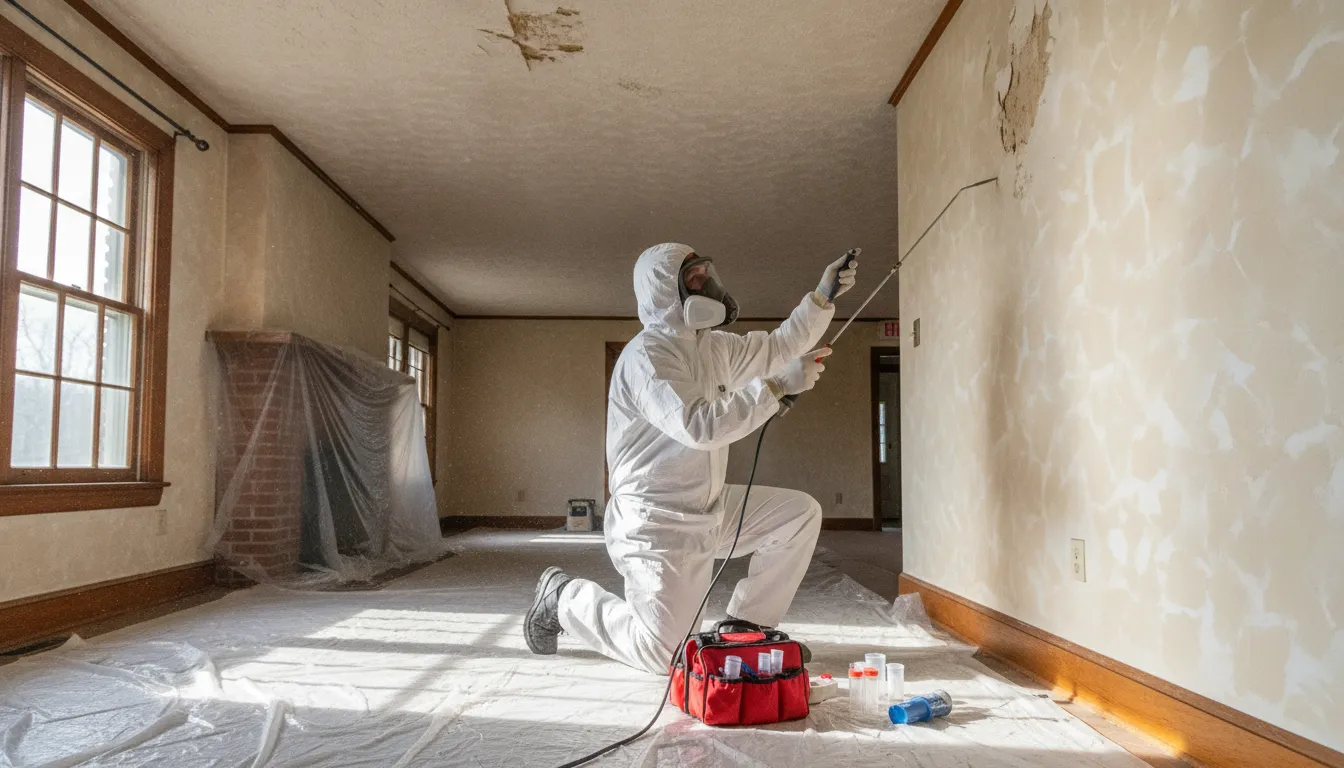
Testing provides the information needed to choose a safe, proportionate response. Until the report is available, leave suspect textured surfaces intact and avoid DIY sampling or removal.
Removal vs. Encapsulation: What Is the Right Approach for Your Raleigh Home?
Once testing confirms asbestos, remediation generally follows one of two paths: abatement, which removes the material, or encapsulation, which seals it in place. The right choice depends on the material's condition, the planned use of the room, renovation plans, and the containment required for the project. A professional can explain these tradeoffs without treating every situation as an emergency.
Removal provides a permanent solution
During abatement, trained and certified professionals remove the asbestos-containing ceiling or wall material and prepare it for proper handling and disposal. This is often the better long-term choice when the material is damaged, likely to be disturbed, or standing in the way of a planned renovation. Popcorn ceilings are also more commonly removed because homeowners want a smoother, updated appearance.
The main advantage is that the asbestos-containing material is no longer part of the building surface. The disadvantage is that removal is usually more costly and time-intensive than sealing. It requires full containment, controlled work practices, specialized equipment, and careful cleanup. Professional removal involves site preparation and safety protocols designed to prevent fibers from spreading into surrounding areas. Learn more about professional asbestos abatement before choosing a contractor.
Encapsulation stabilizes material in place
Encapsulation uses a specialized sealant that binds asbestos fibers and helps prevent them from becoming airborne. It can be a faster, lower-cost alternative when the material is stable, intact, and not likely to be disturbed. Wall textures are often encapsulated, particularly when they can remain covered with a sound coating and the owner does not need to change the wall surface.
Encapsulation does not remove the asbestos-containing material. It creates a managed surface that must remain intact and documented. Future remodeling, electrical work, plumbing, or repairs could still disturb the sealed material and require additional controls. That limitation matters if you expect to open the walls or replace the finish later. Review the basics of asbestos abatement to understand how stabilization fits into a broader remediation plan.
Neither option should be attempted as a do-it-yourself project. The EPA explains that abatement should be performed only by trained, certified professionals, and removal work should include containment measures that limit fiber release. A site assessment can help compare the lasting benefits of removal with the practical advantages of encapsulation for your Raleigh-area property.
Why Should Raleigh Homeowners Trust Professional Asbestos Removal?
Scraping a popcorn ceiling can look like a manageable weekend project, especially when the texture is already peeling or a renovation is underway. But if asbestos is present, scraping, sanding, wetting, or breaking the material can create hazardous dust. The EPA strongly discourages do-it-yourself removal because improper techniques can release asbestos fibers into the air. Learn more about the EPA's asbestos guidance.
Asbestos fibers are too small to see, and visual inspection cannot confirm whether a ceiling or textured wall contains them. A sample must be analyzed by a laboratory. Until reliable testing says otherwise, suspected material should be treated as though it contains asbestos. That approach helps Raleigh homeowners avoid disturbing a material that may be stable when left alone but hazardous when scraped or damaged.
When testing confirms asbestos and removal is the appropriate solution, the work should be performed by trained, certified professionals. Abatement requires planning, containment, specialized equipment, and procedures designed to prevent fibers from spreading through the home. Projects must also comply with applicable EPA and North Carolina environmental safety regulations, rather than relying on ordinary painting or remodeling practices.
Remtech Environmental brings EPA-accredited specialists, IICRC-certified technicians, and Triangle-area experience to this work. We explain the findings, available options, and project-specific next steps without pressure. Homeowners can review what the asbestos abatement process involves and learn more about when asbestos removal is necessary before deciding how to proceed. Professional guidance is especially important before any renovation that could disturb a popcorn ceiling or textured wall.
Call Remtech Environmental at (919) 554-2800 to discuss your Raleigh asbestos concerns with a certified specialist.
Frequently Asked Questions
Can you tell whether a popcorn ceiling or textured wall contains asbestos by looking at it?
No. Color, pattern, age, and texture cannot confirm asbestos. A sample must be collected appropriately and analyzed by a qualified laboratory. The EPA advises treating suspect material as though it contains asbestos until reliable testing proves otherwise (EPA).
Does asbestos removal cost more for a ceiling than for a textured wall?
Not necessarily. The project scope depends on the material's condition, the area involved, access, containment requirements, testing, disposal, and whether surfaces need repair afterward. Because those conditions vary, responsible contractors provide a consultation-based, project-specific quote rather than a standard rate. A Raleigh evaluation can clarify whether removal, encapsulation, or another approach is appropriate.
Do I need a professional for asbestos popcorn ceiling removal in Raleigh?
Yes, suspected asbestos-containing material should not be scraped, sanded, drilled, or otherwise disturbed as a do-it-yourself project. Improper techniques can create hazardous dust, and the EPA strongly discourages DIY removal (EPA). A trained professional can coordinate testing, containment, removal, and disposal based on the material and site.
What happens during the removal process?
The work generally begins with an evaluation and laboratory testing when needed. If asbestos is confirmed, the contractor selects removal or encapsulation, prepares the work area, establishes containment, uses specialized equipment, and manages the material to limit fiber release. The final plan depends on the condition of the ceiling or wall, renovation goals, and the home's layout.
Ready to discuss your Raleigh asbestos concerns?
Identifying whether a popcorn ceiling or textured wall needs testing is the first step toward choosing an appropriate, consultation-based solution. Remtech Environmental can explain the inspection and removal options for your property without pressure or guesswork. To get a free quote today for asbestos inspection and removal in Raleigh, call Remtech Environmental at (919) 554-2800. A conversation can help you understand what to do next.