
3 Signs You Might Have Mold Damage
Published by Remtech Environmental Team · Last updated April 2025
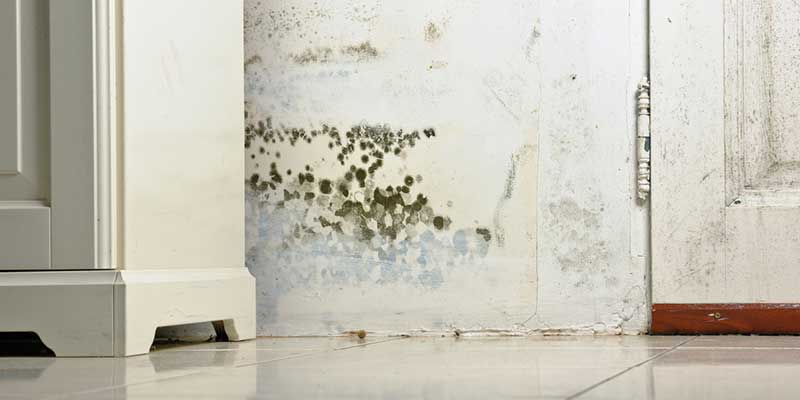
You never want to find out you have a mold problem in your home or commercial facility. The effects of mold damage often create unpleasant smells, deteriorating wall structure and, worst of all, health problems. To prevent a disaster, here are three signs you might have mold damage in your home or building.
When you’re aware and on the lookout for the possibility of mold in your home or building, you can help reduce the effects before the mold causes more serious problems. If you find yourself facing mold damage, be sure to give us a call here at Remtech Environmental.
- Signs on your walls: Walls should be tall, straight, and uniform in appearance. If you begin to notice troubling signs on your walls such as water stains, nail pops, or drywall seams appearing, this may indicate there has been a leak or moisture inside the wall and mold has begun to grow. Noticing discoloration on your walls may also be a sign of mold damage occurring underneath.
- Strange smells: It’s not exactly normal to have a musty, moldy smell spreading throughout your home or building. As mold spores grow and spread, the mold will release gases like mycotoxins that produce strange smells. This smell is often an indicator that you could have mold, and it’s something you definitely should look into.
- Consistent health issues: Mold is known for affecting the health of those exposed to its growth. Some symptoms of mold-related illnesses include headaches, coughing, sneezing, sore throats, fatigue, and more. It also often makes things worse for people with allergies or asthma.
Mold damage announces itself in three sensory channels: what you see, what you smell, and how your body feels inside the building. By the time all three are present, colonization has usually been active for weeks or months and has likely spread into wall cavities, subfloors, or HVAC components. Catching the problem earlier saves thousands in remediation costs and prevents the chronic health exposures that make mold cases so disruptive. North Carolina homeowners face an elevated baseline risk because the state sits squarely in Koppen climate zone Cfa, the humid subtropical band where summer dew points routinely exceed 70 degrees Fahrenheit and outdoor relative humidity holds above 80 percent for months. That moisture load presses against every building envelope in Wake, Durham, Mecklenburg, and Guilford counties, and any failure in the air barrier, vapor barrier, or HVAC dehumidification system gives mold what it needs to amplify. The three signs below are the ones our IICRC-certified inspectors identify most often during initial site visits.
The Three Damage Signals to Take Seriously
These signals are organized from most diagnostic to most subtle. Any one of them justifies a professional assessment in a Triangle-area property.
Visible Discoloration on Drywall, Trim, or Ceilings
Color tells the story. Yellow or brown rings indicate iron-rich water from a roof or supply line. Black speckling on a ceiling or behind a vanity often signals Stachybotrys or Aspergillus niger amplification on cellulose-rich gypsum paper. Pink or salmon staining around tubs is typically Aureobasidium, which feeds on soap residue and silicone caulk. White fluffy growth on basement framing usually points to Penicillium or Aspergillus colonizing softwood lumber that stayed above 16 percent moisture content for more than 48 hours. Each color profile guides the sampling plan. A homeowner who paints over staining with primer and a fresh topcoat is hiding the diagnostic and giving the colony a fresh food source, since most paint binders are organic. Document the staining with date-stamped photos before any cosmetic intervention.
Persistent Musty or Earthy Odor
The smell most people call musty is a chemical signature called microbial volatile organic compounds, or MVOCs. The dominant compound in active mold metabolism is one-octen-three-ol, sometimes described as wet socks or damp basement. The human nose detects it at parts-per-billion levels long before visible growth appears. If the odor strengthens after a rainstorm, after the HVAC cycles on, or in a closed room that has been shut for the workday, you are smelling active fungal metabolism rather than residual material. Air freshener and ozone generators do not address MVOCs at the source. They mask perception while the colony continues to expand. A Remtech inspector traces the odor with a photoionization detector and thermal imaging to find the moisture-active substrate.
Symptoms That Improve When You Leave the Building
The clinical fingerprint of indoor mold exposure is symptom variability tied to location. Headaches, sinus congestion, dry cough, fatigue, and cognitive fog that lift during a weekend trip and return within hours of coming home suggest an indoor trigger. Asthmatic occupants experience more frequent rescue inhaler use. Children may develop new eczema or chronic ear infections. The American College of Occupational and Environmental Medicine recognizes this pattern as a reason for environmental assessment. Self-diagnosis is unreliable because pollen, dust mites, and pet dander cause similar symptoms, but the location-dependent pattern is distinctive and warrants a paired indoor-outdoor air sample analyzed by an AIHA EMLAP-accredited laboratory.
Water Staining and Tideline Marks
Look at the bottom 18 inches of every wall in finished basements, first-floor closets, and rooms adjacent to bathrooms. A horizontal tideline of discoloration marks the high water level from a past intrusion. Even if the surface dried, the gypsum core behind the paper face often retains elevated moisture for weeks, and any cellulose insulation in the cavity can stay damp far longer. In Raleigh and Cary properties built on slab-on-grade foundations, capillary wicking from the slab through bottom plates is a common silent moisture source. Pin meter readings above 16 percent in the bottom plate confirm the issue.
Condensation Patterns on Cold Surfaces
Persistent fogging on windows, water beads on supply registers, or cold sweating on toilet tanks during summer months indicates indoor dew point is too high. When the surface temperature drops below the dew point, water condenses and provides the substrate water activity that mold needs. In NC, this often points to an oversized air conditioner that cools the air without removing enough moisture, or to a building envelope leak that pulls humid attic or crawlspace air into conditioned space. The fix is mechanical, not cosmetic. Wiping down windows daily treats the symptom and ignores the underlying psychrometric problem.
How North Carolina Climate Magnifies the Risk
The Triangle, Triad, and Charlotte metros all sit in Koppen Cfa, which produces hot humid summers and mild winters with no true dry season. Raleigh-Durham International Airport records an average summer relative humidity above 85 percent at 6 a.m. and 60 percent at 3 p.m. for June, July, and August. Outdoor dew points routinely hit 72 to 75 degrees Fahrenheit, which is the threshold where most building materials begin absorbing moisture from the air rather than releasing it. The 2018 IECC residential code, adopted with NC amendments, recognizes the state as a Climate Zone 3A or 4A mixed-humid region, which dictates specific vapor permeability, insulation, and HVAC dehumidification requirements. Older homes in established neighborhoods like Five Points, Boylan Heights, and Forest Hills often predate these requirements and carry vapor-impermeable wall assemblies that trap moisture. Crawlspaces under raised pier foundations are a particular hotspot. An open vented crawlspace in NC summer functions like a swamp because warm humid outdoor air enters, contacts cool subfloor surfaces, and condenses. The 2020 NC encapsulation guidelines from the NC Building Performance Association call for sealed crawlspaces with a continuous vapor barrier and supply-side conditioning. Properties that skipped this upgrade frequently show mold amplification on floor joists, subfloor sheathing, and HVAC ductwork insulation. When you observe any of the three signs above in a NC property, the climate context means urgency is higher than it would be in Phoenix or Denver.
Your Next 48 Hours
If one or more of these signs is present, treat the next 48 hours as the moisture stabilization window. Step one is to lower indoor relative humidity below 50 percent. Run the air conditioner continuously on auto, set the thermostat fan to circulate, and add a portable dehumidifier in the most affected zone with the drain hose running to a floor drain or condensate pump. Step two is to isolate. Close interior doors to limit cross-contamination, turn off ceiling fans pointed at the suspect area, and avoid disturbing visible growth, since aggressive wiping aerosolizes spores. Bag any visibly contaminated soft goods in 6-mil poly and seal them. Step three is to investigate the source. Walk the exterior for downspout discharge points pouring against the foundation, check supply line connections under sinks and behind toilets, inspect the water heater pan for residue, and look at the HVAC condensate drain line for backup. Step four is to schedule a professional assessment. Document conditions with photos, note occupant symptoms with onset dates, and have the property history available, including any prior leaks, roof events, or insurance claims. A Remtech inspector arrives with the instruments and credentials needed to map moisture, identify species, and write a remediation scope your insurance carrier and any future buyer will accept. Acting in the 48-hour window often keeps the project in IICRC S520 Condition 2 territory rather than the more invasive Condition 3 scope.
Get Professional Help in NC
Remtech Environmental responds across Raleigh, Cary, Apex, Durham, Chapel Hill, and the wider Triangle for inspections, sampling, and full IICRC S520 remediation. Visit /mold-removal-raleigh-nc for the remediation workflow, containment standards, and post-remediation verification protocols we use on every project. If the moisture event was triggered by a burst pipe, appliance failure, or storm intrusion, our /water-damage-restoration-raleigh-nc team mobilizes truck-mounted extraction, structural drying, and antimicrobial application within hours, which is the most effective way to stop mold before it amplifies. Older NC homes also frequently contain asbestos in popcorn ceilings, vinyl flooring, and pipe insulation. If a moisture event disturbs those materials, /asbestos-raleigh-nc handles licensed abatement under NCDHHS oversight before any drywall is opened.
Key Takeaways
- Visible discoloration, persistent musty odor from MVOCs, and symptoms that improve when you leave the building are the three highest-yield signs of active mold damage.
- Color of the staining narrows the species hypothesis and guides sampling, so document everything before painting over it.
- North Carolina's Cfa humid subtropical climate keeps outdoor dew points high enough that any envelope failure leads to interior moisture amplification.
- Crawlspaces, slab-on-grade bottom plates, and oversized HVAC systems are the three most common moisture sources we find on NC inspections.
- The first 48 hours after recognizing a sign are the stabilization window where dehumidification, isolation, and professional assessment keep remediation costs and health exposure manageable.
Need Help with Environmental Services?
If you have concerns about mold, asbestos, or water damage in your property, contact Remtech Environmental today for a free consultation.
Get a Free Quote