
3 Reasons Why a DIY Mold Inspection Isn’t Reliable
Published by Remtech Environmental Team · Last updated April 2025
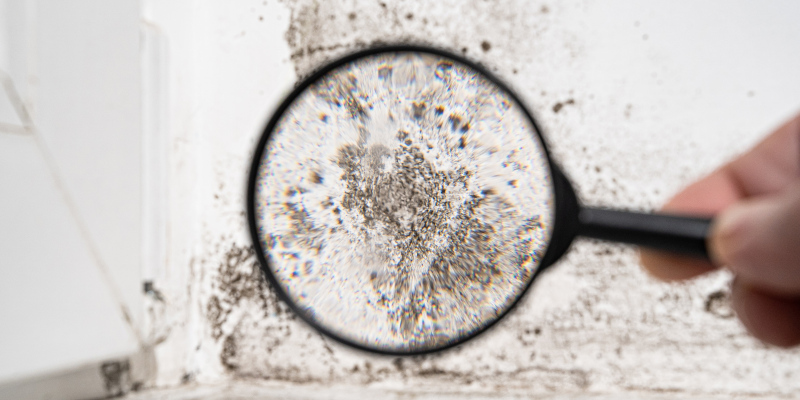
The first step to handling a potential mold problem in your home is to complete a mold inspection. A mold inspection involves thoroughly scoping out the affected areas of your home, as well as any hidden areas that are susceptible to mold growth.
Even if you have a decent hunch about where the mold is located, it’s best to reach out to professionals who have experience in this type of work. Here are three key reasons why a DIY inspection isn’t recommended:
If you suspect you have a mold problem, call our team at Remtech Environmental for expert mold inspection and remediation services.
- You may not get the full picture. Oftentimes, the mold that you see isn’t the only growth in your home. Mold grows in dark, humid areas, which may include places in your home that you rarely see. Homeowners attempting their own mold inspection are likely to miss growth due to not knowing where to look.
- You won’t have access to the right equipment. It’s important to keep yourself safe during a mold inspection, even if you don’t plan on doing any removal on your own. Breathing in mold spores can cause you to get very sick, especially if you have asthma or other respiratory concerns. Our team knows how to keep themselves safe with the right equipment during the inspection process.
- You might not know what type of mold you’re dealing with. There are many varieties of mold, and correctly identifying the type of growth in your home is crucial for treating the problem. Relying heavily on the internet without any training or expertise on mold related services won’t provide you with the knowledge you need for proper identification.
A swab from the hardware store and a free phone app cannot replicate what a credentialed inspector brings to a North Carolina home. DIY mold testing routinely produces false negatives, false positives, and incomplete coverage because it skips the protocols that make laboratory results legally and medically defensible. Under IICRC S520 (the Standard for Professional Mold Remediation), an inspection is more than spotting fuzzy patches on drywall. It involves moisture mapping, differential air sampling, surface tape lifts, and chain-of-custody submission to an AIHA-accredited laboratory. In the Triangle, where humid subtropical Cfa conditions push indoor relative humidity past 70 percent for months at a time, hidden mold colonies thrive behind baseboards, inside HVAC plenums, and beneath vinyl flooring long before any visible spot appears. Below, we break down exactly where consumer kits fall short and why a Raleigh-area homeowner should not rely on them to make remediation, real estate, or health decisions.
Where DIY Mold Inspections Fall Short
Each of the gaps below maps to a specific protocol step that consumer kits skip. Together, they explain why DIY results rarely match a professional assessment.
No Baseline Outdoor Air Sample
Indoor mold spore counts are meaningless without a comparison to outdoor air collected the same day, at the same hour, using the same calibrated pump. An AIHA-accredited lab evaluates the indoor-to-outdoor ratio and the relative species mix, not the raw number. A $40 settle plate kit cannot capture this. North Carolina pollen season pushes outdoor Cladosporium and Alternaria counts well into the thousands of spores per cubic meter, so a homeowner who panics over a high indoor reading often discovers their kitchen is actually cleaner than the front yard. Without the paired sample, the result is a number with no context. Professional inspectors collect simultaneous outdoor and indoor spore traps using an Air-O-Cell cassette at 15 liters per minute for five minutes, then ship them under chain of custody to the lab.
Settle Plates Miss Hydrophilic Species
Stachybotrys chartarum, Chaetomium, and Fusarium are the species most associated with chronic water damage and the most clinically relevant for occupants reporting symptoms. They are also heavy, sticky, and rarely become airborne unless the substrate is disturbed. Settle plates and passive gravity samplers, the format used in most consumer kits, almost never capture them in a normal living scenario. A homeowner gets a clean plate and assumes the building is fine while a colony the size of a dinner plate sits behind the bathroom vanity. Professionals address this by combining bulk samples, tape lifts, and aggressive air sampling per the AIHA Field Guide for the Determination of Biological Contaminants in Environmental Samples, second edition, which is the recognized reference for sampling design.
Moisture Source Goes Undiagnosed
Mold is the symptom. Moisture is the disease. Removing visible growth without correcting the source guarantees recolonization within 30 to 90 days. A DIY inspection produces no thermal imaging scan, no pin-style moisture meter readings, no manometer pressure differential measurement across the building envelope. The homeowner cannot tell whether the moisture came from a slab leak, an undersized HVAC system shortcycling in 90-degree humidity, a failed shower pan liner, or negative pressure pulling humid attic air into conditioned space. Remtech inspectors use FLIR thermal cameras, Tramex pin meters, and a hygrometer to log temperature, dew point, and surface moisture content at every suspect assembly. That data drives the remediation scope and the post-remediation verification standard.
Cross-Contamination During Sampling
Mold spores cling to clothing, hair, and shoes. Walking through a contaminated basement and then opening a sample cassette in the master bedroom guarantees a falsely elevated reading upstairs. Trained inspectors don a Tyvek suit, change gloves between rooms, and sample from least-contaminated to most-contaminated zones in that order. They also disable the HVAC system at least 15 minutes before sampling so air movement does not skew results. None of these controls are explained on a consumer kit insert, and most homeowners hold the cassette while standing directly under a return vent, which is the worst possible location.
No Defensible Documentation
Real estate transactions, insurance claims, and litigation all require third-party documentation. A do-it-yourself test produces a single PDF from a mail-order lab with no inspector credential, no photos, no moisture map, no chain of custody, and no post-remediation verification protocol. Insurance adjusters routinely reject these reports. A professional report includes the inspector's CMI or CMC certification number, calibrated instrument logs, AIHA EMLAP lab credentials, an annotated floor plan, and a written remediation scope tied to IICRC S520 condition categories. That document survives challenge.
Why Sampling Strategy Matters More Than Sample Count
A common DIY mistake is to buy a multi-pack kit and place plates in every room, assuming more data equals better answers. Sampling strategy under IICRC S520 is not about volume. It is about hypothesis testing. Before drawing a single sample, the inspector forms a working theory: where did water enter, how did it travel, what assemblies stayed wet long enough for amplification, which species are likely given the substrate, and where would a complaint occupant be exposed. Samples are then placed to confirm or eliminate that hypothesis. Twenty random plates spread through a house generate noise. Three carefully placed Air-O-Cell cassettes plus one tape lift on the suspect substrate produce a result that holds up in court. The Environmental Relative Moldiness Index, or ERMI, developed by the EPA, is another tool that DIY kits attempt to imitate but rarely deliver correctly because dust collection technique, sample volume, and lab platform must all match the original validated protocol. A grab sample from the top of a bookshelf is not an ERMI sample. In humid Wake, Durham, and Orange County properties, where wall cavities can stay damp for weeks after a single plumbing event, the difference between a designed sample plan and a scattershot DIY approach is the difference between finding the colony and missing it entirely.
What To Do Instead of a DIY Test
If you suspect mold, skip the hardware store and start with three steps. First, document conditions. Photograph any visible staining, peeling paint, warped trim, or efflorescence, and note the date you first saw it. Write down occupant symptoms with onset dates, since a clinician may correlate them with exposure. Second, control the moisture immediately. Run a dehumidifier in the suspect area to hold relative humidity below 50 percent, isolate the space with a closed door if possible, and shut off any active leak at the supply valve. Do not disturb visible growth, since aggressive cleaning aerosolizes spores and worsens exposure. Third, schedule a professional assessment. A Remtech inspector arrives with calibrated instruments, an AIHA-credentialed lab partner, and a written report format that satisfies insurance carriers, real estate attorneys, and treating physicians. The visit covers a full visual survey, moisture mapping with thermal imaging, targeted air and surface sampling, and a remediation scope tied to IICRC S520 condition categories one through three. You receive the report within five to seven business days with annotated photos and a remediation plan you can act on. Skipping the DIY phase saves money, since failed self-tests almost always lead to a professional inspection anyway.
Get Professional Help in NC
Remtech Environmental serves Raleigh, Durham, Cary, Chapel Hill, and the surrounding Triangle with IICRC-certified inspections and remediation. If your inspection confirms growth, our team handles the full remediation under containment with HEPA filtration and post-remediation verification. Visit /mold-removal-raleigh-nc for our remediation process, scope of work, and pricing transparency. If your inspector flags asbestos-containing materials disturbed by a moisture event, often found in older Raleigh homes built before 1985, our /asbestos-raleigh-nc team is a licensed NC asbestos abatement contractor. When the underlying issue is a flood, supply line failure, or storm intrusion, /water-damage-restoration-raleigh-nc dispatches drying equipment within hours to stop secondary mold growth before it starts.
Key Takeaways
- DIY mold kits produce uncalibrated results that fail insurance, real estate, and clinical scrutiny because they lack paired outdoor sampling and chain of custody.
- Hydrophilic species like Stachybotrys and Chaetomium rarely show up on settle plates, so a clean kit result does not mean a clean building.
- Moisture diagnosis with thermal imaging and pin meters is what prevents recolonization, and no consumer kit includes those instruments.
- Sampling strategy under IICRC S520 is hypothesis-driven, not volume-driven, and three designed samples beat twenty random plates every time.
- North Carolina's Cfa humid subtropical climate amplifies hidden mold risk year round, making professional assessment the only defensible path to a real answer.
Need Help with Environmental Services?
If you have concerns about mold, asbestos, or water damage in your property, contact Remtech Environmental today for a free consultation.
Get a Free Quote