

Buying or selling a North Carolina home involves more than reviewing the listing and negotiating a price. Environmental conditions can affect a property's safety, renovation plans, and transaction decisions, especially when asbestos may be present in older building materials. For personalized guidance on how asbestos disclosure applies to your transaction, schedule a free consultation with Remtech Environmental.
For asbestos disclosure north carolina real estate transactions, state law requires the residential disclosure statement to address asbestos and other environmental hazards. Sellers report what they actually know, while the form also permits a no-representation response. The disclosure is an important starting point, but it is not a substitute for a qualified inspection when a buyer needs greater certainty. (North Carolina General Statutes Section 47E-4)
Understanding what the law asks sellers to disclose, what buyers should verify, and where brokers have separate responsibilities can help everyone approach the transaction with clear expectations.
Asbestos Disclosure North Carolina Real Estate Rules: What Does the Law Require Sellers to Disclose?
North Carolina's Residential Property Disclosure Act makes asbestos part of the information sellers must address when disclosing known property conditions. The seller is required to complete a standardized form based on actual knowledge, and the law does not require testing before completing the disclosure.
Under North Carolina General Statute 47E-4, the disclosure statement must include the "presence of lead-based paint, asbestos, radon gas, methane gas, underground storage tank. Hazardous material or toxic material (whether buried or covered), and other environmental contamination." This is a statutory disclosure requirement, not merely a recommendation from a real estate professional. Read GS 47E-4 from the North Carolina General Assembly.
Disclosure is based on the seller's actual knowledge
The law does not require a seller to identify every hidden condition through testing before completing the form. Instead, the disclosure statement is structured around what the owner actually knows about the property. GS 47E-4 states that the form must give the owner the option to indicate whether the owner has "actual knowledge" of specified characteristics or conditions.
For asbestos, that means a seller should answer honestly based on available knowledge, including information learned from prior inspections, renovations, contractors, or other property records. A seller should not guess, minimize a known condition, or treat an absence of prior testing as proof that asbestos is not present. Buyers who need greater certainty should consider an independent professional assessment during the due-diligence period.
The form also allows "No Representation"
North Carolina law also permits an owner to make no representation about a listed characteristic or condition. On the standard form, this option is commonly shown as "No Representation" or "NR." Selecting NR is different from affirmatively stating that asbestos is absent. It tells the buyer that the seller is not representing whether the condition exists.
The North Carolina Real Estate Commission developed and requires the standard disclosure statement used to comply with the statute. That form creates a consistent way for sellers to address environmental conditions, while preserving the distinction between an owner's knowledge, a no-representation response, and an expert inspection. For a transaction involving an older home or suspected asbestos-containing materials. The disclosure form should be treated as one source of information, not a substitute for appropriate due diligence.
How Does the Standard Disclosure Statement Address Asbestos?
North Carolina's standard Residential Property Disclosure Statement addresses asbestos in Section F1, which covers hazardous or toxic substances. The form provides four response options: Yes, No, No Representation, and Not Applicable. Each carries a different meaning for buyers and sellers.
Asbestos is listed among the examples of hazardous materials covered by the form. The disclosure is intended to give a buyer important information before the buyer makes an offer to purchase. Review the NCREC disclosure form for the current wording and instructions.
| Response | What It Means | What Buyers Should Know |
|---|---|---|
| Yes (Y) | Seller has actual knowledge of asbestos at the property and must provide a written explanation. | Request details about location, condition, and any prior remediation. Follow up with an inspection. |
| No (N) | Seller has no actual knowledge of asbestos exceeding government safety standards. | This is a knowledge-based answer, not a testing result. Older homes may contain asbestos without the owner's knowledge. |
| No Representation (NR) | Seller is making no representation about the presence or absence of asbestos. | Do not interpret NR as confirmation that asbestos is absent. Treat it as a signal to investigate further. |
| Not Applicable (NA) | The question does not apply to the property or transaction as presented. | Verify with the seller or agent why NA was selected. It is not an alternative to disclosing a known condition. |
"Yes" means the seller is disclosing a known condition
If the seller selects Yes (Y), the form requires a written explanation. For asbestos, that explanation should identify what the seller knows about the material or product and how it affects the property. A "Yes" response does not, by itself, explain whether asbestos is damaged, airborne, or safe to disturb. Those questions may require a qualified assessment and, when appropriate, sampling by an asbestos professional. For information on what follows a confirmed finding, see the guide to asbestos abatement in Raleigh.

"No" is different from "No Representation"
A seller who selects No (N) is stating that the seller has no knowledge of the listed hazardous substance exceeding government safety standards at the property. This is a knowledge-based disclosure, not a certification that the property has been tested and contains no asbestos. Older building materials can be present without being obvious to a homeowner.
No Representation (NR) means the seller is not making a representation about the condition. It should not be read as confirmation that asbestos is absent. Buyers should treat an NR response as a reason to ask focused questions and consider their own due diligence before important deadlines.
When "Not Applicable" may be selected
Not Applicable (NA) indicates that the question does not apply to the property or transaction as presented. It is not a substitute for a seller's explanation when the seller knows of an asbestos-related condition that affects the property. If the response is unclear, the buyer can request clarification through the appropriate real estate professionals.
The disclosure statement must be delivered before the buyer makes an offer. If it is not delivered as required, the buyer may have a right to cancel the contract under certain conditions. Because the form records disclosure information rather than replacing a technical inspection, buyers and sellers should address uncertainty early, before negotiations and renovation plans move forward.
What Are the Duties of Real Estate Agents and Brokers Regarding Asbestos Disclosure?
In North Carolina, a seller's disclosure statement does not end a real estate broker's responsibility. Brokers have an independent duty to discover and disclose material facts about a property that they know or reasonably should know, including environmental concerns such as asbestos.
The North Carolina Office of Administrative Hearings rules state that a broker must not rely solely on the owner's disclosure statement. Read the applicable North Carolina real estate rules.
The seller's answer does not replace a broker's investigation
The disclosure form generally reflects the owner's actual knowledge, and the owner may select a no-representation option for a listed condition. That answer can communicate what the seller knows, but it does not relieve a broker of the obligation to use reasonable care. A broker should remain alert to visible conditions, property history, renovation details, and questions that could reveal a material fact relevant to the transaction.
Reasonable steps may include visually inspecting accessible areas of the property, asking the owner appropriate follow-up questions. Reviewing information provided during the listing process, and recognizing circumstances that warrant further inquiry. A broker is not expected to perform a laboratory analysis during an ordinary showing. However, apparent or reported asbestos-related information should not be ignored simply because the seller marked no representation.
When asbestos information must be disclosed
If a broker knows, or reasonably should know, that asbestos may be present and that information could affect a buyer's decision. The broker should disclose the material fact according to applicable North Carolina requirements. This duty is broader than simply repeating the owner's response. It also means a broker should avoid presenting an uncertain condition as confirmed, and should explain when additional evaluation may be appropriate.
Disclosure and inspection serve different purposes. Disclosure communicates known or reasonably discoverable information, but it does not determine whether a suspect material contains asbestos. When the property's age, materials, or renovation history raises questions, the buyer may want an independent professional asbestos inspection before closing. With the timing coordinated with the due-diligence period and advice from qualified legal and real estate professionals.
What Should Buyers Ask During Due Diligence?
A disclosure statement is an important starting point, but it is not a warranty about the property's condition. Buyers should use the information provided by the seller, then investigate questions that could affect safety, renovation plans, and closing decisions.
-
Review Section F1 carefully
Read the hazardous-substances section of the Residential Property Disclosure Statement, including Section F1. Note whether the seller selected "Yes," "No," "No Representation," or another available response regarding asbestos and related materials. Keep a copy of the completed form with your transaction records, and ask for clarification on any answer that is incomplete or unclear.
-
Ask about renovations and the home's age
Ask the seller what renovations, repairs, or remodeling projects have been completed, when they occurred, and whether materials were removed or disturbed. Pay particular attention to homes built before 1985, when asbestos-containing building products were more common. Request any available invoices, inspection reports, or contractor records that may explain what work was performed.
-
Look for materials that may require evaluation
During your walkthrough, make a note of materials that can contain asbestos, such as popcorn ceilings, vinyl floor tiles, pipe insulation, and HVAC duct wrap. A visual observation cannot confirm whether a material contains asbestos, so do not scrape, drill, remove, or collect a sample yourself. Learn more about professional asbestos testing options in the Raleigh area.
-
Do not treat a "No" or "NR" answer as a clearance
A seller's response generally reflects the seller's knowledge and is not a substitute for an independent inspection. A "No" answer does not prove that asbestos is absent, while "NR" means the seller is making no representation. Ask follow-up questions when the property's age, materials, or renovation history creates uncertainty.
-
Add an inspection contingency to the offer
Discuss an asbestos inspection contingency with your real estate agent before submitting an offer. The contingency should give you a defined opportunity to investigate suspected materials and decide how to proceed before closing. Have the language reviewed by the appropriate real estate or legal professional for your transaction.
-
Schedule an inspection before closing
Arrange professional asbestos inspection services before closing, especially if materials will be renovated or their condition is uncertain. An independent evaluation can help you make an informed decision without relying solely on the disclosure form. For additional background, review this guide to asbestos hazards and safety.
When Should You Schedule a Professional Asbestos Inspection Before Closing?
A seller's disclosure statement is an important part of a North Carolina real estate transaction, but it does not replace an environmental inspection. A seller may truthfully report no known asbestos because they have never had materials tested. Scheduling an inspection during the due diligence period gives a buyer clearer information before the transaction becomes final.
Why a disclosure statement may not provide a definitive answer
Disclosure answers generally reflect what the seller actually knows. Many homeowners have never had older building materials evaluated, especially when materials are covered, painted, or left undisturbed. A disclosure statement can therefore show no known asbestos even when a home contains materials that could contain it. This distinction matters if the buyer plans to renovate, remove walls, replace flooring, update an HVAC system, or disturb a ceiling.
For context on the potential health concerns and safe handling principles, review Remtech's guide to asbestos hazards and safety.
What a professional inspection includes
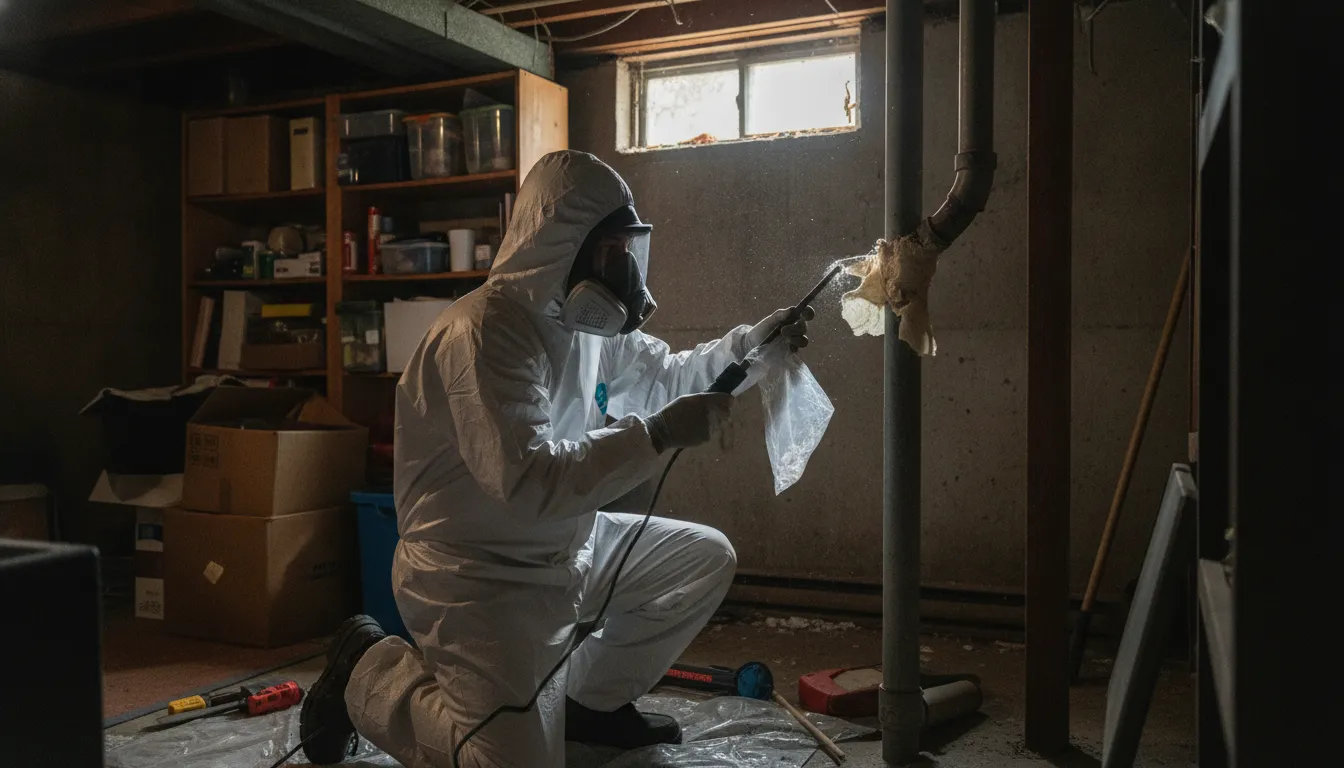
A qualified asbestos inspector begins with a visual survey of materials that may contain asbestos. Depending on the property's age and construction, that can include floor tiles and adhesives, popcorn ceilings, pipe wrap, HVAC duct insulation, and drywall or joint compound. If suspect materials are present, the inspector collects samples using appropriate precautions and sends them to a certified laboratory for analysis.
Laboratory testing provides a more definitive answer than appearance alone. Materials that look modern or harmless can still require testing, while not every older material contains asbestos. The inspection report can identify sampled materials and explain the results so the buyer, seller, and real estate professionals can make decisions based on evidence.
How inspection results can affect the transaction
Finding asbestos does not automatically mean a buyer must walk away. Results received before closing may give the buyer time to renegotiate the purchase terms, request professional abatement as a condition of sale, or budget for future remediation. If work is planned, a specialist can explain asbestos removal in Raleigh and the appropriate next steps.
Remtech Environmental provides professional asbestos inspection services for buyers and property owners in Raleigh, Durham, Cary, and surrounding North Carolina communities. Our experienced team brings decades of combined expertise in environmental assessments. Arranging the inspection before closing helps turn uncertainty into practical information while there is still time to act.
Frequently Asked Questions
Is asbestos disclosure required in North Carolina real estate transactions?
Yes. North Carolina's Residential Property Disclosure Act requires the residential disclosure statement to address environmental hazards, including asbestos. The seller generally provides the completed statement to the buyer no later than the time the buyer makes an offer. The statute is available from the North Carolina General Assembly.
Must a seller disclose asbestos if they have no knowledge of its presence?
The disclosure is based on the seller's actual knowledge. The standard form also allows the seller to make no representation about a listed condition. That answer does not determine whether asbestos is present, so buyers should use their due-diligence period to ask questions and arrange appropriate inspections.
What happens if asbestos is not mentioned in the property disclosure?
An omission does not prove that a property is asbestos-free. If a seller knew about a material condition and failed to disclose it, the omission can create a dispute after the transaction. Buyers who have concerns should document their questions, review available property records, and seek legal advice about a specific situation rather than relying on assumptions.
Are real estate brokers required to disclose asbestos in North Carolina?
Brokers have an independent duty to discover and disclose material facts they know or reasonably should know. They cannot rely solely on the owner's disclosure statement. North Carolina rules describe this obligation in the state's real estate rules, so visible or reported concerns may require further attention.
What is the North Carolina Residential Property Disclosure Statement?
It is the standardized form used to document a seller's representations about specified property conditions and environmental hazards. The North Carolina Real Estate Commission is required to develop and require the form under state law. It is a disclosure document, not a substitute for an independent asbestos inspection.
Ready to schedule your asbestos inspection?
A professional inspection can help buyers, sellers, and real estate professionals address asbestos questions with clear information before closing. For a free consultation about your property and timeline, call Remtech Environmental at (919) 341-1080. Our team can help you understand the next appropriate step without pressure. Request your free quote online to get started today.