
How to Tell if You Need Mold Removal Services
Published by Remtech Environmental Team · Last updated April 2025
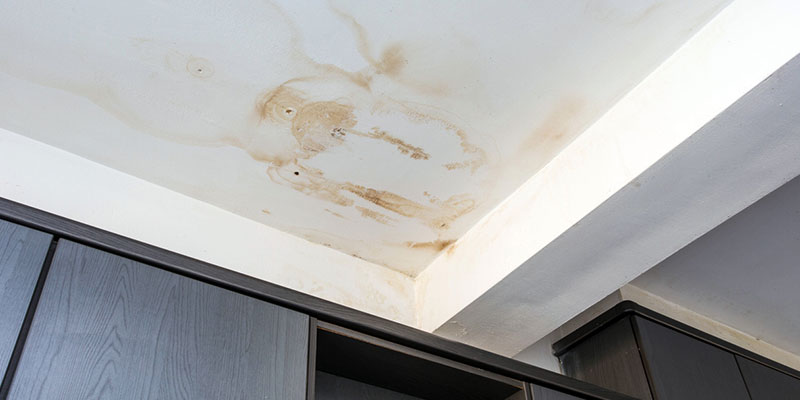
There are some home maintenance tasks you can do alone and others that require professional assistance. For example, if you have mold, we at Remtech Environmental strongly encourage you to use our professional mold removal services. In this article, we will go over a few ways to tell if you might need mold removal services.
- Musty Smell – In our experience, people often smell mold before they see it. After all, mold frequently grows in dark, out-of-the-way areas where it is unlikely to be noticed, but it gives off a distinctive, musty odor. If you notice a persistent musty or damp smell in any part of your home, we encourage you to call our team to have our technicians check it out. Then, if mold is indeed present, we can provide the thorough mold removal services you need.
- Staining – Another sign you may need mold removal services is staining or discoloration on your walls, ceiling, or floors. If you see any specks of a grey, black, green, or blue substance in these areas, then you likely have a mold problem. Streaks of red, pink, or brown mold are not uncommon either. In addition, because mold thrives in damp conditions, water staining often goes hand in hand with mold.
- Allergies – A third indication you may require mold removal services is an increase in allergy symptoms. If you or anyone else in your household is sneezing or coughing more frequently, or experiences congestion, then we encourage you to get your home checked for mold, as breathing in spores can cause these issues. Certain types of mold can also cause other symptoms, such as rashes or even cognitive impairment, so watch out for those as well.
Mold is one of the few household problems where what you can see is almost always the smaller half of the issue. By the time visible colonies appear on a baseboard or under a window sill, the spore population behind the drywall, inside the wall cavity, or on the back side of the cabinet has typically been established for weeks or months. North Carolina's combination of warm summers, sustained humidity, and aging building stock makes the Triangle one of the more mold-prone regions on the East Coast. Crawlspaces in older Raleigh and Durham homes routinely register relative humidity levels above 80 percent for half the year, and that moisture migrates upward into living spaces through floor penetrations, HVAC returns, and plumbing chases. This article covers the signals that should prompt a professional mold assessment, explains why surface cleaning rarely solves the underlying problem, and outlines what a properly scoped IICRC S520 remediation should include.
Indicators That You Need Professional Mold Removal
Mold communicates its presence in several ways. Some are obvious. Others are easy to dismiss as something else. Here are the signals our remediation team treats as actionable.
A Damp, Earthy Smell That Will Not Go Away
The first thing most people notice is the smell. Mold metabolism produces microbial volatile organic compounds with a distinctive earthy, sweet, or mushroom-like character. If you walk into a guest bathroom, a finished basement, or a closet that backs up to an exterior wall and the air feels heavier and smells slightly off compared to the rest of the house, the source is almost always microbial. The reason this matters is that humans can detect mVOCs at concentrations far below what would trigger a visible colony. By the time you can smell it consistently, an established colony is producing enough metabolic byproduct to be measurable. Air fresheners and ozone generators mask the smell temporarily but kill nothing of significance and can damage rubber and electrical components in the process. A trained technician with a particle counter and an mVOC sampling device can confirm the presence and approximate the size of the source within an hour.
Discoloration on Walls, Ceilings, Grout, or Caulk
Mold colonies present in a wide range of colors that often surprise homeowners. Stachybotrys chartarum, the species frequently labeled toxic black mold, appears as a slimy, dark green-black film on wet cellulose materials. Cladosporium, the most common indoor genus, ranges from olive green to dark brown. Aspergillus and Penicillium colonies, which dominate the spore counts in most North Carolina indoor air samples, often appear as small powdery patches in shades of gray, blue-gray, yellow-green, or pink. Pink staining around tub caulking is frequently Aureobasidium pullulans rather than mold proper, but the remediation principle is the same. If a discolored patch wipes away briefly and returns within a week, the surface organism is being fed by moisture coming from somewhere behind the visible surface, and topical cleaning will not resolve it.
Allergy and Respiratory Symptoms That Worsen at Home
Mold spores and mycotoxins are well-documented triggers for upper respiratory symptoms in sensitized individuals. The diagnostic clue most commonly missed by homeowners is the temporal pattern. If your congestion, post-nasal drip, recurrent sinus infection, or unexplained headaches improve when you spend a weekend away from the house and return within hours of coming back, the indoor environment is the variable that changed. Children and elderly residents tend to manifest symptoms first because their respiratory systems and immune responses are more reactive. Persistent eye irritation, skin rashes that resolve on vacation, and asthma exacerbations that spike during humid months in Wake or Durham counties are all reasons to commission a third-party indoor air quality assessment. The CDC and EPA both recognize mold exposure as a contributor to chronic respiratory inflammation in susceptible populations.
Visible Water Damage, Past Leaks, or High Humidity History
Any structure that has experienced a roof leak, plumbing failure, basement seepage, or appliance overflow is a candidate for hidden mold growth, even if the visible water was cleaned up promptly. The IICRC S500 standard requires saturated materials to be dried to equilibrium moisture content within four days to prevent microbial colonization. In practice, very few homeowner-managed water events meet that standard. If your home has a history of any of these events, especially in the last two to three years, and you have not had a post-event clearance inspection, there is a meaningful probability of unaddressed colonization in wall cavities, behind baseboards, under flooring, or above ceiling tiles. Homes with crawlspaces that were not encapsulated, attics that lack adequate ventilation, or HVAC systems that are oversized for the building envelope are also at elevated baseline risk in our climate.
Condensation, Sweating Pipes, or Visible Surface Moisture
Cold surfaces in warm, humid environments collect liquid water through condensation. In Triangle homes, the most common offenders are cold supply lines running through unconditioned spaces, single-pane windows that survive in older Raleigh bungalows, and ducts that traverse vented attics. Wherever those cold surfaces meet humid air, water condenses and drips onto adjacent materials. A copper supply line dripping onto fiberglass batting in a crawlspace will saturate the insulation and the subfloor above it within weeks, creating ideal conditions for hidden mold growth that the homeowner will never see. If you have noticed sweating pipes, persistent window condensation, or droplets forming on metal HVAC components, treat those observations as evidence of an active moisture source that is feeding potential microbial activity somewhere in the structure.
Why Bleach and Spray Cleaners Are Not Mold Removal
The most common mistake homeowners make when they suspect mold is reaching for a spray bottle of bleach. Bleach is a poor choice for mold remediation on porous surfaces for several reasons documented by the EPA and OSHA. The water in bleach penetrates porous materials such as drywall and wood and feeds the colony you are trying to kill, while the active hypochlorite ion stays on the surface and dissipates quickly. The visible discoloration disappears, but the hyphae rooted in the substrate survive and re-emerge within weeks. Beyond efficacy, surface-only treatment fails the IICRC S520 Standard for Professional Mold Remediation, which requires source removal, containment, negative air pressure, HEPA filtration, and post-remediation verification by an independent third party. Without containment, disturbing a colony with a sponge or a sprayer aerosolizes spores and mycotoxins throughout the home, often making the indoor air quality dramatically worse than it was before the homeowner started. Professional remediation in North Carolina also carries liability and disclosure implications. Improperly remediated mold that surfaces during a real estate transaction can cost a seller substantially more than the original remediation would have.
What Mold Removal Costs in the Triangle
Mold remediation costs in the Raleigh-Durham metro typically range from 500 dollars for a small isolated bathroom colony to 30,000 dollars or more for whole-house contamination involving HVAC ducts and structural framing. A typical one-room remediation involving containment, source removal, HEPA air scrubbing, and post-remediation verification falls between 1,500 and 4,500 dollars in our service area. Crawlspace remediation, which is one of the most common projects in older Triangle housing stock, ranges from 3,000 to 10,000 dollars depending on square footage, the condition of the vapor barrier, and whether encapsulation is included. HVAC contamination requiring duct cleaning and coil treatment typically adds 1,500 to 4,000 dollars. Most homeowner insurance policies cover mold only when it results from a covered water event such as a sudden pipe burst, and many North Carolina policies cap mold coverage at 5,000 or 10,000 dollars regardless of underlying cause. Read your policy declarations page carefully and ask your remediator to provide documentation that supports a covered claim where applicable.
Schedule a Mold Assessment in Raleigh, Durham, or Cary
Remtech Environmental performs IICRC S520-compliant mold remediation throughout the Triangle. Our certified technicians provide free initial assessments, third-party laboratory analysis through accredited partners, and post-remediation verification protocols that satisfy real estate transaction requirements. Visit our Raleigh mold removal page for service in Wake County, our Durham mold remediation page for coverage of Durham and Orange counties, or our Chapel Hill mold removal page for service to homes near UNC. We also handle commercial mold remediation for property management companies, schools, and healthcare facilities across the region.
Key Takeaways
- Mold odors are detectable at concentrations far below what produces visible colonies; a persistent earthy smell is actionable evidence.
- Bleach on porous surfaces fails because water feeds the colony while hypochlorite dissipates from the surface.
- IICRC S520 requires containment, source removal, HEPA filtration, and post-remediation verification by an independent party.
- Triangle crawlspace mold projects typically run 3,000 to 10,000 dollars depending on encapsulation scope.
- North Carolina homeowner policies frequently cap mold coverage at 5,000 to 10,000 dollars even when the cause is covered.
Need Help with Environmental Services?
If you have concerns about mold, asbestos, or water damage in your property, contact Remtech Environmental today for a free consultation.
Get a Free Quote