
3 Signs that You Need Mold Remediation Services
Published by Remtech Environmental Team · Last updated April 2025
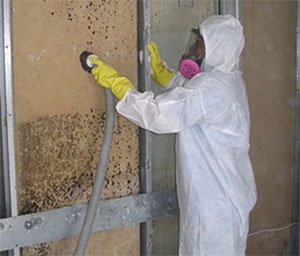
Here at Remtech Environmental, we understand that you care about your home, and we want to help you keep it in the best possible condition. One of the things that can be the most damaging to a structure, and to the people who live or work in it, is mold, which can eat away at wood and building materials and also make people very sick. Unfortunately, mold can grow in very hard-to-reach areas, which can make the problem hard to spot until it has already done real damage. To help you avoid this fate, our team has put together this article to go over three signs that you need mold remediation services–if you notice one or more of the following happening in your home, chances are that you have a mold problem.
- A Musty Smell- One sign that you may need mold remediation is a musty or mildew-like odor emanating from any part of your home, as this smell is caused by mold spores. While mold can set in anywhere in your home, it is most commonly found in areas where there is already a lot of moisture, such as the bathroom or crawlspace.
- Leaks or Water Issues- Because mold thrives in humid environments, you may also need mold remediation services if your home is revealed to have a leak or other plumbing or water issue. There’s no telling how long the moisture problem went undetected, so you may very well have a hidden mold problem, too.
- Health Symptoms- A third, less-obvious sign that you need mold remediation services is an increase in the frequency of illness in your home or in the severity of symptoms. Breathing in mold spores can cause respiratory issues, such as coughing or sneezing, and some species of mold can even cause neurological problems.
Most homeowners do not call a remediation company until something has gone visibly wrong. By that point, the mold problem has typically existed for months and the remediation scope is larger and more expensive than it would have been if the early signals had been recognized. The original version of this article highlighted three core indicators of a mold problem: musty odors, prior water damage, and unexplained health symptoms. All three remain valid, but field experience across thousands of Triangle homes has taught our team that two additional signs deserve equal weight. This expanded guide goes deeper into each of the original three and adds visible structural damage and HVAC-distributed contamination as fourth and fifth indicators. If any one of these is present in your home, a professional assessment under the IICRC S520 standard is warranted. If two or more are present simultaneously, remediation should be treated as a near-term priority rather than a deferred maintenance item.
Five Signs That Warrant Professional Mold Remediation
We have expanded the original three signs into a five-point framework drawn from years of remediation work in Raleigh, Durham, Chapel Hill, and surrounding communities. Each sign below stands on its own as a reason to schedule an assessment.
Sign One: A Musty, Mildew-Like Odor That Persists
Odor is almost always the first detectable indicator of microbial activity in a structure. The smell originates from microbial volatile organic compounds released as fungi metabolize cellulose, gypsum paper, and other organic substrates. In our climate, the most common source rooms are bathrooms with poor ventilation, finished basements that lack supplemental dehumidification, and laundry rooms where dryer venting has come loose inside a wall cavity. A useful diagnostic test is to leave the house for 48 hours with the HVAC running normally, then walk back in with fresh sensory perception. Smells you have habituated to become noticeable again. If a specific room or area smells distinctly different from the rest of the home, that is your next investigation target. Persistent musty odor is grounds for an inspection regardless of whether visible growth is apparent, because in roughly 60 percent of the cases we investigate, the colony producing the smell is hidden behind a finished surface.
Sign Two: Recent or Historical Water Intrusion
Every mold remediation project begins with a water source, even when that source has been resolved long before the call comes in. If your home has experienced any of the following in the last 36 months, treat unaddressed colonization as a real possibility. Roof leaks during a hurricane or tropical storm event, including remnants of named storms that pass over the Carolinas every few years. Plumbing failures including supply line bursts, ice maker line failures, dishwasher hose ruptures, or wax ring failures at toilets. Appliance overflows from washing machines, water heaters, or HVAC condensate pans. Basement seepage following extended rain events. Crawlspace flooding, particularly in homes near creeks, ponds, or low-lying drainage. The IICRC S500 standard requires materials to be dried to equilibrium within four days. Any water event resolved without professional drying carries a non-trivial risk of latent mold growth that may not become symptomatic for months.
Sign Three: Health Symptoms That Pattern to the Building
Mold-related health symptoms are real, well-documented, and most reliably distinguished from other causes by their relationship to time spent in the building. Fatigue, sinus congestion, chronic headaches, brain fog, recurring respiratory infections, and skin rashes that improve when residents are away from home and return when they come back are characteristic of building-related illness. Children, elderly residents, and individuals with asthma, COPD, or compromised immune systems are at heightened risk. Mold sensitization is also cumulative. Repeated low-dose exposure can produce reactions in people who previously had no trouble, which means a household that has tolerated a slow-growing problem for two years may suddenly experience a member developing significant symptoms. If you have a pattern of building-correlated symptoms, request a clinical workup and a parallel professional indoor air quality assessment. Both data points together produce far more useful information than either one alone.
Sign Four: Visible Structural Deterioration
Mold and rot are different organisms with overlapping environmental requirements. Where you see one, the other is usually nearby. Visible signs of structural deterioration that warrant a remediation assessment include soft or spongy areas in subflooring, particularly near bathrooms, kitchens, and exterior doors. Crumbling drywall paper or paint that bubbles, peels, or flakes off in sheets. Dark staining or fuzzy growth visible on floor joists, sill plates, or rim joists when viewed from a crawlspace. Window sills that have begun to discolor or feel soft to the touch. Baseboards that pull away from walls, indicating moisture-driven dimensional change in the wall framing. None of these are cosmetic problems. Each one is evidence that organic building materials have lost integrity due to sustained moisture exposure, and remediation must address both the active microbial colonization and the structural repair needed to restore the building envelope.
Sign Five: HVAC-Distributed Contamination
When mold establishes in or near an HVAC system, the contamination becomes whole-house contamination. The system actively distributes spores and mycotoxins through the duct network during every cycle. Indicators of HVAC involvement include visible discoloration on supply register grilles, dust streaking on ceilings around vents, a musty smell that intensifies when the system kicks on, and reactions among residents that follow heating or cooling cycles. Common origin points are condensate pan biofilm, saturated insulation in plenum boxes, fiberglass duct board that has absorbed moisture during installation, and return air leaks pulling unconditioned crawlspace or attic air through the system. Remediation in HVAC scenarios is significantly more involved than a simple room remediation and requires NADCA-trained duct cleaning specialists working in coordination with mold remediation crews. Skipping this step leaves the active distribution mechanism in place and guarantees recolonization within weeks.
Why Surface Cleaning Cannot Resolve a Real Mold Problem
Homeowners who attempt to handle a mold problem with retail products typically succeed at making the visible colony invisible while leaving the actual problem intact. Surface cleaners and bleach formulations are designed for non-porous surfaces such as glass and metal. On the porous materials that dominate residential construction, including drywall paper, framing lumber, OSB sheathing, and fiberglass insulation, the active ingredient stays on the surface while the water carrier soaks deeper, often feeding the colony you are trying to eliminate. The IICRC S520 standard for professional mold remediation requires four critical elements that DIY work cannot replicate. First, physical containment using six-mil polyethylene sheeting and zipper doors to isolate the work area. Second, negative air pressure maintained by HEPA-filtered air scrubbers exhausting outside the containment. Third, source removal of all non-salvageable porous materials rather than surface treatment. Fourth, post-remediation verification through air sampling and surface sampling analyzed by an accredited third-party laboratory. Without these four controls, disturbing a mold colony aerosolizes massive spore loads into living areas and frequently makes the indoor air quality measurably worse than it was before the work began.
Mold Remediation Costs Across the Triangle
Pricing varies widely with scope, but Triangle-area homeowners can use the following ranges as planning guidance. A small contained remediation involving a single bathroom or closet typically runs 800 to 2,500 dollars including containment, source removal, HEPA air scrubbing, antimicrobial treatment, and post-remediation verification. A whole-room remediation involving partial drywall removal, contents handling, and structural drying generally falls between 2,500 and 6,500 dollars. Crawlspace remediation, which is the most common scope in older Raleigh and Durham housing stock, ranges from 3,500 to 12,000 dollars depending on square footage, the condition of the existing vapor barrier, and whether full encapsulation with a dedicated dehumidifier is included. Whole-house remediation involving HVAC contamination and multiple affected rooms can exceed 25,000 dollars. Insurance coverage is highly variable in North Carolina. Mold caused by a covered water event is typically covered up to a sublimit of 5,000 to 10,000 dollars, while mold caused by long-term seepage or maintenance issues is usually excluded entirely. Get a written scope of work, an itemized estimate, and a clearance inspection commitment in writing before signing any remediation contract.
Get a Triangle Mold Remediation Estimate
Remtech Environmental serves homeowners and commercial property managers across the greater Triangle region with full-service mold remediation under IICRC S520 protocols. We provide free initial assessments, partner with accredited third-party laboratories for clearance testing, and offer documentation packages that satisfy real estate transaction and insurance requirements. Visit our Raleigh mold removal page for Wake County service, our Durham mold remediation page for Durham and Orange County coverage, our Cary mold removal page for western Wake response, or our Chapel Hill mold remediation page for service to homes near UNC and the surrounding communities.
Key Takeaways
- Persistent musty odor indicates microbial activity in roughly 60 percent of cases even when no visible growth is apparent.
- Any water event resolved without professional drying within four days carries meaningful risk of latent mold colonization.
- Building-correlated health symptoms that improve away from home are characteristic of indoor mold exposure.
- HVAC contamination converts a localized mold problem into whole-house distribution and requires coordinated NADCA duct cleaning.
- IICRC S520 requires containment, negative air, HEPA filtration, and third-party verification; surface cleaning alone does not satisfy this standard.
Need Help with Environmental Services?
If you have concerns about mold, asbestos, or water damage in your property, contact Remtech Environmental today for a free consultation.
Get a Free Quote